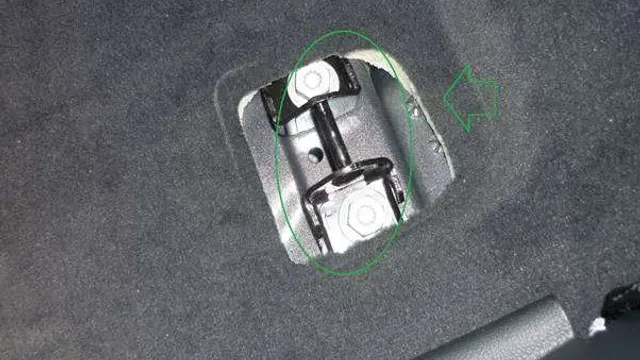
If your 2017-2026 Audi Q7 or SQ7 has a creaking or rattling noise from the second-row seats, Technical Service Bulletin 2060719/5 details a repair procedure. The noise is caused by friction between the seat lock handle and the locking mechanism. This TSB outlines how technicians should adjust the…
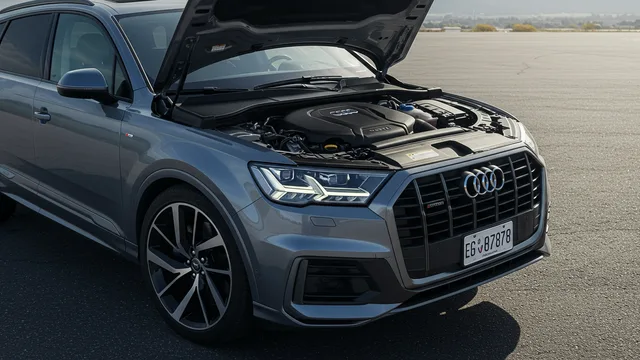
Audi has issued Technical Service Bulletin 2071770/8 for 2022-2023 Q3, Q5, Q5 PHEV, and Q7 models experiencing a Check Engine Light (MIL) and diagnostic trouble code P240700. This TSB addresses an overly sensitive OBD diagnostic system related to the EVAP emission control system.
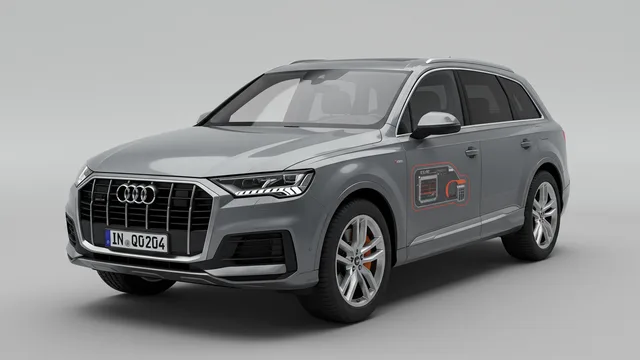
This Audi On-Car Analysis List, dated July 15, 2024, provides guidance for technicians on diagnosing and addressing various common issues across 2021-2024 Audi models. Topics include airbag warning lights (DTCs B101704, B103604, B12251B), MIB3 system problems, roof panel button malfunctions, noisy…
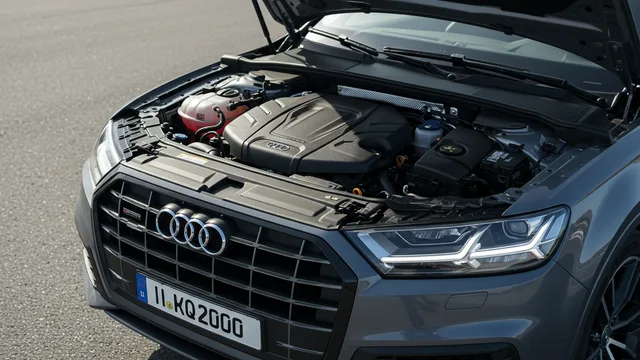
Audi has released Technical Service Bulletin (TSB) 2071770/7 for 2022-2023 Q3, Q5, and Q7 models experiencing a Malfunction Indicator Lamp (MIL) illumination with DTC P240700. This is due to overly sensitive OBD diagnostics for the EVAP system.
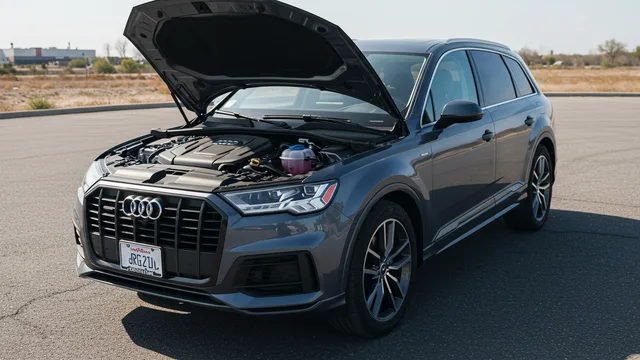
Audi has released Technical Service Bulletin 2071770/6 to address a Malfunction Indicator Lamp (MIL) illumination accompanied by Diagnostic Trouble Code P240700 (EVAP emission control system leakage diagnosis pump current fluctuating) in 2022-2023 Audi Q5 PHEV, Q3, and Q7 models. A software update…
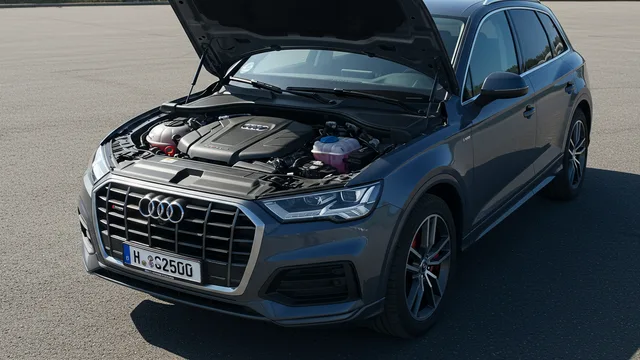
If your 2022-2023 Audi Q5 e-quattro, Q3, or Q7 has an illuminated Malfunction Indicator Lamp (MIL) and stores DTC P240700, Audi Technical Service Bulletin 2071770/6 provides a software update solution for the EVAP system leakage diagnosis pump current fluctuating.
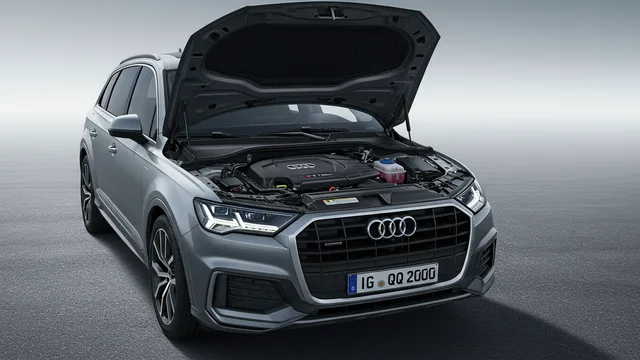
Audi has released Technical Service Bulletin 2071770/7 to address an illuminated Malfunction Indicator Lamp (MIL) with diagnostic trouble code P240700 in certain 2022-2023 Q3, Q5 e, and Q7 models. The issue stems from overly sensitive OBD diagnostics related to the EVAP system, requiring a…
This manufacturer communication, NHTSA ID 10253423, outlines the Audi Delivery Guidelines for 2021-2025 Audi Q7 vehicles. These guidelines ensure that new vehicles are properly inspected and prepared before customer delivery, covering aspects related to equipment and owner/service manuals.
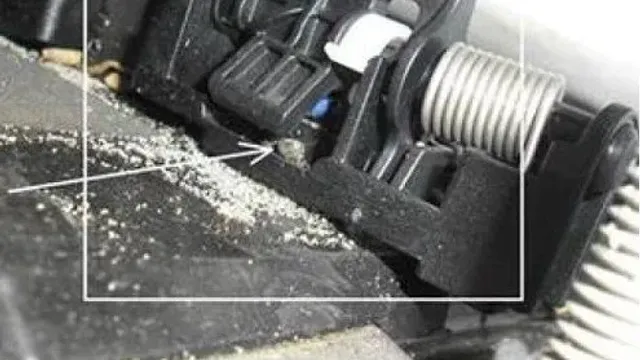
Audi has released TSB 2070964/1 for 2021-2025 Q5, Q7, SQ5, and SQ7 models addressing a taillight malfunction and DTC B146C29. The issue involves taillights not switching correctly when the rear lid is opened or closed, often caused by foreign debris.
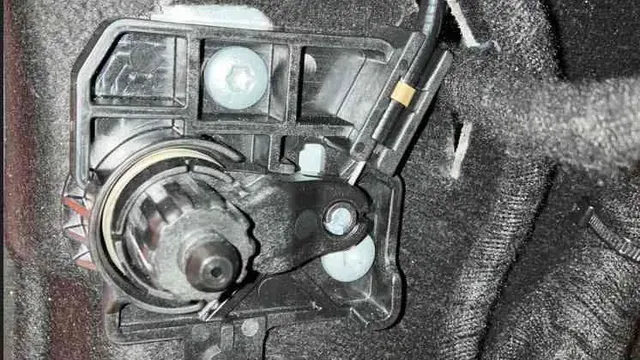
Audi has released Technical Service Bulletin 2072188/1 for 2022-2023 Q7 and SQ7 models addressing a common issue where the hood cannot be opened or released. The TSB outlines a repair procedure involving adjusting the Bowden cable for proper hood latch operation.
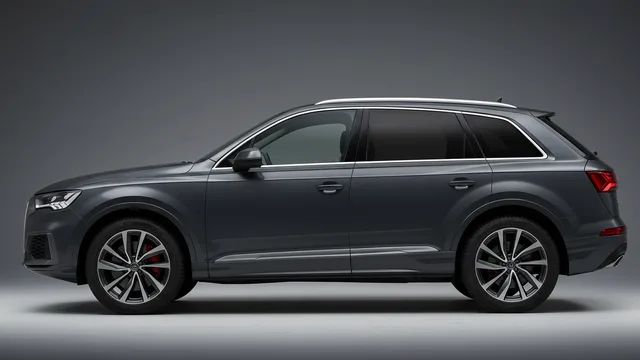
Audi Technical Service Bulletin 2064695/3 explains the intended operation of the entry/exit assistance system in 2021-2024 Audi A4, A5, Q5, Q7, and RS models, clarifying that certain behaviors are normal and not a fault.
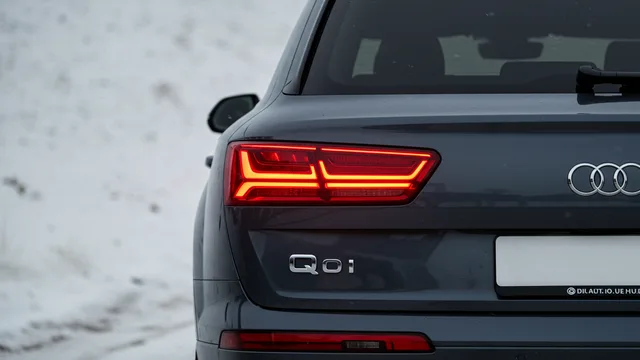
Audi has released Technical Service Bulletin (TSB) 55 22 67 2066057/1 to address issues where the power tailgate in 2021-2022 Audi Q7, SQ7, and A4 allroad vehicles does not open or close. This TSB provides a software update to resolve DTC B121102.
car in question is a 2022 Audi q7 55 tfsi - 3.0 turbo - 40k miles 2 owner. serviced at Audi since new. under warranty until 50k car throws a p0299 code - turbo underboost condition present - coolant migration from a faulty VW/AUDI water pump is sending coolant into vacuum lines causing catastrophic engine issues - car can not be driven. Audi will not fix under warranty and is trying to charge 5,800$ to replace waterpump/ associated lines. tells me the warranty "is for some items and not others" there is a class action lawsuit for a longstanding issue that Audi has been aware of since 2020 and not offering any solution for - Case No. 26-5678, NJ.
No injuries · No fire · No crash
My 2022 Audi Q7 experienced an internal water pump seal failure that allowed engine coolant to migrate into the vehicle’s vacuum system, contaminating the vacuum reservoir, valve, and connected lines. This is a known failure pattern affecting Audi/Volkswagen vehicles equipped with the 2.9T/3.0T EA839 engine family, where the water pump’s internal design allows coolant to be drawn into the vacuum circuit undetected, since the leak is internal and not visible externally. This can affect brake booster vacuum assist and turbo/drivetrain systems depending on severity. The failure occurred outside of any accident or misuse, is a documented design issue in ongoing class action litigation against Audi/Volkswagen, and required extensive repair (water pump, vacuum reservoir, valve, and related lines) once diagnosed. I am filing this complaint to document the pattern of this defect.
No injuries · No fire · No crash
I was traveling at highway speeds in active, high-velocity traffic when my vehicle suffered a sudden, catastrophic mechanical failure that nearly resulted in a severe multi-car accident. Without any warning, the vehicle completely lost its ability to accelerate, flatly refusing to pick up speed or maintain momentum despite pressing the gas pedal. This unexpected, immediate drop in propulsion marooned me in high-speed lanes, leaving the vehicle dangerously vulnerable as oncoming traffic rapidly closed the distance behind me. Drivers behind me were forced to aggressively swerve and brake to avoid a high-speed rear-end collision. Moments after this life-threatening loss of power occurred, the Check Engine Light illuminated on the dashboard. Subsequent technical inspection revealed a severe engineering defect: the internal seals of the factory coolant control components failed, forcing pressurized engine coolant backward into the engine’s primary vacuum system. This pressurized fluid completely contaminated the vacuum lines, the vacuum reservoir tank, and the electronic solenoids—including the N75 boost control solenoid. By filling the vacuum infrastructure with liquid coolant, the engine was instantly starved of its ability to regulate turbocharger boost, triggering a critical "limp mode" and a P0299 underboost fault. The catastrophic failure of an internal cooling seal directly compromising an active drivability safety system represents an unreasonable and severe defect. It transforms a routine drive into an immediate, uncontrollable highway hazard. I am filing this report because this known coolant migration pattern presents a clear, present, and life-threatening danger to owners operating this engine platform.
No injuries · No fire · No crash
While parked in my residential garage with the engine shut off and car door closed, the vehicle suffered an un-commanded rollaway incident due to a suspected defect in the electronic parking brake or automatic-park transmission software. The vehicle was completely stopped, the driver exited the vehicle and the driver's door was closed. Moments later, the vehicle shifted out of its parked state or failed to hold, rolling backward down the driveway and colliding with a basketball pole in the driveway, causing vehicle damage. No warning chimes or dashboard alerts were observed prior to exiting. The vehicle's electronic failsafe to automatically engage 'Park' upon the door opening failed to secure the vehicle.
I drove home after shopping, opened my garage door by remote, and pulled into the garage. I placed the vehicle in park, and shut off the engine via push button. I retrieved my purse from the passenger seat and exited the vehicle. I exited the vehicle with the intent of retrieving my shopping bags from the rear hatch. As I walked towards the rear of the vehicle I noticed my next-door neighbor had stopped at the end of my driveway with the driver’s window down. I did not make it to the hatch door and instead walked to the end of my driveway. [XXX] was the only occupant of the car. He was the driver. We started talking for several minutes with my back to the garage the entire time until neighbor hollered “[XXX] is going on?” The last thing I remember is my Audi Q7 slamming my body into one or both vehicles. I was thrown to the driveway with my right foot wedged under the Audi Q7’s driver’s side rear tire. I worked my foot free from my shoe and got myself up to a standing position with clear pain in my back and foot. Vehicle rolled on its own with transmission in Park. Note: ~Vehicle transmission was in Park on a flat surface when I exited vehicle with car keys ~ I was stuck by vehicle, vehicle in question also struck another vehicle ~Not to my knowledge ~None of the agencies or companies have inspected vehicle ~No warning lights INFORMATION REDACTED PURSUANT TO THE FREEDOM OF INFORMATION ACT (FOIA), 5 U.S.C. 552(B)(6)