2027 BMW M 1000 RR Gains Lighter, More Agile M Motorsport Frame
BMW Motorrad is introducing a third-generation M Motorsport frame for its M 1000 RR superbike, set to be standard from the 2027 model year. This new frame is approximately 1.3 kg lighter and features precisely tuned stiffness and flexibility for enhanced handling and rider feedback.

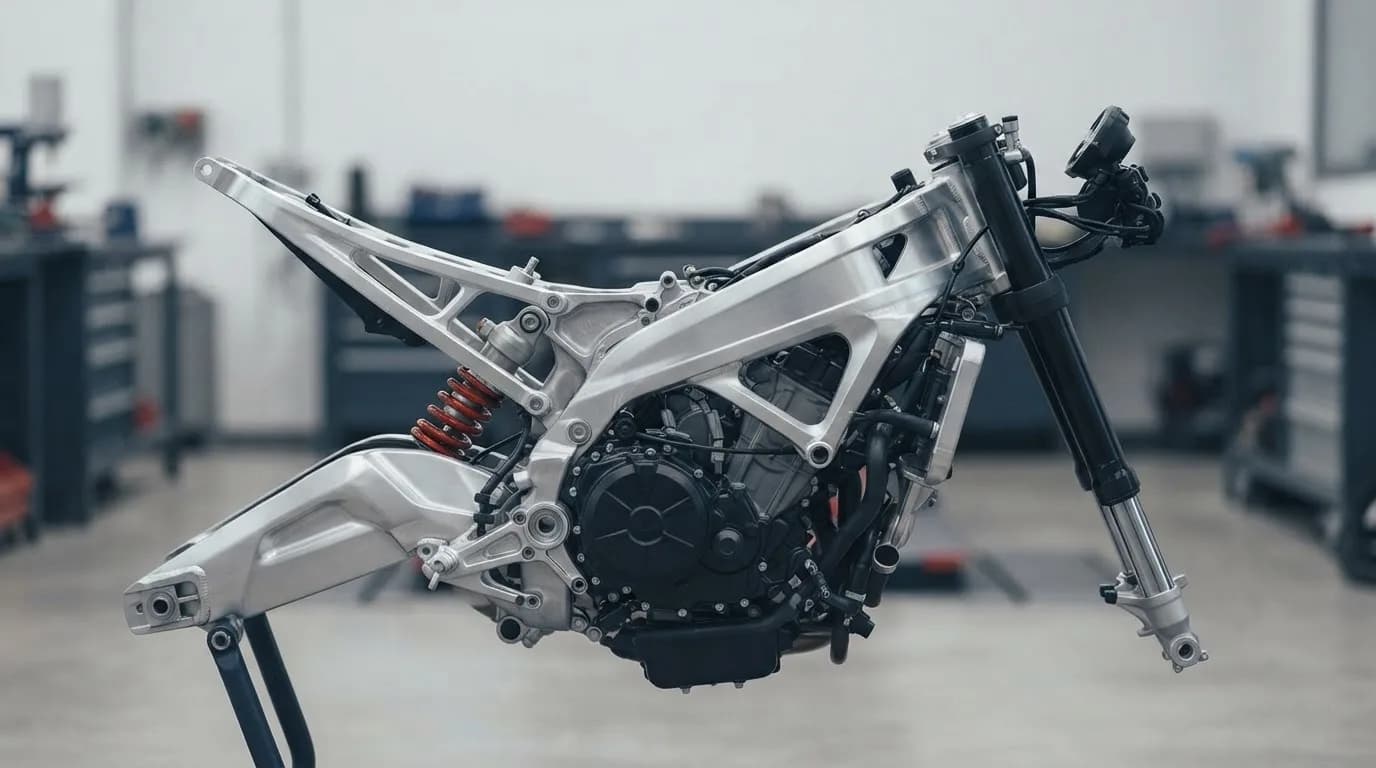
BMW Motorrad is set to equip its M 1000 RR superbike with a new M Motorsport frame, integrating advanced racing technology into its production models. This third-generation aluminum frame will become standard on the M 1000 RR from the 2027 model year, promising significant enhancements in handling and rider feedback. The development aims to transfer direct insights from international motorsport competition to the road.
Lighter, More Responsive Chassis
The updated M Motorsport frame is approximately 1.3 kg lighter than its previous iteration, contributing to improved agility and quicker changes of direction for the M 1000 RR. This weight reduction is a key factor in enhancing the motorcycle's overall dynamic performance.
Engineers achieved a precisely tuned balance of stiffness and flexibility by reducing wall thicknesses by up to 30 percent. This design allows the BMW M 1000 RR frame to flex laterally to a defined degree when the motorcycle is leaned over, effectively supplementing the suspension in absorbing road surface inputs.
This controlled flexibility results in more consistent tire contact, improved feedback to the rider, and more even tire wear, particularly during aggressive riding or on a racetrack. Concurrently, the chassis maintains high longitudinal stiffness to ensure precise transmission of braking and drive forces, providing predictable responses even under extreme loads.
Advanced Digital Development and Production
The creation of the new M Motorsport frame involved an end-to-end digital development chain, from initial simulations and testing to reproducible series production. This process leveraged the combined expertise of BMW Group's facilities in Munich, Landshut, and Berlin.
Chassis development, digital design, simulation, and testing were conducted in Munich. The approved production data then formed the basis for manufacturing the four primary cast components—the steering head, left and right side sections, and the rear section—at BMW Group Plant Landshut.
Landshut specializes in lightweight construction and uses a low-pressure casting process for these complex, thin-walled aluminum parts. This method ensures controlled mold filling, reducing turbulence and air inclusions for consistent component quality. Intricate quartz sand cores are used to create internal cavities, with core-shooting simulations validating the process digitally before tooling is even made.
After casting, components undergo extensive quality checks, including X-ray inspection, wall-thickness measurements, and coordinate measurements, before being sent to BMW Group Plant Berlin. In Berlin, the components are precisely positioned and joined using TIG welding. A cathodic dip coating provides uniform corrosion protection, followed by final milling of functional surfaces and mounting points to exact dimensions. A final coordinate measurement confirms the BMW M 1000 RR frame's dimensional accuracy before assembly into the M 1000 RR.
Direct Motorsport Benefits for Riders
This new frame technology provides a high-performance technical platform that benefits both BMW Motorrad's factory racing teams and customer racing teams globally. The findings and demands from competitive racing directly influence the design and characteristics of the series-production component.
For M 1000 RR customers, this direct transfer of motorsport technology translates into tangible riding advantages. Riders can expect greater precision when initiating turns, more transparent and predictable motorcycle responses, and enhanced confidence in demanding riding situations. The frame's design ensures precise transmission of braking, steering, and drive forces, while actively supporting optimal tire contact during lean angles.
The introduction of the third-generation M Motorsport frame for the 2027 BMW M 1000 RR underscores BMW Motorrad's strategy of integrating racing-derived innovations into its production motorcycles. Owners and enthusiasts can anticipate a motorcycle with improved agility, more refined handling characteristics, and a heightened sense of connection to the road, directly benefiting from the brand's extensive motorsport experience.
Yorum bırakın
Yorumlar moderasyondan geçer ve görünmesi biraz zaman alabilir. Sadece adınız ve soyadınızın baş harfi herkese açık olarak gösterilir.
Yorumlar
İlk yorum sizden olsun.