BMW M3 Celebrates 40 Years of Performance and Evolution
BMW's M3 model line is celebrating its 40th anniversary, marking four decades since its debut as a high-performance sports car. First introduced in 1985, the M3 quickly established itself as a benchmark for agility and driving pleasure, becoming a defining vehicle for BMW M GmbH enthusiasts…

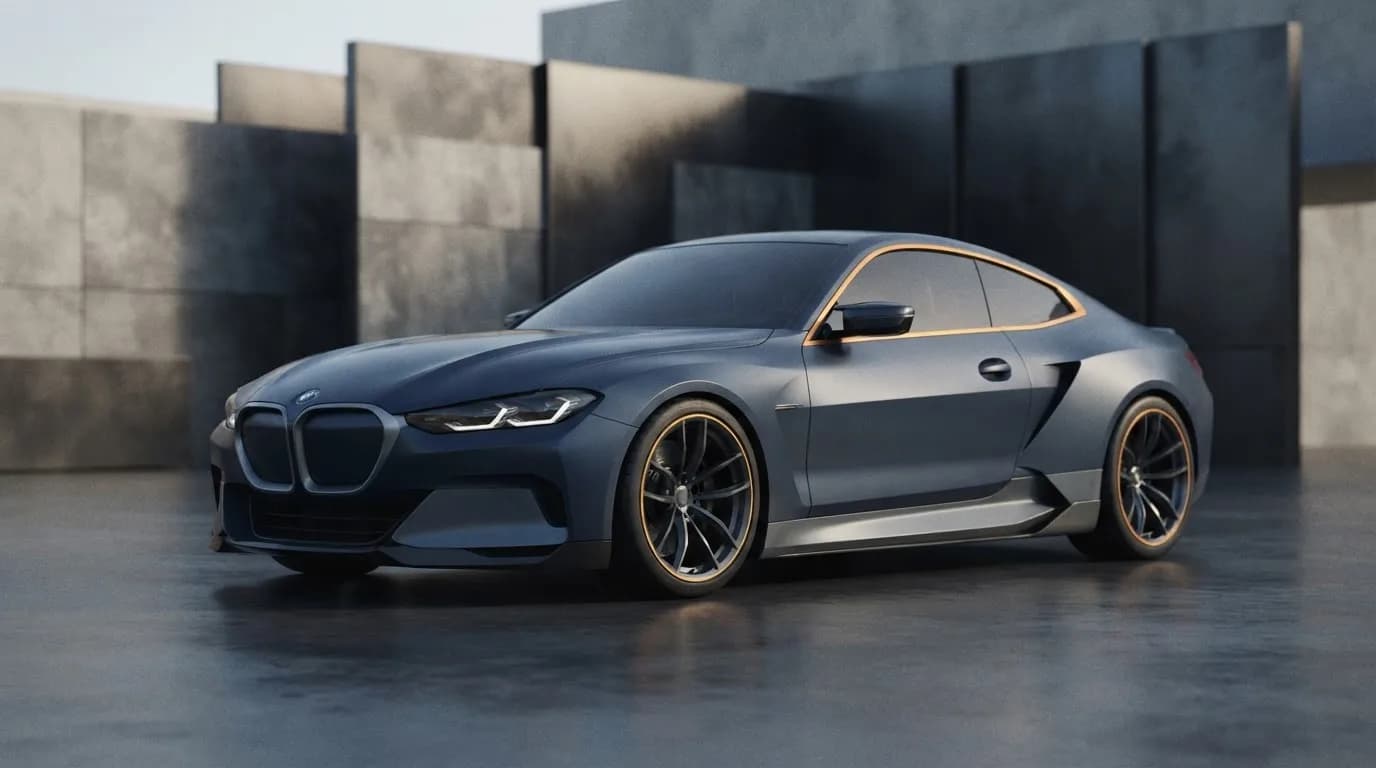
BMW's iconic M3 model line is celebrating its 40th anniversary, marking four decades since its debut as a high-performance sports car in the premium midsize segment. First introduced at the IAA motor show in Frankfurt am Main in 1985, the M3 quickly established itself as a benchmark for agility, dynamism, and driving pleasure, becoming a defining vehicle for BMW M GmbH enthusiasts globally.
The M3's Racing Roots and Early Evolution
The original BMW M3, known internally as the E30 generation, made its public appearance in 1985. It featured a 2.3-liter four-cylinder engine with four-valve technology, producing 147 kW (200 hp). Weighing 1,200 kilograms, this first M3 accelerated from 0 to 100 km/h (62 mph) in 6.7 seconds and reached a top speed of 235 km/h (146 mph). A convertible version was later added to the lineup.
This initial M3 achieved significant success in motorsports, securing numerous victories worldwide, including in the German DTM touring car series, the World Touring Car Championship, and the Nürburgring 24-hour race. The second-generation M3, launched in 1992, evolved into a more refined vehicle. It introduced a six-cylinder engine for the first time and expanded its body styles to include a four-door sedan alongside the coupe and convertible. From 1996, the Sequential M Gearbox (SMG) became an available option.
Power and Performance Milestones
The third-generation BMW M3, arriving in 2000, was characterized by its aggressive styling, including a power dome, flared wheel arches, and a dual-branch exhaust system. It was powered by a 3.2-liter in-line six-cylinder engine generating 252 kW (343 hp). A special edition, the BMW M3 CSL, further enhanced performance with increased power and reduced weight, delivering 265 kW (360 hp) and achieving 0 to 100 km/h (62 mph) in 4.9 seconds. In racing, the BMW M3 GTR secured multiple wins in the ALMS series in the US and twice won the Nürburgring 24-hour race.
The fourth-generation M3, introduced in 2007, marked a significant change with its naturally aspirated V8 engine. This 4.0-liter unit produced 309 kW (420 hp), propelling the M3 Coupe from 0 to 100 km/h (62 mph) in 4.8 seconds. BMW's return to the DTM series in 2012 with the M3 DTM was highly successful, culminating in a drivers' championship for Bruno Spengler, a teams' title for BMW Team Schnitzer, and the manufacturers' championship for BMW.
Modern M3 Developments
The fifth model generation, launched in 2014, saw the M3 badge exclusively applied to the four-door sedan variant. This generation introduced a newly developed, high-revving straight-six engine with M TwinPower Turbo technology, replacing the V8. This engine delivered increased power and torque while also achieving a 25 percent reduction in fuel consumption and emissions compared to its predecessor. The BMW M3 Sedan with the Competition Package, producing 331 kW (450 hp), set a new acceleration record for the BMW M3, reaching 100 km/h (62 mph) in 4.0 seconds.
The current, sixth-generation M3, which debuted in 2020, continues the lineage with its six-cylinder in-line engine. In 2021, the M xDrive intelligent all-wheel-drive system was introduced to the M3 line. A highly anticipated addition, the BMW M3 Touring, joined the lineup in 2022, offering a new body variant. The limited-run BMW M3 CS represents the fastest series-produced BMW M3 to date, accelerating from 0 to 100 km/h (62 mph) in 3.4 seconds and featuring an electronically limited top speed of 302 km/h (188 mph).
Over its 40-year history, the BMW M3 has consistently evolved, adapting to changing automotive technologies and market demands while maintaining its core identity as a driver-focused performance machine. From its early racing dominance to its current diverse lineup, the BMW M3 continues to be a significant model for BMW M GmbH, influencing both road and track performance.
Yorum bırakın
Yorumlar moderasyondan geçer ve görünmesi biraz zaman alabilir. Sadece adınız ve soyadınızın baş harfi herkese açık olarak gösterilir.
Yorumlar
İlk yorum sizden olsun.