Audi Museum Mobile Celebrates 50 Years of Five-Cylinder Engines
Audi Tradition is marking the 50th anniversary of its distinctive five-cylinder engine with a new special exhibition titled "1-2-4-5-3: 50 years of Audi five-cylinder engines." The exhibit opens August 1, 2026, at the Audi museum mobile in Ingolstadt and will run through February 28, 2027.

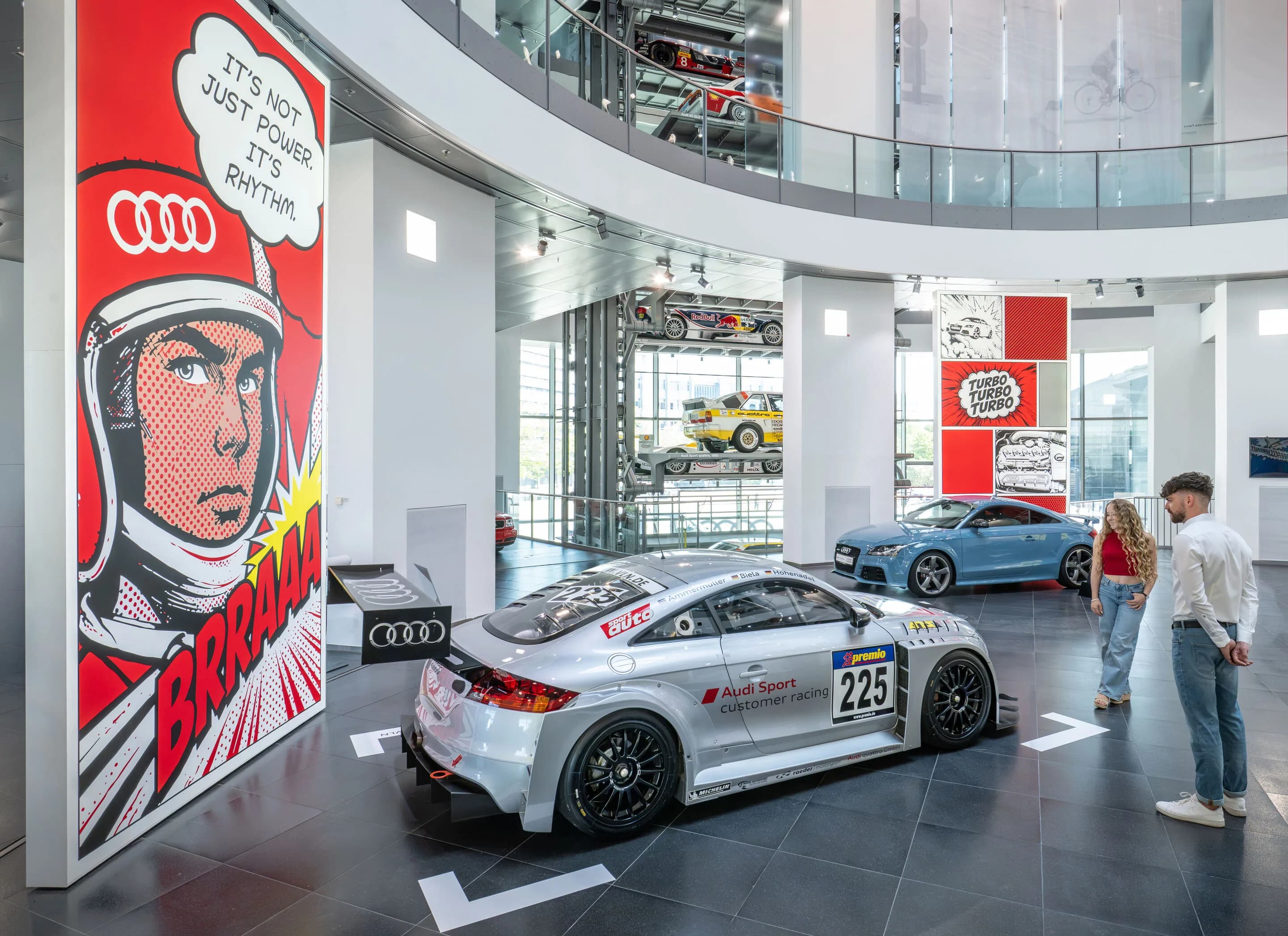
The Audi museum mobile in Ingolstadt will host a new special exhibition, "1-2-4-5-3: 50 years of Audi five-cylinder engines," to commemorate the half-century milestone of this engine type. The exhibition opens on August 1, 2026, and will be available to visitors through February 28, 2027. This display highlights the engine's impact on the brand's history, from its distinctive sound to its motorsport achievements and production vehicle performance.
The Origins and Design of the Five-Cylinder
The story of the Audi five-cylinder engine began in August 1976 with its introduction in the second-generation Audi 100. Engineers chose the inline five-cylinder configuration, designated EA 828, over a six-cylinder option due to space constraints and weight distribution concerns. This decision allowed the Audi 100 5E to offer a significant increase in power and prestige.
Drawing inspiration from the inline four-cylinder EA 827 engine, the five-cylinder shared many design elements, including the overhead belt-driven camshaft and cylinder spacing. Its unique 1-2-4-5-3 firing order, combined with a 144-degree crankshaft rotation interval, contributed to its characteristic sporty sound and smooth operation. The initial 2,144 cc engine in the Audi 100 5E produced 100 kW (136 PS), enabling the car to accelerate from 0 to 100 km/h in 9.5 seconds and reach a top speed of 190 km/h.
Motorsport Success and Performance Milestones
Audi expanded its five-cylinder offerings in 1978 with a 2-liter naturally aspirated diesel engine, producing 51 kW (70 PS). A year later, the first turbocharged five-cylinder gasoline engine debuted in the Audi 200 5T, delivering 125 kW (170 PS). The engine gained significant public recognition in 1980 with the launch of the Audi quattro, featuring a turbocharged five-cylinder engine that initially produced 147 kW (200 PS).
This powerful engine, paired with quattro all-wheel drive, propelled Audi to numerous motorsport victories, including world championships in rallying. Later versions, such as those in Group B rally cars, exceeded 500 PS, and the Audi IMSA GTO achieved 530 kW (720 PS). In production models, the Avant RS2, introduced in 1994, featured a 2.2-liter five-cylinder engine generating 232 kW (315 PS), establishing it as one of the most powerful production station wagons of its time.
Modern Revival and Exhibition Highlights
The original five-cylinder engines were gradually phased out in the mid-1990s, with the last units appearing in the Audi A6 2.5 TDI and Audi S6 2.2-liter turbo until 1997. However, the engine made a return in 2009 with the Audi TT RS, featuring a transversely mounted 2.5-liter TFSI engine (EA 855). This high-performance unit, with a reinforced engine block, delivered 250 kW (340 PS) and has since been featured in various RS models, earning the "engine of the year" award nine times.
The "1-2-4-5-3: 50 years of Audi five-cylinder engines" special exhibition, curated by Stefan Felber, showcases seven engine displays and fourteen vehicle exhibits. Notable vehicles on display include the Megola motorcycle, Audi 100 5E (C2), Audi 90 quattro, Avant RS2, Audi S6, Audi TT RS, Audi TT Motorsport, Audi RS Q3 concept, Audi RS 3, and Audi GT50 concept. Visitors can also access detailed information about the exhibits through the Audi Tradition app.
The Audi five-cylinder engine has maintained a significant role in the brand's identity, symbolizing a blend of performance, innovation, and a distinctive auditory experience. The Audi five-cylinder exhibition provides an opportunity to explore this legacy.
Galeria
1 imagem
Leave a comment
Comments are moderated and may take a moment to appear. Only your first name and the initial of your last name are shown publicly.
Comments
Be the first to comment.