2020-2023 Nissan Altima, Frontier, Sentra False AEB Activation TSB
Nissan Technical Service Bulletin NTB21-115B details a solution for 2020-2023 Nissan Altima, Frontier, and Sentra vehicles experiencing false activation or unexpected braking from their Automatic Emergency Braking (AEB) or Forward Collision Warning (FCW) systems. The repair involves reprogramming…
 Ahmet Topcu2022 Nissan Sentra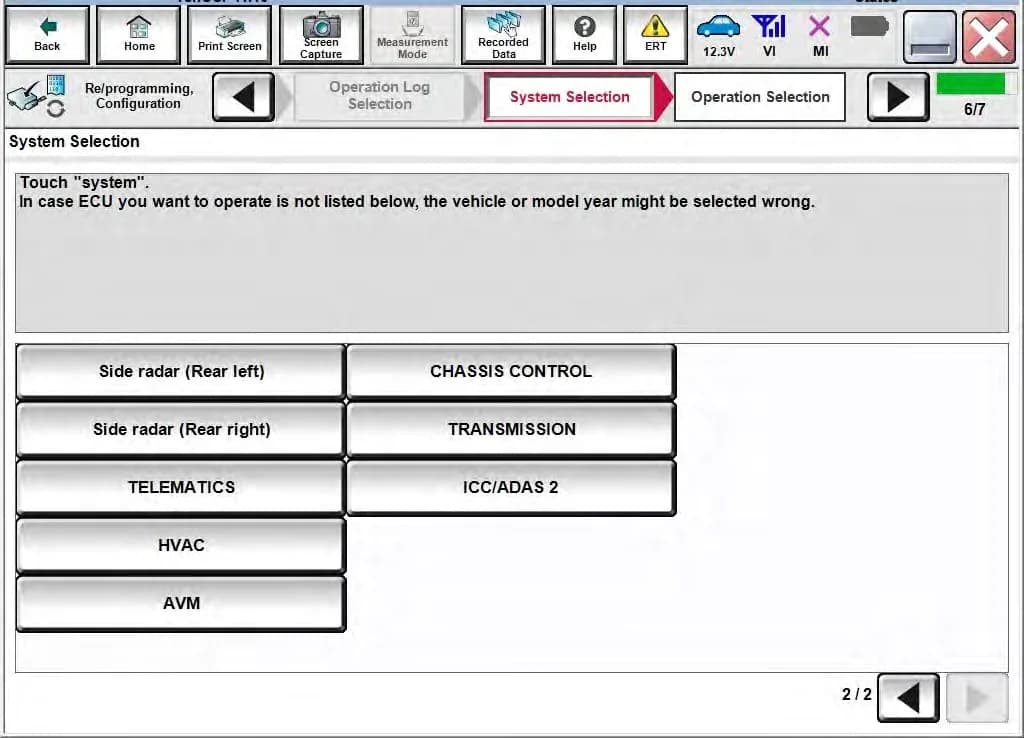
Também se aplica a
- Nissan Altima
- 2021–2022
- Nissan Frontier
- 2022–2023
- Nissan Sentra
- 2021
Nissan has issued Technical Service Bulletin (TSB) NTB21-115B to address customer complaints regarding the false activation of the Automatic Emergency Braking (AEB) or Forward Collision Warning (FCW) systems in certain 2020-2023 Altima, Frontier, and Sentra vehicles. This issue can lead to unexpected braking, which can be startling and potentially hazardous for drivers. This bulletin, dated July 11, 2024, supersedes previous versions (NTB21-115 and NTB21-115A) and provides updated information for diagnosing and repairing the condition. The primary solution involves updating the software for the ICC/ADAS 2 control module.
Symptoms
Owners of affected vehicles may experience the following:
- False activation and/or unexpected braking of the Automatic Emergency Braking (AEB) system. This means the vehicle might brake suddenly without a clear obstacle in its path.
- False activation and/or unexpected braking of the Forward Collision Warning (FCW) system. The system might issue warnings or initiate braking when there is no imminent collision risk.
These symptoms occur without any related Diagnostic Trouble Codes (DTCs) being stored in the vehicle's computer system. If you are experiencing a Nissan Sentra false AEB activation, this TSB may apply to your vehicle.
Fault Codes / DTCs
This TSB specifically notes that there are no related DTCs stored when the customer experiences false activation or unexpected braking of the AEB or FCW system. This means a technician cannot rely on a diagnostic scan for fault codes to identify this particular issue.
Important Warnings for Technicians and Owners
Nissan has provided several critical warnings within this bulletin to ensure proper repair and prevent damage to vehicle components. These include:
- Technician Qualification: "Nissan Bulletins are intended for use by qualified technicians, not 'do-it-yourselfers'. Qualified technicians are properly trained individuals who have the equipment, tools, safety instruction, and know-how to do a job properly and safely."
- Vehicle Applicability: "If you believe that a described condition may apply to a particular vehicle, DO NOT assume that it does. See your Nissan dealer to determine if this applies to your vehicle."
- Battery Voltage: "If the vehicle battery voltage drops below 12.0V or rises above 13.5V during reprogramming, the ICC/ADAS 2 control module may be damaged."
- Electrical Loads: "Be sure to turn OFF all vehicle electrical loads. If a vehicle electrical load remains ON, the ICC/ADAS 2 control module may be damaged."
- CONSULT PC Power: "If the CONSULT PC battery voltage drops during reprogramming, the process will be interrupted and the ICC/ADAS 2 control module may be damaged."
- Bluetooth Interference: "Turn OFF all external Bluetooth® devices (e.g., cell phones, printers, etc.) within range of the CONSULT PC and the VI. If Bluetooth® signal waves are within range of the CONSULT PC or VI during reprogramming, reprogramming may be interrupted and the ICC/ADAS 2 control module may be damaged."
- Reprogramming Interruption: "Do not disconnect the VI or shut down CONSULT if reprogramming does not complete."
- DTC Claiming: "FRT allows adequate time to access DTC codes. No other diagnostic procedures subsequently required. Do NOT claim any Diagnostic Op Codes with this claim."
Diagnosis / Trigger Conditions
The condition is confirmed when a customer reports "false activation and/or unexpected braking of the Automatic Emergency Braking (AEB) or Forward Collision Warning (FCW) system," and a diagnostic scan reveals no related Diagnostic Trouble Codes (DTCs) stored in the vehicle's systems. This indicates a software-related issue rather than a component failure that would trigger a fault code.
Repair Procedure Summary
The repair involves reprogramming the ICC/ADAS 2 control module. The procedure requires using the Nissan CONSULT-III plus diagnostic tool with updated ASIST and software. Key steps include:
- Preparation: Ensure the CONSULT PC is updated and connected to a battery maintainer/smart charger to maintain voltage between 12.0V and 13.5V. Turn off all vehicle electrical loads and Bluetooth devices. Connect the Vehicle Interface (VI).
- Initial Setup: Turn the ignition ON (engine OFF), turn on hazard warning lamps, and start CONSULT-III plus. Log in with NNAnet credentials.
- Module Selection: Navigate to "Re/programming, Configuration" and confirm precautions. Select "Automatic Selection(VIN)" and confirm the vehicle's VIN. Then, select "ICC/ADAS 2" as the target module.
- Reprogramming: Select "Reprogramming" and record the current ICC/ADAS 2 Part Number. Compare this number to Table A in the TSB; if there's no match, the bulletin does not apply. Confirm precautions and battery voltage again, then start the data transfer. The transfer is estimated to take 10 minutes.
- Post-Reprogramming: If reprogramming fails, follow recovery steps such as selecting "Retry" or restarting the procedure from "Home." Once complete, erase all DTCs.
- Configuration: Return to "Re/programming, Configuration." Select "After ECU Replacement" under "VEHICLE CONFIGURATION," then choose "Manual selection." Refer to the Electronic Parts Catalog (EPC) and Tables B or C in the TSB to determine the "OLD CONFIG PART NUMBER" (Type ID) and select the corresponding "NEW CONFIG PART NUMBER" (Type ID) for your specific vehicle (Altima, Frontier, or Sentra).
- Finalization: Confirm and save the new configuration. Select "End" to finish the operation. Perform a final "Diagnosis (All Systems)" and "ERASE" any remaining DTCs.
Required Tools or Parts
Technicians will need the following for this procedure:
- CONSULT PC with updated ASIST and CONSULT-III plus software.
- Vehicle Interface (VI).
- Battery maintainer or smart charger capable of maintaining 12.0V to 13.5V during reprogramming.
- AC Adapter for the CONSULT PC.
- The ICC/ADAS 2 control module is reprogrammed, not replaced. However, claims information references the "Warning Speaker Controller ASSY" (part number 284P1-) and "ADAS Control Unit" (part number 284E7-) as Primary Failed Parts (PFP) depending on the vehicle configuration.
Claims Information
Nissan provides specific claims coding for this repair, varying by model and whether the vehicle is equipped with ProPilot:
- Altima (L34) Without ProPilot:
- PFP: Warning Speaker Controller ASSY (284P1-*****)
- OP CODE: RXE1AA (Perform Software Check ICC/ADAS2) or RXD9AA (Perform Software Check and Reprogram)
- SYM: ZE
- DIA: 32
- FRT: 0.4 hours (Check) or 0.8 hours (Reprogram)
- Altima (L34) With ProPilot:
- PFP: ADAS Control Unit (284E7-*****)
- OP CODE: RXD8AA (Perform Software Check ICC/ADAS2) or RXD7AA (Perform Software Check and Reprogram)
- SYM: ZE
- DIA: 32
- FRT: 0.4 hours (Check) or 0.8 hours (Reprogram)
- Frontier (D41):
- PFP: Warning Speaker Controller ASSY (284P1-*****)
- OP CODE: RXE4AA (Perform Software Check ICC/ADAS2) or RXE5AA (Perform Software Check and Reprogram)
- SYM: ZE
- DIA: 32
- FRT: 0.3 hours (Check) or 0.7 hours (Reprogram)
- Sentra (B18):
- PFP: Warning Speaker Controller ASSY (284P1-*****)
- OP CODE: RX0NAA (Perform Software Check ICC/ADAS2) or RX0PAA (Perform Software Check and Reprogram)
- SYM: ZE
- DIA: 32
- FRT: 0.4 hours (Check) or 0.8 hours (Reprogram)
Owner Action
If you experience a Nissan Sentra false AEB activation or similar issues with your Altima or Frontier, contact your authorized Nissan dealer. Describe the symptoms clearly, noting that the issue occurs without any warning lights or DTCs. The dealer will perform the necessary diagnostic checks and apply the software update as outlined in TSB NTB21-115B. This repair is typically covered under warranty if your vehicle meets the eligibility criteria.
Revision History
This bulletin, NTB21-115B, is the latest revision, dated July 11, 2024. It supersedes:
- NTB21-115A (May 10, 2024): Added "APPLIED DATES," moved login steps, and updated battery voltage range.
- NTB21-115 (December 17, 2021): Original bulletin published.
NHTSA ID: 10258778
Galeria
30 imagens
Frequently Asked Questions
- What is Nissan TSB NTB21-115B about?
- Nissan TSB NTB21-115B addresses the issue of false activation or unexpected braking of the Automatic Emergency Braking (AEB) and Forward Collision Warning (FCW) systems in certain 2020-2023 Nissan Altima, Frontier, and Sentra vehicles. The solution involves reprogramming the ICC/ADAS 2 control module.
- Will my vehicle show a fault code for a Nissan Sentra false AEB activation?
- No, this TSB specifically states that there are no related Diagnostic Trouble Codes (DTCs) stored when a customer experiences false activation or unexpected braking of the AEB or FCW system. The issue is identified by the customer's reported symptoms.
- Which Nissan models are affected by the false AEB activation issue?
- The TSB applies to 2021-2022 Nissan Altima (L34), 2022-2023 Nissan Frontier (D41), and 2020-2022 Nissan Sentra (B18) vehicles. For Sentra models, this applies to those built on or before March 10, 2022.
- What is the repair procedure for the false AEB/FCW activation?
- The repair involves confirming the current ICC/ADAS 2 part number and then reprogramming the ICC/ADAS 2 control module using the CONSULT-III plus diagnostic tool. This software update corrects the behavior of the AEB and FCW systems, ensuring proper functionality and preventing false activation.
- Is this a recall, and will I be notified by Nissan?
- This is a Technical Service Bulletin (TSB), not a recall. TSBs provide repair information to dealerships for common issues. Nissan typically does not notify owners directly about TSBs. If you experience a Nissan Sentra false AEB activation, you should contact your Nissan dealer to determine if this bulletin applies to your vehicle.
Related Articles
2021-2022 Nissan Sentra Tie Rod Recall: Steering Loss Risk
Nissan has issued a safety recall (R23B3) for certain 2021-2022 Sentra models due to potentially weak tie rods. This condition can lead to impaired steering, wheel vibration, or even loss of vehicle control. Dealers will replace both tie rods free of charge. A stop-sale is in effect.
2021-2024 Nissan Models: C1A17-49 / C2580-49 Laser/Radar DTC
Nissan Technical Service Bulletin NTB21-106B provides guidance for diagnosing and resolving Diagnostic Trouble Codes C1A17-49 and C2580-49 related to the Laser/Radar system in various 2021-2024 Nissan models. It clarifies when to simply erase the code versus seeking further repair.
2021-2024 Nissan Intelligent Key Unit Service TSB
Nissan TSB NTB20-073C provides critical service information for replacing the Intelligent Key unit in 2021-2024 Ariya, Pathfinder, Rogue, and Sentra vehicles. It emphasizes correct module configuration and NATS initialization steps.
2021-2024 Nissan Sentra Remote Engine Start Inoperative TSB
Owners of 2021-2024 Nissan Sentra vehicles may experience inoperative A/T Shift Lock and Remote Engine Start after a Body Control Module (BCM) replacement. Nissan Technical Service Bulletin NTB20-055A explains that pressing the Intelligent Key UNLOCK button prematurely can permanently disable…
2021-2022 Nissan Sentra Tie Rod Recall
Nissan has announced a safety recall, R23B3, for certain 2021-2022 Sentra models. The recall addresses a potential issue with the tie rods that could impair steering ability or, in severe cases, lead to a loss of vehicle control. Owners will be notified.
Leave a comment
Comments are moderated and may take a moment to appear. Only your first name and the initial of your last name are shown publicly.
Comments
Be the first to comment.