2023-2026 Hyundai Lamp Condensation TSB 25-BD-012H
This Hyundai Technical Service Bulletin (TSB) 25-BD-012H addresses condensation in headlamps, rear combination lamps, daytime running lamps (DRL), and fog lamps across various 2023-2026 Hyundai models. It clarifies that lamp assembly replacement is often unnecessary and provides a diagnostic and…
 Marcus Weber2024 Hyundai Tucson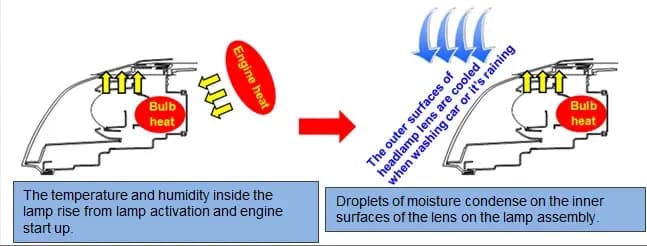
Também se aplica a
- Hyundai Accent
- 2021–2022
- Hyundai Elantra
- 2021–2025
- Hyundai Elantra N
- 2022–2025
- Hyundai Ioniq 5
- 2022–2025
- Hyundai Ioniq 5 N
- 2025
- Hyundai Ioniq 6
- 2023–2025
- Hyundai Ioniq 9
- 2026
- Hyundai Kona
- 2021–2026
- Hyundai Kona N
- 2022–2023
- Hyundai Nexo
- 2021–2025
- Hyundai Palisade
- 2021–2026
- Hyundai Santa Cruz
- 2022–2026
- Hyundai Santa Fe
- 2021–2026
- Hyundai Sonata
- 2021–2026
- Hyundai Tucson
- 2021, 2022, 2023, 2025, 2026
- Hyundai Veloster
- 2021
- Hyundai Veloster N
- 2021–2022
- Hyundai Venue
- 2021–2025
- Hyundai Xcient
- 2023–2024
▸ Mostrar mais 13▾ Mostrar menos
Hyundai has released Technical Service Bulletin (TSB) 25-BD-012H to provide comprehensive information regarding condensation that may appear in the headlamps, rear combination lamps, daytime running lamps (DRL), or fog lamps across various 2023-2026 Hyundai models. This bulletin, which supersedes TSB 23-BD-002H, aims to clarify the causes of this condensation and outline appropriate diagnostic and repair procedures. For many cases of Hyundai Tucson lamp condensation, simply running the lamps with the engine on for a period can eliminate the moisture.
Symptoms
Owners may observe visible moisture or water droplets inside the lens of the headlamp, rear combination lamp, daytime running lamp (DRL), or fog lamp. This can range from light fogging to more noticeable water accumulation or streaks.
Causes of Lamp Condensation
The TSB identifies two primary causes for lamp condensation:
- Natural Condensation: This occurs due to temperature and humidity changes inside the lamp assembly. Factors like direct sunlight exposure, increased outside temperature, or the lamp assembly being cooled by rain or a car wash can cause moisture to condense on the inner lens surfaces. This type of condensation is considered normal, similar to windshield fogging, and typically does not require lamp replacement.
- Condensation from Engine Startup: Heat generated by the lamp bulbs and the engine can raise the temperature inside the lamp assembly. If the outer lens surface is simultaneously cooled (e.g., by washing the car or rain), moisture can condense on the inner lens. The amount and location of condensation can vary based on environmental factors and vehicle usage.
Important Warnings
- Lamp assembly replacement is NOT necessary in most cases for condensation. The condition can often be eliminated by turning on the lamps with the engine running for several minutes or during normal driving operation.
- For IONIQ vehicles, IONIQ repairs can only be performed at IONIQ certified dealers to avoid potential damage.
- If a lamp desiccant/moisture absorbent pack is replaced for a warranty claim, Do NOT use the lamp assembly for the replacement part; instead, file the claim with the desiccant/moisture absorbent pack as the replacement part and the lamp assembly as the causal part.
- Normal condensation is NOT REQUIRED to be replaced under warranty.
- If damage or modifications to the lamp assembly are caused by external influence, the Repair is NOT covered under warranty.
- Replace ONLY the lamp sub-assembly if it is available separately.
Diagnosis and Repair Procedure
The TSB outlines a flowchart to guide technicians through the diagnostic and repair process for Hyundai Tucson lamp condensation:
- Initial Assessment: Determine if lamp condensation is present. If it's identified as normal condensation (e.g., after rain or a car wash, or in cold temperatures), proceed with the drying guidelines.
- Drying Guidelines:
- Park the vehicle in a well-ventilated area.
- Remove any dust cap(s) from the lamp assembly (some may have two).
- Turn the engine ON and switch the lamps ON to prevent battery discharge.
- Allow the vehicle to idle for at least 30 minutes with the engine and lamps on to evaporate moisture.
- Reinstall the dust cap(s).
- Post-Drying Check: If condensation persists after following the drying guidelines, inspect for a potential water leak.
- Water Leak Identification: Signs of a water leak include water collecting at the bottom of the lamp assembly, water streaks, or condensation remaining after the lamps have been on for 30 minutes or more. A water leak may be caused by a poor seal, cracks in the assembly, or poor fitment.
- Further Inspection (if water leak suspected): Remove the lamp assembly and inspect for external damage or aftermarket modifications. If external damage or modifications are present, determine if they were caused by external influence. If so, the repair may not be covered under warranty.
- Desiccant Replacement: If condensation remains after drying and no external damage or water leak is identified, or if it's determined to be an internal issue, replace the lamp desiccant or moisture absorbent pack (if equipped) and repeat the lamp assembly drying procedure.
- Lamp Assembly Replacement: If all other steps fail to resolve the condensation, or if a severe water leak is confirmed not due to external influence, the affected lamp sub-assembly or entire lamp assembly may need replacement.
Required Parts
For cases requiring desiccant replacement, the following part is referenced:
- Desiccant/Moisture Absorbent Pack: Part Number 92125-*** (Note: The full part number needs to be ordered from the parts catalog for the specific model).
Source: NHTSA ID: 11025476
Galeria
10 imagens
Frequently Asked Questions
- Is condensation in my Hyundai's headlamps always a sign of a defect?
- No, according to Hyundai TSB 25-BD-012H, condensation inside headlamps, DRLs, or fog lamps is often a natural occurrence due to temperature and humidity changes. It is considered "Normal Condensation" and usually does not require lamp assembly replacement.
- How can I try to remove condensation from my Hyundai's lamps?
- Hyundai TSB 25-BD-012H recommends parking your vehicle in a well-ventilated area, removing any dust caps from the lamp assembly, and then running the engine with the lamps turned ON for at least 30 minutes. This process helps evaporate the moisture. Remember to reinstall the dust caps afterward.
- When should I be concerned about lamp condensation in my Hyundai Tucson?
- You should be concerned if you see water collecting at the bottom of the lamp assembly, visible water streaks, or if the condensation remains after running the lamps for 30 minutes. These could indicate a "Water Leak" due to a poor seal, cracks, or improper fitment, which may require professional diagnosis and repair as outlined in TSB 25-BD-012H.
- Will my warranty cover lamp condensation issues?
- Normal lamp condensation is generally not covered by warranty as it's considered a natural phenomenon. However, if a water leak or a defect requiring replacement of a desiccant/moisture absorbent pack is identified and not caused by external damage, normal warranty provisions may apply. Repairs due to external damage or modifications are typically not covered.
Related Articles
2024 Hyundai Tucson Health Check: Recalls and Bulletins
The 2024 Hyundai Tucson has faced two recalls, including a critical power steering issue, alongside numerous service bulletins addressing engine, electrical, and structural concerns. This report details the key problems and what owners should know.
2021-2024 Hyundai Starter Freezing & Solenoid Replacement TSB
Hyundai has issued Technical Service Bulletin 26-EE-003H for various 2021-2024 models experiencing difficulty starting in cold weather. This TSB outlines an inspection and potential replacement of the starter magnetic switch (solenoid) assembly.
2023-2025 Hyundai Tucson Inoperable Horn TSB 26-BE-003H
Hyundai has released Technical Service Bulletin 26-BE-003H for 2023-2025 Tucson (NX4A) vehicles experiencing an inoperable horn. This TSB outlines the diagnostic and repair steps to replace both the high and low-pitch horn assemblies due to internal oxidation.
2022-2024 Hyundai MSLA Feature: Speed Limit Assist Guide
This guide explains Hyundai's Manual Speed Limit Assist (MSLA) feature for 2022-2024 Tucson and Santa Cruz owners. Learn how to activate, use, and disengage MSLA to help avoid exceeding speed limits, along with important safety information.
2024 Hyundai Tucson / Sonata EGR Valve Electrical Short TSB
Hyundai has issued Service Campaign 9B3, documented in TSB 25-01-023H, to address an electrical short in the Exhaust Gas Recirculation (EGR) valve assembly in certain 2024 Hyundai Tucson and Sonata vehicles. This issue can lead to a Malfunction Indicator Lamp (MIL) illumination and various…
Leave a comment
Comments are moderated and may take a moment to appear. Only your first name and the initial of your last name are shown publicly.
Comments
Be the first to comment.