2019-2022 Audi e-tron Battery Module Software Update TSB 93N6
Audi has released Technical Service Bulletin 93N6 for 2019-2022 e-tron and e-tron Sportback vehicles. This update optimizes the battery modules control unit software to improve cell balancing and prevent premature battery aging. Learn what to expect.
 David Chen2022 Audi e-tron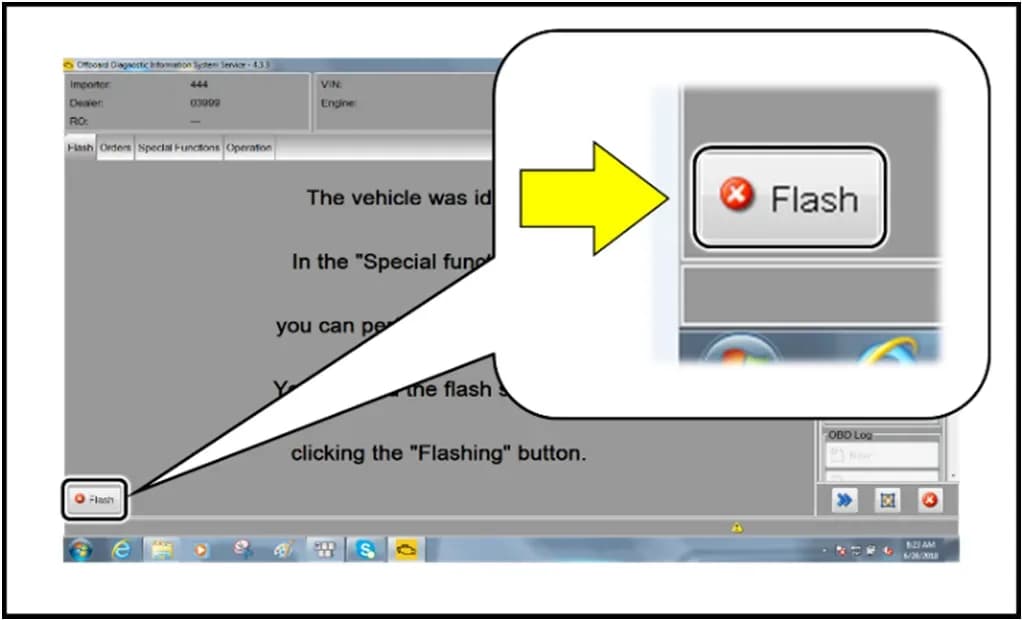
Também se aplica a
- Audi e-tron
- 2021
- Audi e-tron Sportback
- 2021–2022
Audi has issued Technical Service Bulletin (TSB) 93N6 to address a software update for the battery modules control unit in certain 2019-2022 e-tron and e-tron Sportback vehicles. This proactive update aims to improve the longevity and performance of the high-voltage battery by optimizing its cell balancing functions. Owners searching for Audi e-tron battery software update information should review this bulletin.
This TSB, identified as 93N6, was most recently revised on September 25, 2024, updating the work procedure information. Previous revisions include May 30, 2024 (updated warranty parameters), February 14, 2024 (updated work procedure), and April 26, 2022 (original publication).
Technical Background and Symptoms
The high-voltage battery system in electric vehicles like the Audi e-tron is composed of numerous individual battery cells. These cells, while designed to be similar, can have slightly different capacities and voltages. Without an effective balancing function, the overall capacity of the battery system can be limited by the weakest cell. This can lead to individual cells being overloaded and aging more rapidly.
This TSB addresses a potential issue where the efficiency of the battery's balancing function might be affected by an error in cell voltage measurement. The Audi e-tron battery software update outlined in TSB 93N6 optimizes the control unit's balancing capabilities and stabilizes cell voltage measurements, thereby preventing premature battery aging and maintaining overall battery health.
Important Warnings for Owners and Technicians
Audi has provided several critical warnings and instructions within TSB 93N6 that owners and technicians must be aware of:
- Eligibility Check: The procedure is only valid for vehicles displaying the 93N6 code in the Elsa Campaign/Action Information screen on the day of repair. Elsa is the only valid source for verification.
- Prior Recalls: All safety recalls, specifically mentioning 93V2 or 93U9 if applicable, must be completed before performing the 93N6 software update. The evaluation step for these campaigns must also be completed first. The TSB explicitly states: "All Safety Recalls must be completed prior to completing this campaign."
- Data Erasure: The software update in TSB 93N6 will erase the high-voltage battery historical data. This could lead to an inaccurate evaluation of the high-voltage battery cell modules if not performed in the correct sequence relative to other campaigns.
- Diagnostic Tool Connection: The VAS Diagnostics Interface MUST ONLY be connected to the tester with a USB cable. Using Bluetooth or WiFi for the update is PROHIBITED as it increases the risk of losing connection and potentially damaging the control module. Requests for additional time or parts will be denied if the GFF log indicates the update was performed wirelessly.
- Battery Charger Connection: A battery charger (e.g., GRX3000VAS Tester/Charger or equivalent) must be connected to the vehicle battery in power supply mode throughout the software update. The battery voltage must remain above 12.5 volts. Failure to do so can cause the update to fail and potentially damage control modules, which will not be covered under warranty. DO NOT connect the ground cable directly to the negative terminal of the battery; connect it to the grounding lug on the chassis.
- Hazard Warning Lights: Hazard warning lights must be switched on during the procedure. This prevents the system from entering bus sleep mode, which could interrupt and cancel the update. The TSB notes: "The procedure may cancel itself if the hazard warning lights are not switched on."
- Radiator Fan Safety: The radiator fan(s) may cycle on at high speed during the update process. There is a serious risk of personal injury if contact is made with spinning fan blades. Keep hands and all objects away from the radiator fan(s) during the update.
- Warranty Claims: A warranty claim may not be reimbursed if there is no confirmation response to support the claim. The SVM process must be completed in its entirety.
- Dealer Inventory: The procedure must be performed on applicable vehicles in dealer inventory prior to sale. "Vehicles cannot be delivered until the Update is completed."
Repair Procedure Summary
The repair for the Audi e-tron battery software update involves updating the software for the battery modules control units and, if necessary, other related control units. This process requires specific diagnostic tools and adherence to a detailed procedure to ensure successful completion and prevent damage. The procedure must be performed using "Audi Flashing" and NOT "Guided Fault Finding (GFF)".
Initial Setup and Preparation:
- Ensure the ODIS software on the diagnostic tester is completely up to date. Check the "Alerts" section on ServiceNet for the current ODIS version.
- Connect a battery charger, such as the GRX3000VAS Tester/Charger (or equivalent), to the vehicle battery in power supply mode. The battery voltage must remain above 12.5 volts throughout the update. Connect the positive cable to the positive terminal and the negative cable to the chassis grounding lug.
- Turn off screen saver and power saving settings on the diagnostic tester to prevent interruptions.
- Ensure the VAS Diagnostic Tester is plugged in using its supplied power adapters, not relying on battery power.
- Open the vehicle's hood and battery cover.
- Switch on the hazard warning lights to prevent the system from entering bus sleep mode during the update.
Diagnostic Tool Connection and Verification:
- Connect the VAS6150X/VAS6160X Diagnostic Tester to the vehicle.
- Start the ODIS program.
- Confirm that the scan tool is communicating with the diagnostic head via a USB cable. If Bluetooth or WiFi symbols are displayed (as shown in the example image on page 6 with "Wi-Fi is being used X" or "Bluetooth is being used X"), disconnect and reconnect the diagnostic head using only the USB cable.
Initiating the Software Update:
- From the home screen of the scan tool, highlight and select "Flash" (as indicated by an arrow in the example image on page 7).
- Select "Starting Flashing" and follow the on-screen prompts.
- When prompted for a Repair Order, select "No RO" (as shown in the example image on page 7).
SVM Code Input:
- Highlight "SVM – Code Input" on the diagnostic tester screen.
- Enter the corrective action code (SVM code) 93N6A268.
- Select "Accept" and follow any further on-screen prompts.
Finalizing the Update:
- After the flash procedure is successfully completed, select "Send" to send the diagnostic protocol online.
- Click "Flash" to exit the flash session.
- To clear any event memory entries generated during the flashing, put the vehicle into bus sleep mode. This is achieved by disconnecting the diagnostic tester, removing the key from the vehicle, and locking the vehicle with the remote for 6 minutes.
Required Special Tools
Performing this software update requires specific tools:
- Battery Tester/Charger: GRX3000VAS (or equivalent)
- Diagnostic Tester: VAS6150X/VAS6160X (or equivalent)
Warranty Information
This update is covered under the High-Voltage Battery Warranty. Dealers should follow these claim entry instructions:
- Service Number: 93N6
- Damage Code: 0099
- Parts Vendor Code: 002
- Claim Type:
- Sold vehicle: 7 10
- Unsold vehicle: 7 90
- Causal Indicator: Mark labor as causal
- Vehicle Wash/Loaner: Do not claim wash/loaner under this action.
- Criteria I.D.: S1
Labor Operations
| Labor Op | Time Units | Description |
|---|---|---|
| 2706 89 50 | 10 | Connect battery charger |
| 9301 25 99 | Time stated on diagnostic protocol | Update battery module control module software |
| 9035 33 99 | 10 | Activate bus sleep mode |
Additional Actions and Eligibility
Some affected vehicles may require additional actions. Technicians must check the Elsa Campaign/Action Information screen for any other required work. Vehicle eligibility is verified solely through the Elsa system; other systems are not valid and may result in non-payment of a claim.
Customer Notification
Audi requires that customers be informed in writing of all work conducted on the vehicle, including any updates completed under this TSB. This should be recorded on the Repair Order.
NHTSA ID: 10255562
Galeria
11 imagens
Frequently Asked Questions
- What is Audi TSB 93N6?
- Audi TSB 93N6 is a Technical Service Bulletin that describes a software update for the battery modules control unit in 2019-2022 Audi e-tron and e-tron Sportback vehicles. Its purpose is to optimize battery cell balancing and prevent premature aging of the high-voltage battery.
- Which Audi e-tron models are affected by the 93N6 software update?
- The 93N6 software update applies to 2019-2022 Audi e-tron Quattro and 2020-2022 Audi e-tron Sportback Quattro models. Owners should check with their authorized Audi dealer to confirm if their specific vehicle is eligible for this update.
- What is the SVM code for the Audi e-tron battery software update?
- The corrective action code (SVM code) for the Audi e-tron battery software update under TSB 93N6 is 93N6A268. This code is used by technicians during the update process.
- Are there any precautions I should know about the 93N6 update?
- Yes, several precautions are outlined in TSB 93N6. All safety recalls, including 93V2 or 93U9 if applicable, must be completed first. The update requires a constant power supply to the vehicle, and the diagnostic tool must be connected via USB, not wirelessly. Also, technicians must be aware of potential high-speed radiator fan operation during the update.
- Will this software update affect my Audi e-tron's battery warranty?
- TSB 93N6 is related to the high-voltage battery warranty. The software update is designed to optimize battery performance and prevent premature aging. It's crucial that the procedure is performed correctly, as improper execution or failure to follow all steps (including SVM confirmation) could impact warranty claim reimbursement.
Related Articles
2022 Audi e-tron Problems: Electrical System & Braking Concerns
The 2022 Audi e-tron has faced significant owner complaints regarding its electrical system, including sudden power loss and charging hazards, as well as various braking malfunctions. This profile details these issues and relevant service bulletins.
2022-2026 Audi Guided Fault Finding Reporting Obligation
Audi has issued Technical Service Bulletin TPI 2033392, also known as Transaction No. 2081531/1, regarding a reporting obligation for technicians when Guided Fault Finding produces an unexpected result. This TSB outlines the process for contacting Audi Product Support for diagnostic assistance.
2022-2026 Audi Infotainment System Complaints
Audi has released Technical Service Bulletin (TSB) 2081405/1 to address various customer complaints regarding infotainment systems in 2022-2026 Audi vehicles. This TSB helps technicians diagnose issues often caused by external media or mobile devices, rather than vehicle technology.
2018-2026 Audi Models Cracking Noise TSB 2061464/11
Audi Technical Service Bulletin 2061464/11 describes a cracking noise from the front or rear axle when changing direction in various 2018-2026 Audi models. The issue is due to stub axle movement and is resolved by bonding the stub axle to the wheel bearing with locking fluid.
2022-2026 Audi Parking Aid False Warnings TSB 2024323/13
Audi has released Technical Service Bulletin 2024323/13 to address customer complaints of false parking aid warnings. This bulletin details various environmental and vehicle-specific conditions that can cause the parking aid system to issue alerts even when no obstacles are present. It provides…
Leave a comment
Comments are moderated and may take a moment to appear. Only your first name and the initial of your last name are shown publicly.
Comments
Be the first to comment.