2021-2023 Audi A6/A7 TPMS Warning Light TSB
Audi has released TSB 44 22 93 2065474/3 addressing a TPMS warning light and DTC U012700 in 2021-2023 A6, A7, S6, S7, RS 6 Avant, and RS 7 models. The issue stems from moisture affecting the TPMS control module, leading to communication failure. Learn about symptoms, diagnosis, and the recommended…
 Sarah Mitchell2022 Audi A6
Também se aplica a
- Audi A6
- 2021, 2023
- Audi A6 allroad
- 2021
- Audi A7
- 2021–2023
- Audi RS 6 Avant
- 2021–2023
- Audi RS 7
- 2021–2023
- Audi S6
- 2021–2023
- Audi S7
- 2021–2023
▸ Mostrar mais 1▾ Mostrar menos
Audi has issued Technical Service Bulletin (TSB) 44 22 93 2065474/3 to address a common concern regarding the Tire Pressure Monitoring System (TPMS). This bulletin, dated May 20, 2022, supersedes previous TSB 22-91 from March 17, 2022, and provides updated repair instructions.
The TSB applies to various 2021-2023 Audi models, including the A6, A7, S6, S7, RS 6 Avant, and RS 7. Owners of these vehicles may experience a persistent Audi A6 TPMS warning light in the instrument cluster or a specific diagnostic trouble code related to the TPMS control module.
Symptoms
Owners may observe the following issues:
- The "tire pressure monitoring system (TPMS) warning light is on" in the instrument cluster.
- A "TPMS message in the instrument cluster" is displayed.
Technicians diagnosing the issue may find that the "tire pressure monitoring system control module, J502 (address code 0065) cannot be reached with the diagnostic tester."
Fault Codes / DTCs
When scanned, the data bus on board diagnostic interface, J533 (address code 0019), may store the following diagnostic trouble code (DTC):
| Code | Description | Symptom Code |
|---|---|---|
| U012700 | Tire Pressure Monitoring Control Module - no communication | 131595 |
Technical Background
According to Audi, the root cause of this communication failure and the illuminated Audi A6 TPMS warning light is moisture intrusion. Ambient conditions can allow moisture to enter the TPMS control module (J502) through its pressure equalization element, leading to the module's failure.
Important Warnings
Audi notes that a long-term production solution for this issue is currently under development. This bulletin provides the current recommended repair procedure, but further updates may be released once a permanent solution is available.
Repair Procedure Summary
The repair procedure outlined in TSB 44 22 93 2065474/3 involves several steps to address the faulty TPMS control module:
- Initial Inspection: Technicians should first check the wiring and pins in the connector for any damage. They must also measure the voltage supply at the tire pressure monitoring system control module, J502 (address code 0065).
- Module Replacement: If no wiring or voltage supply irregularities are detected, the TPMS control module, J502, must be replaced. A new bracket, part number 4E0 810 675 B, should also be installed.
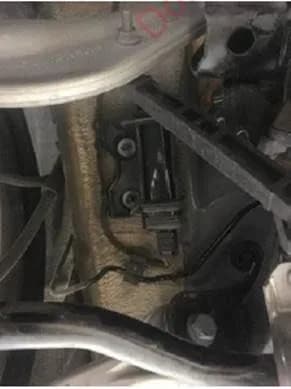
- Wiring Routing: It is crucial to ensure that the wiring is routed correctly at the new bracket and connector. The TSB emphasizes that the wiring must be routed straight into the connector housing to ensure a proper seal and prevent future moisture intrusion. Figures 1 and 2 in the TSB illustrate the installation locations for both the standard and new bracket configurations.
Required Parts and Tools
For this repair, the following parts are specified:
- Bracket: Part number 4E0 810 675 B (Quantity 01)
- TPMS Control Module: Refer to ETKA for the correct part number (Quantity 01)
- Fasteners, Bolts, Nuts, and Screws: As needed per the Repair Manual (Refer to ETKA/ELSA)
Warranty Information
This repair is covered under Audi's warranty for up to 48 months or 50,000 miles. For Certified Pre-Owned (CPO) vehicles, the claim type is G10, and owner verification is required. If the vehicle is outside of warranty coverage, this Technical Service Bulletin serves as informational guidance.
Warranty claims should be submitted using Service Number 4434 and Damage Code 0040. Specific labor operations include:
- Remove and install Tire Pressure Monitoring System control module (Labor Operation 4434 1900)
- Check Tire Pressure Monitoring System control module (Labor Operation 4434 0199)
- Repair Tire Pressure Monitoring System control module (Labor Operation 4434 4199)
Diagnostic time is covered under GFF 0150 0000. A road test after the service procedure is covered under 0121 0004, while a road test prior to service has no allowance.
All warranty claims must adhere to the Audi Warranty Policies and Procedures Manual and are subject to review or audit.
NHTSA ID: 10212110
Galeria
1 imagem
Frequently Asked Questions
- What does DTC U012700 mean for my Audi?
- DTC U012700 in your Audi indicates a 'Tire Pressure Monitoring Control Module - no communication' fault. This means the vehicle's data bus on board diagnostic interface (J533) is unable to communicate with the TPMS control module (J502).
- Why is my Audi A6 TPMS warning light on?
- If your Audi A6 TPMS warning light is on, it could be due to moisture entering the TPMS control module (J502) through its pressure equalization element. This moisture can cause the module to fail, leading to communication issues and triggering the warning light, as detailed in Audi TSB 44 22 93 2065474/3.
- What is the repair for the Audi TPMS control module issue?
- The repair involves checking the wiring and voltage supply to the TPMS control module (J502). If these are normal, the module and its associated bracket (part number 4E0 810 675 B) are replaced. Proper routing of the wiring is also critical to prevent future moisture intrusion.
- Is this TPMS repair covered under warranty?
- Yes, this repair is typically covered under Audi's new vehicle limited warranty for up to 48 months or 50,000 miles, whichever comes first. For Certified Pre-Owned (CPO) vehicles, specific warranty conditions apply. If your vehicle is outside of warranty, the TSB serves as an informational guide for the repair.
Outras revisões deste TSB
- 2022-2026 Audi e-tron GT ABS DTCs B2F0100 U012700U012700
- 2021-2023 Audi A6/A7 TPMS Warning Light DTC U012700U012700
- 2021-2023 Audi A6/A7 TPMS Light On DTC U012700U012700
- 2022-2024 Audi e-tron GT ABS Warning Light TSBU012700
- 2022-2023 Audi e-tron GT ABS/ESC Warning DTCs B2F0100 U012700U012700
- 2019-2022 Audi A6 / A7 TPMS Light On, DTC U012700U012700
- 2022 Audi e-tron DTCs B2F0100, U012700 in ABS ModuleU012700
Related Articles
2021-2024 Audi Gearbox P17EF00 Hydraulic Pump Adaptation
Audi Technical Service Bulletin 2074823/2 details a condition where the auxiliary hydraulic pump adaptation routine in the DL-382 gearbox control unit may not start automatically, logging DTC P17EF00. This TSB applies to various 2021-2024 Audi A4, A5, A6, A7, and Q5 models and requires a software…
2017-2025 Audi Models Droning/Vibrations TSB 2059057/13
Audi has released Technical Service Bulletin 2059057/13 to address customer complaints of droning, humming, and vibrations in various 2017-2025 Audi models equipped with Quattro Ultra. This TSB outlines a specific ATF drain and fill procedure for the all-wheel drive coupling 1.
2021-2025 Audi Starter/Generator Belt Noise P2BA300
Audi has released Technical Service Bulletin 2061461/13 to address grinding, squeaking, or tweeting noises from the engine compartment, or an "Electrical system: Malfunction!" warning, potentially linked to Diagnostic Trouble Code P2BA300 in 2021-2025 A4, A5, A6, and Q5 models.
2022-2023 Audi A6 / A7 Abrupt Shifting TSB
Audi has issued Technical Service Bulletin (TSB) 37 24 26 2075033/1 to address customer complaints of "rough" or "abrupt" shifting behavior in 2022-2023 Audi A6, A6 allroad, and A7 vehicles. This issue is caused by a software problem in the Transmission Electronics control module (J217) and is…
2021-2023 Audi Gearbox Malfunction DTC P17F900
Audi has released Technical Service Bulletin 2064312/6 to address a 'Gearbox Malfunction' warning and DTC P17F900 in 2021-2023 A4, A5, A6, A7, and Q5 models with DL382 transmissions. The issue often stems from loose bolts on the high-pressure filter cover, leading to a loss of drive.
Leave a comment
Comments are moderated and may take a moment to appear. Only your first name and the initial of your last name are shown publicly.
Comments
Be the first to comment.