Honda Racing Prepares for New IndyCar Tracks with Simulator
Honda Racing Corporation USA (HRC US) is utilizing its advanced Driver-In-The-Loop (DIL) simulator to prepare for the 2026 NTT INDYCAR SERIES season. This technology allows Honda-powered teams to develop strategies and car setups for new street circuits that lack historical data, such as the…

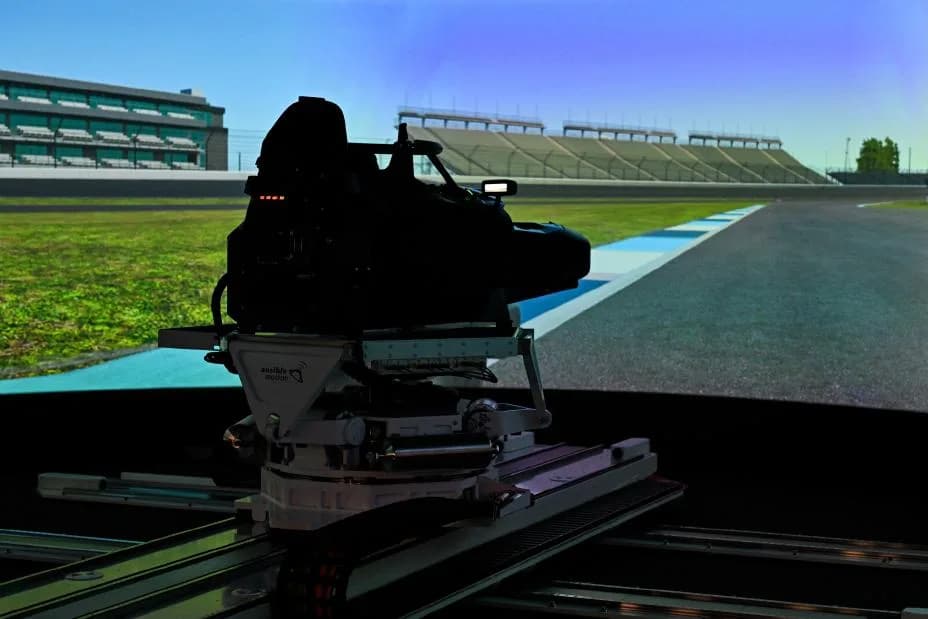
Honda Racing Corporation USA (HRC US) is utilizing its advanced Driver-In-The-Loop (DIL) simulator to prepare for the 2026 NTT INDYCAR SERIES season, which features several new temporary street circuits. This technology allows Honda-powered teams to develop strategies and car setups for tracks that have no prior racing history, such as the upcoming Markham event in Ontario. The simulator aims to bridge the gap between unknown venues and race-day readiness, providing a crucial advantage for the Honda IndyCar simulator program.
Simulating Uncharted Territories
The 2026 NTT INDYCAR SERIES calendar includes three new temporary street courses: Arlington, Washington D.C., and Markham. The Markham circuit, a 2.19-mile, 12-turn layout, presents a particular challenge due to the complete absence of historical data or previous racing activity. Engineers must prepare for these venues without any existing track information or tire wear patterns.
HRC US addresses this by employing its multi-million-dollar DIL simulator. This system is designed to replicate race conditions accurately, integrating a physical IndyCar cockpit with 360-degree yaw rotation and a 270-degree visual field. It incorporates real Honda aerodynamic data, laser-scanned track layouts, and proprietary tire models developed by HRC.
To ensure the accuracy of the virtual environment, HRC US uses high-fidelity laser scanning technology and rFpro software. This combination creates "digital twins" of real-world race circuits, allowing for detailed virtual testing that closely mirrors physical race car behavior.
Overcoming Track Data Challenges
The process of creating a digital track model begins once IndyCar confirms a circuit layout, often in collaboration with track designer Tony Cotman. HRC provides basic architectural drawings to rFactor, which then scans the actual streets of the circuit. This raw scan data is then processed by HRC.
Transforming raw scan data into a usable racetrack model requires extensive mathematical filtering. According to Davide Tarsitano, Head of Vehicle Performance at HRC US, the initial scans are "clouds of points" that need to be converted into a smooth, drivable surface. This filtering process removes noise and corrects aggressive elevation steps that could impact vehicle models.
Even familiar street circuits evolve due to factors like human error in barrier placement. New tracks like Markham face additional variables, such as asphalt changes caused by harsh winters and subsequent city repairs. Predicting how Firestone tires will interact with these variable surfaces is a critical, proprietary aspect of HRC's preparation, a key function of the Honda IndyCar simulator.
Linus Lundqvist, the 2024 INDYCAR Rookie of the Year, joined HRC in mid-June as the official HRC Driver-In-The-Loop Simulator Development Driver. His role involves logging numerous virtual laps to refine the simulation tools and enhance prediction capabilities for new tracks.
Strategic Race Weekend Preparation
While engineers work for months on track modeling, race teams and drivers engage with the simulator in a focused two-week period before an event. Initial offline simulations help determine fundamental parameters, such as calculating maximum speeds (VMAX) to assist teams in selecting initial gear ratios.
Once the DIL model is operational, the simulator becomes a central hub for driver preparation. Drivers prioritize simulator time as close to the race weekend as possible to maintain muscle memory and familiarity with the virtual track before arriving at the actual venue.
This detailed preparation is part of Honda's strategy to maintain its competitive edge against rivals like Chevrolet on temporary street circuits. Davide Tarsitano emphasizes the pride his team takes in providing teams with the most accurate tools and predictions possible, acknowledging the extensive data analysis and assessments involved.
By investing in and refining its Driver-In-The-Loop simulator technology, Honda Racing Corporation USA aims to minimize unknowns and maximize performance on new and challenging NTT INDYCAR SERIES street circuits. This approach allows teams to arrive at events like Markham with a pre-tuned understanding of the track, potentially offering a competitive advantage from the start of the race weekend, thanks to the Honda IndyCar simulator.
Gallery
4 images
Leave a comment
Comments are moderated and may take a moment to appear. Only your first name and the initial of your last name are shown publicly.
Comments
Be the first to comment.