2023-2024 Jeep Compass / Pacifica / Durango ACC Sensor Misalignment
This Mopar Warranty Operations Newsletter, Volume 10, Issue 10, details several important updates for 2023-2024 vehicles, including diagnostics for Intelligent Battery Sensors (IBS), PROXI alignment procedures for Occupant Restraint Controllers (ORC), and a common issue with Driver Assistance…
 Ahmet Topcu2024 Jeep Compass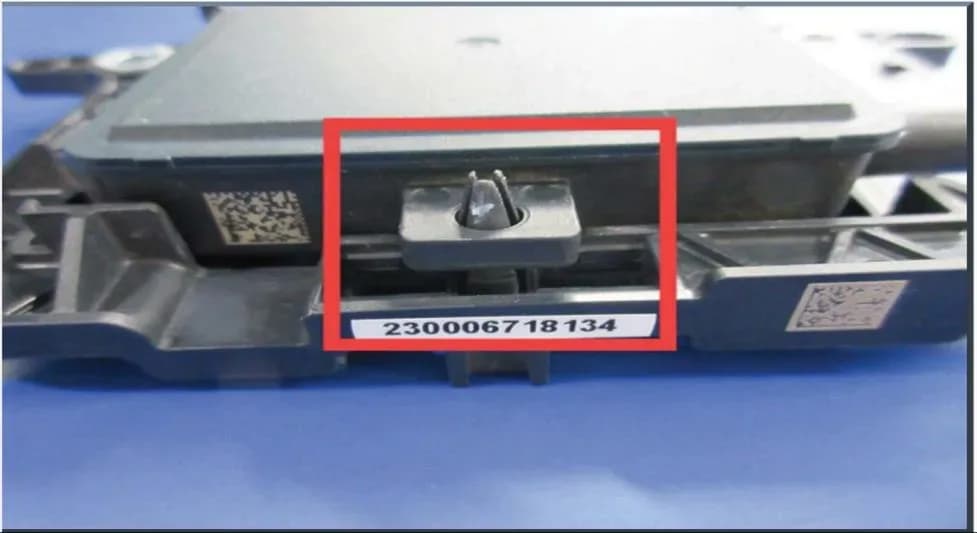
Si applica anche a
- Jeep Compass
- 2023
- Jeep Grand Cherokee
- 2023–2024
- Dodge Durango
- 2023–2024
This Mopar Warranty Operations Newsletter, Volume 10, Issue 10, provides critical updates for technicians and owners regarding various service procedures, diagnostics, and warranty policies for 2023-2024 models. Key topics include troubleshooting the Intelligent Battery Sensor (IBS), addressing Driver Assistance System Module sensor misalignment, and performing PROXI alignment for the Occupant Restraint Controller (ORC).
Driver Assistance System Module Sensor Misalignment (DTC C14A4)
Owners of 2023-2024 Chrysler Pacifica (RU), Jeep Compass (MP), and Dodge Durango (WD) vehicles may encounter issues with their Driver Assistance System Module (DASM) sensor, leading to specific warning messages and diagnostic trouble codes. This section specifically addresses the 2024 Jeep Compass C14A4 misalignment issue.
Symptoms and Warning Messages
When the ACC module sensor is misaligned, obstructed, or damaged, the Electronic Vehicle Information Center (EVIC) may display the message "ACC/FCW Unavailable Service Required". This condition also results in the Adaptive Cruise Control (ACC) system being disabled. Other possible messages include:
- "Forward Collision Warning (FCW) unavailable service required"
- "Adaptive Cruise Control (ACC) unavailable service required"
- "adaptive cruise control system disabled"
- "crash avoidance lights on"
- "ACC module housing not fully seated or mounted securely report related incident"
- "ACC module securing clips broken or bent report related incident"
- "loss of advanced driver assist system (ADAS) features"
Fault Codes / DTCs
The primary diagnostic trouble code associated with this issue is C14A4, indicating an incorrect mounting position of the radar sensor.
Diagnosis and Trigger Conditions
The newsletter emphasizes that mud, dirt, ice, or road debris on the sensor can compromise its functionality. A secure and unmodified ACC Module mounting location is crucial for proper operation. Modifications to the vehicle suspension or aftermarket grills that block the ACC Sensor can also cause malfunctions. Physical inspection is required, as damage to the rear bumper can pull the mounting bracket and valence out of position, leading to the 2024 Jeep Compass C14A4 misalignment.
Repair Procedure Summary
To address the 2024 Jeep Compass C14A4 misalignment, technicians should perform a thorough inspection of the ACC module, bracket, mounting location, and alignment. This involves verifying:
- The sensor is not damaged, obscured, or out of alignment.
- The module housing is fully seated and secure.
- Securing clips are not broken or missing.
- The mounting bracket is not bent.
- The DASM Bracket Bolts are torqued to specification (4+-1 Nm).
Important Warnings
- The Driver Assistance System Module (DASM/ACC) should not be replaced if the DTC C14A4 is in a “Stored” status and there is no physical damage to the part, including the bracket, cover, and mounting clips. This is considered normal operation that may require inspection and re-calibration. If C14A4 is still present after inspection, perform the ACC module programming procedure, erase DTCs, and recheck for the DTC.
Intelligent Battery Sensor (IBS) Diagnostics
Many returned 12V Intelligent Battery Sensors (IBS) are found to be functional upon examination. This section provides guidance to avoid unnecessary IBS part replacements for all 2023 and 2024 models.
Symptoms
The primary symptom is an inaccurate State of Charge (SOC) reading from the IBS or the IBS reporting a high SOC error.
Fault Codes / DTCs
Active IBS DTCs that may be present include U113E and B2193.
Diagnosis and Trigger Conditions
Possible reasons for inaccurate SOC include:
- New battery installation.
- IBS 2-way connection unplugged.
- IBS disconnected from battery negative post.
- Battery B+ disconnected.
- Battery placed on charger while SOC is inaccurate.
- Drained battery exhibiting voltage below 9V.
- 4 consecutive hours of learn time not reached for IBS SOC adaptation (required for all scenarios listed above).
Possible reasons for IBS reporting high SOC error under a learned state include:
- Long periods of charge traffic through the IBS, increasing estimation error (drift error).
- Blind charging of the battery (charge traffic bypassing IBS shunt and current sensing hardware).
- Aging of the battery.
- Batteries taking less charge as their SOC increases, requiring a charger for at least 12 hours for a full charge.
- Battery previously drained for a prolonged period, potentially causing the IBS to become stuck and fail to climb to full (depending on IBS software).
- Discrepancy between IBS and battery test tools due to different operating principles.
IBS Service Actions to Avoid
Technicians should avoid these actions to prevent misdiagnosis or unnecessary part replacement:
- Assuming IBS can instantly report accurate SOC.
- Self-judging SOC.
- Blind charging of the battery (IBS bypass).
- Replacing IBS due to U113E without LIN analysis or at least resetting the IBS (cycling the 2-way connector).
- Replacing IBS due to a new battery installed or battery charging.
- Servicing IBS without physically checking the IBS first.
- Replacing IBS without any active DTC.
- Replacing IBS without attempting to unplug and plug back the IBS.
- Failing to allow adequate learn time for SOC Estimation.
- Replacing IBS due to the Battery tell-light (charging system fault indicator).
Key Takeaways
- The majority of IBS units returned are found to be operating correctly.
- IBS SOC accuracy is within +/- 10% once the IBS has learned.
- IBS learning is needed for scenarios like new battery installation, IBS reset, power loss, or excessive charge traffic.
- To eliminate an active IBS DTC U113E or B2193, cycle the IBS 2-way connection to reset the sensor. Only replace the IBS if DTCs persist as active.
- Proper diagnosis of DTC U113E requires scope analysis with a LIN bus tool.
Occupant Restraint Controller (ORC) PROXI Alignment
For 2023-2024 Grand Cherokee (WL) vehicles requiring a PROXI alignment of the Occupant Restraint Controller (ORC), such as during module replacement or new module addition, an updated service procedure is provided.
Repair Procedure Summary
Section A (for specific ORC part numbers):
- Using a scan tool, select the
Galleria
8 immagini
Frequently Asked Questions
- What does the message 'ACC/FCW Unavailable Service Required' mean in my 2024 Jeep Compass?
- This message, often accompanied by DTC C14A4, indicates a potential misalignment or issue with your Driver Assistance System Module (DASM) sensor. It means your Adaptive Cruise Control (ACC) and Forward Collision Warning (FCW) systems are disabled. An inspection of the sensor's mounting and alignment is typically required.
- Why is my Intelligent Battery Sensor (IBS) giving inaccurate readings or errors?
- Inaccurate IBS readings or high SOC errors can be caused by several factors, including recent battery replacement, disconnected IBS wiring, low battery voltage, or insufficient 'learn time' for the sensor to adapt. DTCs U113E or B2193 may also be present. It's important to avoid unnecessary IBS replacement, as many returned sensors are found to be functional.
- What is a PROXI alignment for the Occupant Restraint Controller (ORC) in my 2023-2024 Grand Cherokee?
- A PROXI alignment is a procedure required for the ORC module, typically after module replacement or addition, to ensure it communicates correctly with the vehicle's systems. This process involves using a scan tool to initialize the ORC, perform the PROXI Configuration Alignment, and then lock the ORC and perform an ABS Initialization routine.
- What is the new 'LR4' message code for RSU claims?
- Effective October 31, 2024, the message code 'LR4 - The RSU set-up is incorrect, wrong LOP/Limit code.' will appear on rejected RSU claims if the claimed LOP(s) do not match the RSU database. Dealers must wait 24 hours and then resubmit the claim after correcting the LOP setup.
Related Articles
2024 Jeep Compass ACC Module Update TSB 08-161-26
This Technical Service Bulletin (TSB 08-161-26) addresses Malfunction Indicator Lamp (MIL) illumination and Diagnostic Trouble Code C14A4-00 in 2024 Jeep Compass vehicles equipped with Adaptive Cruise Control. The fix involves an ACC module software update.
2024 Jeep Compass ACC Module Update TSB
This technical service bulletin (TSB) addresses issues with the Adaptive Cruise Control (ACC) system in the 2024 Jeep Compass, including diagnostic trouble codes C14A4-00 and C0063-9A, and various warning messages. A software update for the ACC module is available to resolve these concerns.
2022-2025 Jeep Compass Front End Noise TSB
This Technical Service Bulletin (TSB) 19-002-26 addresses a 'front end noise when turning the steering wheel' in 2022-2025 Jeep Compass vehicles. The issue is linked to the tie rod ends, which may require inspection and replacement. This TSB is specifically for the South America market.
2024-2025 Jeep Compass P0115-00 ECT Sensor Malfunction
Jeep Technical Service Bulletin 08-115-26 (also RSU 26-049) details a potential malfunction of the Engine Coolant Temperature (ECT) sensor in 2024-2025 Jeep Compass models. This can lead to a Malfunction Indicator Lamp (MIL) illumination, DTC P0115-00, and an engine overheating warning.
2024-2025 Jeep Compass Park Brake Warning TSB
A manufacturer communication addresses the 'park brake light on' and 'service park brake' messages in 2024-2025 Jeep Compass vehicles, often accompanied by DTCs C10D0, C10ED, or C10CD. The issue is linked to a damaged wiring harness near the TCM bracket.
Leave a comment
Comments are moderated and may take a moment to appear. Only your first name and the initial of your last name are shown publicly.
Comments
Be the first to comment.