2021 Hyundai Tucson P132600 Engine Monitoring Logic Update
Hyundai has issued Service Campaign 966 to enhance the engine monitoring logic in the 2021 Hyundai Tucson and other models. This update improves detection of abnormal engine bearing noise, preventing severe engine damage. If detected, the Malfunction Indicator Lamp (MIL) will blink, and DTC…
 Sarah Mitchell2021 Hyundai Tucson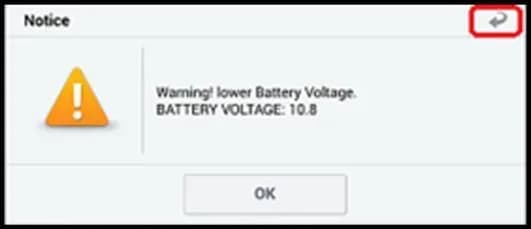
Hyundai has initiated Service Campaign 966, identified by Technical Service Bulletin (TSB) 24-01-068H, to enhance the engine monitoring logic in various vehicles, including the 2021 Hyundai Tucson. This crucial update aims to improve the detection of abnormal engine bearing noise before it can lead to severe engine damage. The campaign involves a software update to the Engine Control Module (ECM) to implement this enhanced monitoring system.
This TSB supersedes a previous bulletin, TSB 22-01-028H-1, to correct a discrepancy in the ROM ID information for certain 2010 Santa Fe models. The updated software is designed to provide earlier warnings and protection for the engine, addressing a significant concern for vehicle longevity and reliability.
Why This Update Is Important
The primary goal of this service campaign is to prevent potentially severe engine damage by improving the vehicle's ability to detect abnormal engine bearing noise. Engine bearings are critical components, and their failure can lead to catastrophic engine issues. By enhancing the knock sensor software, Hyundai aims to provide drivers with an early warning, allowing for timely diagnosis and repair, thereby mitigating the risk of costly and extensive engine repairs.
Symptoms of the P132600 Engine Monitoring Logic Issue
If the enhanced knock sensor software detects abnormal engine bearing noise, specific indicators will alert the driver and technicians. The most noticeable symptom for owners of a 2021 Hyundai Tucson or other affected models will be that the "Malfunction Indicator Lamp (MIL) will blink continuously" on the dashboard. Concurrently, the vehicle "will be placed in Engine Protection Mode."
While in Engine Protection Mode, the vehicle's performance will be significantly altered. Owners will experience that the vehicle "can continue to be operated for a limited time in Engine Protection Mode, but it will accelerate slower and have a reduced maximum speed." Furthermore, "Engine RPMs will be limited to approximately 1800-2000 RPM." This mode is designed to allow the driver to safely reach a Hyundai dealer for service while minimizing further engine damage. In addition to these visible and experiential symptoms, Diagnostic Trouble Code (DTC) P132600 will be recorded in the ECM.
Fault Code P132600
The presence of DTC P132600 is a direct indicator that the engine monitoring logic has detected a potential issue with abnormal engine bearing noise. This code is stored in the Engine Control Module (ECM) when the knock sensor software identifies conditions indicative of bearing wear or damage. For technicians, this DTC provides a clear starting point for diagnosis, confirming the need for further inspection and the application of the ECM software update to address the underlying issue and prevent future occurrences.
Important Warnings for Owners
Owners should be aware of several critical points regarding this service campaign. If you experience the symptoms described, such as the MIL blinking and reduced engine performance, it is imperative to have your vehicle inspected by an authorized Hyundai dealer as soon as possible. Although the vehicle can be driven in Engine Protection Mode, its capabilities are significantly limited, and continued operation without addressing the issue could lead to more severe problems.
For dealers, the TSB explicitly states: "Dealers must perform this Service Campaign whenever an affected vehicle is in the shop for any maintenance or repair." This ensures that all eligible vehicles receive the necessary software update. During the update process, a specific warning is highlighted: "If voltage is below 12 volts as per the GDS warning, then select Back and run the engine at least 15 minutes to reach an adequate battery state of charge to prevent ECU Update failure. Cycle the ignition OFF/ON before retrying ECU update again." This emphasizes the importance of proper battery voltage for a successful ECM update.
The Repair: Engine Control Module (ECM) Software Update
The repair for the Hyundai Tucson P132600 issue involves an Engine Control Module (ECM) software upgrade. This update enhances the knock sensor software, improving its ability to detect abnormal engine bearing noise. The procedure is performed by a Hyundai dealer using specialized diagnostic equipment, such as the GDS (Global Diagnostic System).
The process requires careful attention to detail. Technicians are instructed to initially perform all GDS ECU Updates in Auto Mode. If the update fails in Auto Mode, they must then switch to Manual Mode to recover and complete the update. A crucial step after the ECU upgrade process shows 100% completion is to "cycle the ignition key to OFF for at least 30 seconds to reset the control unit." This step is vital for establishing normal powertrain communication and preventing system errors. After the update, any existing ECM DTCs must be cleared, and the engine should be started to confirm proper vehicle operation.
This software update modifies the ECM's programming, updating its ROM ID to a newer version. The TSB provides extensive tables detailing the original and new ECM ROM IDs, along with corresponding ECU part numbers (e.g., 39104-2G341, 39110-2BBH3, 39106-2G800, 39105-2G910, 39137-2EJA0, 39135-2EMA0, 39137-2ELC0, 39137-2EGB0, 39161-2EEB0, 39133-2ETA0, 39131-2EPE0) for various models and engine configurations. These tables guide technicians in selecting the correct software for each specific vehicle.
Owner Action
If you own a 2021 Hyundai Tucson or another Hyundai model potentially affected by this campaign, and you experience symptoms like a blinking Malfunction Indicator Lamp (MIL) or reduced engine performance, you should contact your authorized Hyundai dealer. The ECM software update under Service Campaign 966 will be performed free of charge. Even if you haven't experienced symptoms, it is advisable to have your vehicle checked during your next service visit to ensure the latest engine monitoring logic is installed.
Source: NHTSA ID 11006829
Frequently Asked Questions
- What is Hyundai Service Campaign 966?
- Hyundai Service Campaign 966 is a program to update the Engine Control Module (ECM) software to enhance the detection of abnormal engine bearing noise. This update helps prevent severe engine damage by providing earlier warnings.
- What are the symptoms if my Hyundai Tucson has the P132600 issue?
- If your 2021 Hyundai Tucson experiences this issue, the Malfunction Indicator Lamp (MIL) will blink continuously, and the vehicle will enter Engine Protection Mode. You may notice slower acceleration, a reduced maximum speed, and engine RPMs limited to approximately 1800-2000 RPM. Diagnostic Trouble Code (DTC) P132600 will also be stored in the ECM.
- How is the P132600 engine monitoring logic issue fixed?
- The fix involves an Engine Control Module (ECM) software update performed by an authorized Hyundai dealer. This update enhances the knock sensor software. After the update, the ignition key must be cycled to OFF for at least 30 seconds to reset the control unit.
- Is there a cost for the Service Campaign 966 software update?
- No, the ECM software update under Service Campaign 966 will be performed free of charge by an authorized Hyundai dealer.
- Does this campaign affect only the 2021 Hyundai Tucson?
- While the 2021 Hyundai Tucson is a primary vehicle linked to this document, Service Campaign 966 applies to a broader range of Hyundai models and engine types, including certain Santa Fe, Tucson, Sonata Hybrid, Veloster, and Elantra models across various model years.
Altre revisioni di questo TSB
Related Articles
2021 Hyundai Tucson Health Check: Engine & Paint TSBs
For the 2021 Hyundai Tucson, there are no reported recalls, owner complaints, or federal investigations. However, owners should be aware of several manufacturer service bulletins (TSBs) addressing engine emissions, potential engine bearing issues, white paint peeling, and an anti-theft ignition…
2021 Hyundai Tucson Emissions Logic Update (9C2)
Hyundai Service Campaign 9C2 addresses elevated engine-out emissions in certain 2021 Hyundai Tucson models by updating the Engine Control Module (ECM) software. This update helps ensure compliance with emissions standards and prevents failed inspections.
2015 Hyundai Sonata GDS Event 1383 Campaign Suspended
Hyundai Motor America has temporarily suspended Service Campaign 9C2, related to software GDS event #1383, for the 2015 Hyundai Sonata (LFA) 2.4L. Vehicles will not show this campaign as open in WebDCS during the suspension period.
2021 Hyundai Tucson GDS Event #1383 Engine Investigation
Hyundai is actively investigating a software-related engine issue, identified as GDS event #1383. While primarily concerning 2015 Sonata 2.4L vehicles, this manufacturer communication is linked by NHTSA to the 2021 Hyundai Tucson, indicating an ongoing review for a resolution.
2010-2021 Hyundai Engine Bearing TSB 26-01-033H
Hyundai Technical Service Bulletin (TSB) 26-01-033H is a critical reference for Op codes and part numbers under Service Campaign T6G. This campaign addresses engine bearing inspection and replacement for various Hyundai models from 2010-2021, often triggered by DTC P1326 and "Abnormal Engine Noise."
Leave a comment
Comments are moderated and may take a moment to appear. Only your first name and the initial of your last name are shown publicly.
Comments
Be the first to comment.