2021 Hyundai Engine Bearing Clearance Test TSB
This Hyundai Technical Service Bulletin (TSB 21-EM-004H) details the essential procedure for testing engine connecting rod bearing clearance in various 2021 Hyundai models. It covers the use of specialized tools and critical inspection steps.
 Sarah Mitchell2021 Hyundai Tucson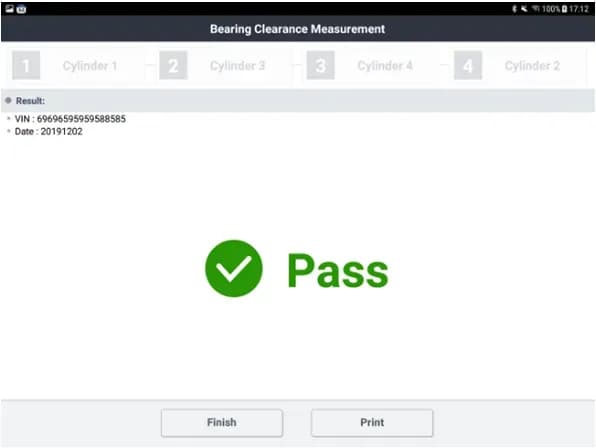
Si applica anche a
- Hyundai Accent
- 2021
- Hyundai Elantra
- 2021
- Hyundai Kona
- 2021
- Hyundai Palisade
- 2021
- Hyundai Santa Fe
- 2021
- Hyundai Sonata
- 2021
- Hyundai Veloster
- 2021
- Hyundai Venue
- 2021
▸ Mostra altri 2▾ Mostra meno
Why this test is important
Hyundai TSB 21-EM-004H outlines the service procedure for engine connecting rod bearing clearance testing. This inspection is crucial for assessing the internal health of the engine, specifically the connecting rod bearings. Proper bearing clearance is vital for engine longevity and performance, as incorrect clearance can lead to excessive wear, noise, and potentially catastrophic engine failure. Performing this test fulfills specific inspection requirements to determine if further steps, such as engine repair or replacement, are necessary.
Important Warnings and Advisories
This TSB contains several critical warnings and advisories for technicians performing the Hyundai engine bearing clearance test:
- Calibration Check: Do not proceed if the AP/VC air pressure readings are out of specification range during calibration. Recalibration of the Bearing Clearance Tester, as outlined in TSB 20-GI-009H, is required if readings are incorrect.
- Shop Air Supply: Ensure shop air consistently provides at least 50 PSI of air pressure. Do not use a portable air compressor for bearing clearance testing, and verify that the shop air water separator is functioning correctly.
- Tool Issues: For software-related issues with the Bearing Clearance Tester, contact GITA at 888-437-0308. For hardware-related issues, contact Techline at 800-325-6604.
- Test Hose Connection: During the initial spark plug rod insertion, DO NOT connect the test air hose to the clearance gauge.
- Clearance Gauge Tip: Do not continue if the ball point tip (E) of the clearance gauge SST is loose or missing. If loose, apply Blue Loctite (or equivalent) to the tip thread and securely retighten.
- Bluetooth Pairing: If multiple devices appear during Bluetooth pairing with the GDS, move away from other devices to ensure correct pairing.
- Crankshaft Rotation: Use the Crank Rotator Tool or a long-handled wrench for slow and precise crankshaft movement. Ensure the test hose is disconnected from the clearance gauge when finding TDC piston depth.
- Engine Rotation Speed: The engine must be rotated SLOWLY using the crank rotator SST. Abrupt or erratic movements can cause improper TDC setup and test errors.
- Stopping Rotation: Do NOT stop rotating the engine before reaching MAX TDC, especially during the initial rotation where the value may suddenly change from 0mm. Nudge the engine slowly to confirm the piston is at MAX TDC without value change.
- TDC Testing Point: The testing point is slightly after Top Dead Center (ATDC), specifically when the piston has moved down 0.03mm from its highest position.
- Crank Rotator SST: Do not turn the crank rotator SST until specifically instructed by the GDS.
- Measurement Value Issues: If the bearing measurement value does not change when the AP/VC is switched, or the message "Unable to measure" appears on the GDS, rotate the crankshaft further as exhaust valves might be open. Reset the crankshaft to TDC (Step 11).
- Bearing Tool SST Power Check: If the solenoids do not "click" when switching between AP/VC, check the power cable or power supply.
- Engine Replacement Approval: If the test result is "No Pass" and an engine replacement is required, Prior Approval (PA) is necessary. Submit PA and refer to the applicable Dealer Best Practices guide for engine approval requirements.
Required Tools and Parts
Performing the Hyundai engine bearing clearance test requires specific Special Service Tools (SSTs):
- BEARING CLEARANCE TESTER SET (BEARING TOOL) (Part Number: KQ231-2T110QQH)
- Includes: Test Hose, Main Hose, Power Supply Cable, Spark Plug Rods, Crank Rotator Tool, Clearance Gauge, and Test Hose (air hose for clearance gauge).
- BEARING CLEARANCE TESTER SET (A) BODY (Part Number: KQ231-2T100QQH)
- SPARK PLUG ROD (M12) for GDI and Theta II MPI Hybrid engines (Part Number: KQ231-2T101QQH) - features a smooth upper body with no grooves.
- SPARK PLUG ROD (M14) for other MPI engines (Part Number: KQ231-2T107QQH) - features two machined identification grooves on the upper body.
- CRANK ROTATOR TOOL (Part Number: KQ231-2T102QQH)
- CLEARANCE GAUGE (Part Number: KQ231-2T103QQH)
- POWER SUPPLY CABLE (Part Number: KQ231-2T104QQH)
- TEST HOSE (AIR HOSE FOR CLEARANCE GAUGE) (Part Number: KQ231-2T105QQH)
- Global Diagnostic System (GDS): Required for vehicle communication, special inspection function, and recording test data.
Bearing Clearance Test Procedure Summary
The Hyundai engine bearing clearance test involves a multi-step process to accurately measure connecting rod bearing clearance:
- Tool Setup: Connect the main hose (shop air supply) and test hose to the bearing tool. Ensure the shop air supply meets the minimum 50 PSI requirement and AP/VC pressures are within 0.1-0.11MPa and -73 to -83Kpa, respectively. Document gauge readings and VIN using STUI in the GDS.
- Engine Preparation: Remove the engine cover and the four ignition coils (tightening torque: 9.8-11.8 N·m). Then, remove the four spark plugs (tightening torque: 14.7-24.5 N·m).
- Spark Plug Rod Insertion: Insert the correct spark plug rod SST (M12 for GDI/Theta II MPI Hybrid, M14 for other MPI engines) into Cylinder #1's spark plug hole and hand-tighten. Insert the clearance gauge SST into the spark plug rod and tighten with the thumb screw. Do not connect the test air hose at this stage.
- GDS Connection: Connect the GDS to the vehicle and turn the ignition 'ON'. Navigate to the 'More' tab on the GDS home screen and select 'Special Inspection'. Enter vehicle information as prompted.
- Clearance Gauge Pairing: Connect the GDS to the clearance gauge SST via Bluetooth. Turn on the gauge, press 'Set' and 'Mode' simultaneously for 4 seconds until "reset" appears. Select the gauge from the GDS device list, refreshing if needed. Ensure the ball point tip of the clearance gauge is securely installed.
- Ignition Off: Turn the ignition 'OFF' and remove the VCI.
- Crankshaft Rotation and TDC Finding: Follow GDS instructions. Use the Crank Rotator Tool or a long-handled wrench to slowly and precisely move the crankshaft. Ensure the test hose is disconnected from the clearance gauge. Rotate the crankshaft slowly to find TDC (Top Dead Center) compression, monitoring the piston height value on the GDS or clearance gauge. The ideal testing point is slightly ATDC, 0.03mm down from MAX piston height. Do not turn the crank rotator SST until instructed.
- Bearing Tool Power Check: Connect the SST power cables to a fully charged 12V battery or external 13.8V AC/DC power supply. Turn the bearing tool SST power switch 'ON'. Toggle the AP/VC transfer switch; solenoids should "click". If not, check the power supply.
- Cylinder Testing: Locate the AP/VC switch on the bearing tool SST and set it to 'AP'. Follow GDS instructions to test each cylinder according to the engine firing order (e.g., #1→#3→#4→#2). When instructed by the GDS, change the AP/VC switch to the 'VC' position.
- Final Steps: Continue following GDS instructions to complete the inspection. Check the engine oil level and select it in the GDS. If the test result is "Pass", save a screenshot, reinstall components, check for DTCs, and ensure no warning lights are present. If the result is "No Pass", save a screenshot, submit a Prior Approval (PA) for engine replacement, follow the remainder of the separate reference TSB, check for DTCs, and perform appropriate diagnostic service.
What to do if your vehicle is affected
If you own a 2021 Hyundai model and are experiencing engine-related concerns, or if your vehicle is due for a specific engine inspection, it is recommended to contact your authorized Hyundai dealer. This TSB 21-EM-004H outlines a detailed diagnostic procedure that requires specialized tools and technical expertise. The dealer will be able to perform the Hyundai engine bearing clearance test and determine the next appropriate steps, which may include further diagnosis, repair, or engine replacement if the test result is "No Pass".
NHTSA ID: 10190044
Galleria
20 immagini
Frequently Asked Questions
- What is the purpose of Hyundai TSB 21-EM-004H?
- Hyundai TSB 21-EM-004H provides the detailed service procedure for testing the engine connecting rod bearing clearance. This test is a required inspection step to determine if further engine repair or replacement is necessary for affected 2021 Hyundai models.
- What tools are required to perform the engine bearing clearance test?
- The test requires several specialized tools, including the BEARING CLEARANCE TESTER SET (KQ231-2T110QQH), various Spark Plug Rods (M12 or M14), a Crank Rotator Tool (KQ231-2T102QQH), a Clearance Gauge (KQ231-2T103QQH), and the Global Diagnostic System (GDS).
- What should I do if the test result shows "No Pass"?
- If the engine bearing clearance test results in a "No Pass" indication, the TSB instructs technicians to save a screenshot of the results, submit a Prior Approval (PA) for engine replacement, and follow additional guidelines for engine approval. This indicates a significant issue requiring further action.
- Are there any specific warnings for technicians performing this test?
- Yes, the TSB includes several critical warnings, such as ensuring proper shop air pressure, not using portable air compressors, rotating the crankshaft slowly and precisely, and ensuring the test hose is disconnected during specific steps. Technicians are also warned about the "Unable to measure" message on the GDS.
- Which Hyundai models are covered by TSB 21-EM-004H?
- This TSB applies to various 2021 Hyundai models, including the Tucson, Santa Fe, Elantra, Palisade, Veloster, Kona, Accent, Venue, and Sonata, as indicated by separate applicable TSBs.
Related Articles
2021 Hyundai Tucson Health Check: Engine & Paint TSBs
For the 2021 Hyundai Tucson, there are no reported recalls, owner complaints, or federal investigations. However, owners should be aware of several manufacturer service bulletins (TSBs) addressing engine emissions, potential engine bearing issues, white paint peeling, and an anti-theft ignition…
2021 Hyundai Tucson Emissions Logic Update (9C2)
Hyundai Service Campaign 9C2 addresses elevated engine-out emissions in certain 2021 Hyundai Tucson models by updating the Engine Control Module (ECM) software. This update helps ensure compliance with emissions standards and prevents failed inspections.
2015 Hyundai Sonata GDS Event 1383 Campaign Suspended
Hyundai Motor America has temporarily suspended Service Campaign 9C2, related to software GDS event #1383, for the 2015 Hyundai Sonata (LFA) 2.4L. Vehicles will not show this campaign as open in WebDCS during the suspension period.
2021 Hyundai Tucson GDS Event #1383 Engine Investigation
Hyundai is actively investigating a software-related engine issue, identified as GDS event #1383. While primarily concerning 2015 Sonata 2.4L vehicles, this manufacturer communication is linked by NHTSA to the 2021 Hyundai Tucson, indicating an ongoing review for a resolution.
2010-2021 Hyundai Engine Bearing TSB 26-01-033H
Hyundai Technical Service Bulletin (TSB) 26-01-033H is a critical reference for Op codes and part numbers under Service Campaign T6G. This campaign addresses engine bearing inspection and replacement for various Hyundai models from 2010-2021, often triggered by DTC P1326 and "Abnormal Engine Noise."
Leave a comment
Comments are moderated and may take a moment to appear. Only your first name and the initial of your last name are shown publicly.
Comments
Be the first to comment.