2024 BMW X5, X7, X6 Battery Replacement Service Action
BMW has issued Service Information Bulletin SIB 61 22 24 to address premature 12V and 48V battery failures in certain 2024 X5, X7, X6, 430i, and 330i models. This service action aims to replace affected batteries due to manufacturing defects and details the crucial battery recycling process.
 David Chen2024 BMW X5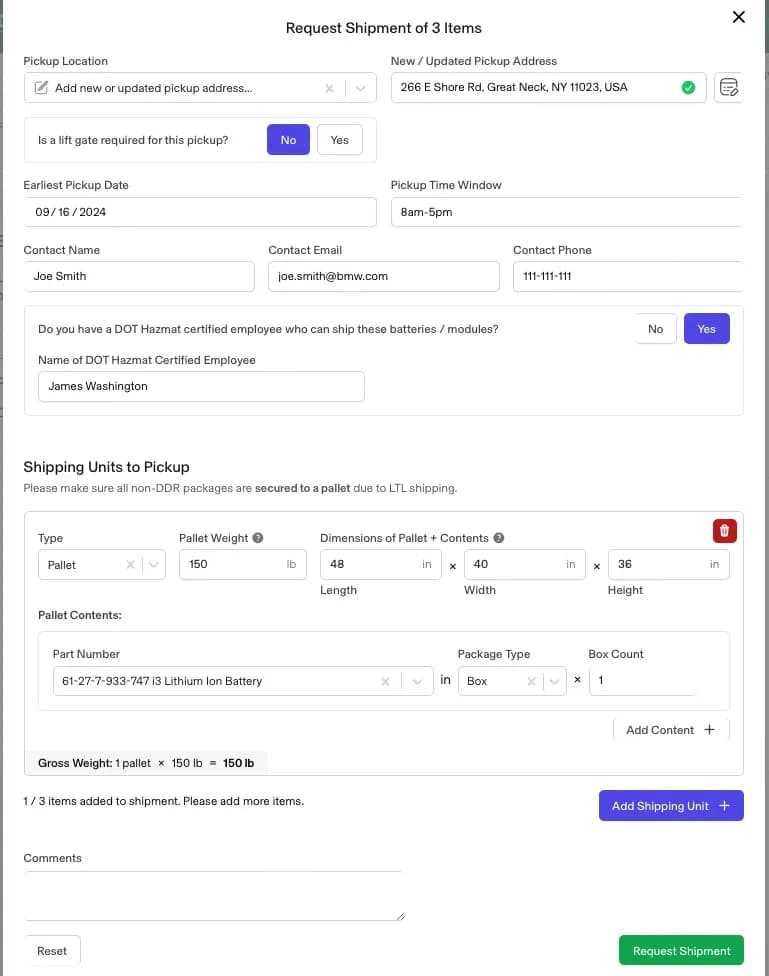
Si applica anche a
- BMW 330i
- 2024
- BMW 430i
- 2024
- BMW X6
- 2024
- BMW X7
- 2024
BMW has released Service Information Bulletin (SIB) SIB 61 22 24 (Revision 1) to address a manufacturing defect affecting the 12V and 48V batteries in a limited number of vehicles. This bulletin replaces the previous SI B61 22 24 dated September 2024. The updated bulletin includes new parts information and specifically mentions the addition of the 48-V Battery, Gen (1.5). This service action aims to prevent premature battery failure in affected vehicles, including the 2024 BMW X5, X7, X6, 430i, and 330i models.
Why This Matters
A limited number of 12-volt and 48-volt vehicle batteries may have sustained damage during the manufacturing process. This damage can lead to premature battery failure, potentially impacting vehicle operation and reliability. The root cause has been identified as preliminary battery cell damage occurring during production. This repair is designated as "THIS REPAIR IS MOBILE FRIENDLY."
What's Being Replaced
Depending on the specific vehicle equipment, the service action involves replacing either the 48V battery, the 12V auxiliary battery, or the 12V dual storage system (DSS) battery. This 2024 BMW X5 battery replacement and for other affected models is crucial to resolve the manufacturing defect.
Affected vehicles include those produced between January 25, 2024, and May 8, 2024, across various models and series:
- F96: X6 M Sports Activity Coupe
- G05: X5 Sports Activity Vehicle
- G07: X7 Sports Activity Vehicle
- G20: 3 Series Sedan
- G22: 4 Series Coupe
- G23: 4 Series Convertible
Vehicles requiring this campaign will be marked as "Open" in BMW's internal systems (AIR, AWP, Campaign Summary, or Warranty Vehicle Inquiry). Owners can check their dealer inventory in Inventory Campaign Details (ICD) under ROSS.
Repair Procedure Summary
The repair procedure for the 2024 BMW X5 battery replacement and other models varies based on the vehicle's battery system and option codes:
- For affected vehicles produced with option code 1CE (48V Mild Hybrid system, also known as AIR = 01CE Energy recovery system): The 48V battery will be replaced according to repair instructions REP 61 21 007, titled "Replacing 48-V battery - with registering battery replacement - 61 21 007 | REP-REP-P-6121007”.
- For affected F96, G05, and G07 vehicles equipped with a 12V Li-ion Auxiliary battery: The auxiliary battery will be replaced following repair instructions REP 61 21 086, titled "Replacing 12-V lithium-ion auxiliary battery - registering with battery replacement - 61 21 086 | REP-REP-P-6121086".
- For affected G2X vehicles (G20, G22, G23) equipped with a 12V Li-ion Dual Storage System (DSS) battery: The DSS battery will be replaced as per repair instructions REP 61 21 004, titled “Replacing the 12V dual storage system - registering with battery change - 61 21 004 | REP-REP-P-6121004”.
After battery replacement, it is essential to always update the software on newly installed 48V vehicle batteries and perform battery registrations following diagnosis and installation.
Important Warnings and Notes for Technicians and Owners
BMW emphasizes strict adherence to specific guidelines during the battery replacement process to prevent further damage and ensure safety. Technicians must be aware that in most cases, "loose, corroded or improperly torqued threaded connections lead to component damage." The following steps must be followed:
- Repair Instructions: When renewing any battery, the procedures in the repair instructions must be followed.
- Terminal Handling: "Do not use force when disconnecting terminal covers from the battery." Also, "Do not pull on the ground cables" and "Do not place any tools under the terminal clip to lever (pry) off the terminal cover."
- Torque Specifications: Use a torque wrench and set tightening torque in accordance with repair instructions. "Screws or nuts of the threaded connections must always be tightened to the specified torque." If possible, have a second person check the torque.
- Battery Sizing: Use the battery size (capacity) installed standard upon battery replacement.
- Fault Codes: Delete fault code entries associated with battery replacement.
- Contact Surfaces: Clean contact surfaces and have them checked by a second technician.
- Software Updates: Always update Software on newly installed 48 V vehicle batteries.
- Battery Registration: Perform Battery registrations after diagnosis and after a new battery is installed.
- Critical Warning: "Follow repair instructions and ensure all battery cables are fastened with the correct nut at the specified torque."
- 48V Battery Electronics: "Damage to the 48 V Battery electronics can occur if it is disconnected from the on-board electrical system while active! Only activate the 48 V electrical system when the 48 V electrical system is fully installed (connected)."
- Programming: ISTA (Integrated Service Technical Application) will automatically reprogram and code all programmable control modules that do not have the latest software. Always connect a BMW-approved battery charger/power supply (SI B04 23 10) when performing programming. For programming and coding information, refer to CenterNet / TIS / Technical Documentation / Programming and Diagnostics / Programming Documentation.
Required Parts
The following part numbers are applicable for the battery replacement, depending on the vehicle's configuration. The quantity for each is 1, except for the 12-V lithium dual storage system which may require 4 units for some configurations:
- 48-V battery (Gen 1): 61 21 5 A38 DE3
- 48-V battery (Gen 1.5): 61 21 5 A6E C78
- 12-V lithium-ion auxiliary battery: 61 21 5 A7E 839 or 61 21 5 A8D 7F0
- 12-V lithium dual storage system: 61 21 5 A4A F23 or 61 21 5 A8D 7E0
Parts removed under warranty from BMW vehicles are the property of BMW NA and cannot be used for resale. Dealers are responsible for proper identification, storage, and documentation of these parts.
Claim Information
Reimbursement for this Service Action, identified by Repair Code 0061790800, will be processed via normal claim entry utilizing applicable work package information. The repair code is "F96 G0x G2x Replace vehicle battery (12 V / 48 V)".
Special flat rate labor operation codes are provided for this action:
- For G2X vehicles (G20, G22, G23) with 12V Li-ion Dual Storage System (DSS) battery:
- Work Package #1: Labor Operation 00 77 520 - "Replace (12 V) dual battery (Plusposition)"
- Work Package #2: Labor Operation 00 77 014 - "Replace (12 V) dual battery (Main work)"
- For vehicles with option code 1CE (48V Mild Hybrid system):
- Work Package #3: Labor Operation 00 77 521 - "Replace battery (48 V) (Plusposition)"
- Work Package #4: Labor Operation 00 77 015 - "Replace battery (48 V) (Main work)"
- For F96, G05, G07, G22, and G23 vehicles (combined scenarios):
- Work Package #5: Labor Operation 00 77 521 - "Replace battery (48 V) (Plusposition)"
- Work Package #6: Labor Operation 00 77 015 - "Replace battery (48 V) (Main work)"
Expanded Work Packages (WP A) for additional work/programming-encoding (00 77 522) are required after part replacement and include carrying out a vehicle test (00 00 006/61 21 528). An associated work package (B) for replacing the 12V battery (00 77 520) may also apply.
This procedure automatically reprograms and encodes any vehicle control modules that do not have the latest software I-level. If control modules fail during reprogramming, consequential repair work procedures should be claimed. Alternative Mobility Solution (AMS) for vehicle owners also qualifies for expense reimbursement under this bulletin, using Sublet Code 2. For FRU allowance information, dealers can use the BMW Group AIR application resource by entering the VIN.
Lithium-Ion Battery Recycling Program (Bulletin C-2-0824-0612)
BMW has a dedicated recycling program for lithium-ion batteries, outlined in Bulletin C-2-0824-0612 (LITHIUM-ION BATTERY RECYCLING PROGRAM). This program is crucial for proper disposal due to the hazardous nature of these materials and supersedes previous bulletins C-2-0407-0602, C-2-0407-0603, and C-2-0323-0606. BMW covers the cost of the battery recycling program, ensuring no cost to the dealer network for normal end-of-life warranty replacements and recalled batteries.
Important Warnings for Battery Recycling
- "Please DO NOT return batteries to the WPRC. You must use the “Normal End of Life" recycling return process in the aftersales bulletin below: Bulletin #: C-2-0824-0612 LITHIUM-ION BATTERY RECYCLING PROGRAM."
- "DO NOT DISPOSE OF THE BATTERY PACKAGING IN WHICH THE NEW BATTERY IS DELIVERED, AS IT IS REQUIRED FOR SHIPPING THE NORMAL END OF LIFE CORES (NOT RECALLED) BACK FOR RECYCLING."
- "DO NOT SEND ANY LITHIUM-ION BATTERIES TO THE WPRC. Lithium-ion batteries are strictly prohibited from being sent to any WPRC facility. Failure to comply with this directive could result in catastrophic consequences including fines and a partial or full claim debit."
- "It is critical that lithium-ion batteries are not co-mingled with lead acid or AGM battery cores."
Battery Core Credit Process
Starting September 1, 2024, all Li-Batteries (12V, 48V, and high voltage) will have a core charge ($150 to $600) depending on the size and capacity. For warranty and non-warranty Li-Batteries purchased after September 1, 2024, a YRE5 parts return code will be required to initiate the recycling request through Redwood Materials' portal and generate core credit. Any battery purchased prior to September 1, 2024, will not qualify for a core credit.
Normal End of Life Li-Batteries (Non-Recalled or Damaged)
For low and high voltage lithium-ion batteries replaced under normal diagnosis or repairs, use the returnable packaging from the replacement part. If the packaging is unusable, DDR shipping crates will be provided. A Certified HazMat Shipper must be on site to execute the return, along with an Emergency Response Phone Number.
The recycling process involves using the Redwood Materials portal:
- Log into the recycling portal.
- Click "Add new item."
- Fill in requested information for each battery, including part number, VIN (optional), serial number (optional), and answering DDR questions (damaged, defective, or recalled). For recalled batteries or those categorized as "Yellow" or "Red," select "Yes" under the first DDR question.
- Click "Complete Recycling Request."
- Repeat this process for every battery to be recycled.
- Select each battery ready to ship and click "Request Shipment." Recalled/damaged batteries must be requested separately. Redwood Materials will reach out once the crate has shipped.
- Confirm pickup details (address, date, time, contact info) and securely strap non-DDR batteries to a pallet, providing final shipment details (weight, dimensions, battery count).
- Dealers are encouraged to consolidate multiple batteries on as few pallets as possible, provided packaging meets DOT requirements. Additional content can be added to a pallet.
Recalled or Damaged Li-Batteries
This procedure applies only to Recalled or Damaged batteries. High Voltage Battery Recalls require Centers to ship batteries classified as DDR (Damaged, Defective, Recalled) as defined by Department of Transportation 49 CFR, which require special packaging. Redwood Materials facilitates these returns. The process for requesting a pickup for Recalled batteries is similar to the above steps, but additional information is required in step 3, triggering special packaging shipment.
Recalled parts are the property of BMW NA and cannot be resold. Dealers must hold them in a secure retention area until claim payment. If a Center has not completed the required supplemental HV Battery recall training, they must reference bulletin C-2-0824-0302.
HV Cell Module Assessment
"IMPORTANT: Assessment of the HV Cell Module must be performed by a GEN 5 high voltage battery Certified Technician (“HV certified technician") as per the instructions below, prior to contacting REDWOOD MATERIALS (Air Document REH-HIN-P-6125-32 - V.1)." This assessment determines transport conditions for hazardous materials. The HV certified technician is responsible for the transport condition assessment and issuing the relevant certificate. Packaging is performed by hazardous material trained personnel.
The assessment involves two steps:
- Electrical Assessment: Performed using ISTA to verify no critical faults are stored. Categories are:
- GREEN: "Not critical" fault codes stored according to diagnosis procedure, or no visual damage.
- YELLOW: Electrical fault in the module, "Not critical" according to diagnosis, procedure as per recall bulletin.
- RED: Module damaged or "critical" according to diagnosis, or no assessment possible via diagnosis, procedure "can't be completed" as per recall bulletin.
- Visual Assessment: Classification based on visual inspection for:
- Smoke, Evidence of Fire, Heat Development
- Crack or opening on the housing
- Dents/bulges in the housing, deformations, changes
- Parts/components weakened due to corrosion
- Slack, loose or damaged connections
- Serial number/Safety Instructions sticker not legible
- Suspected water damage or leakage
Transportation Measures Based on Assessment
- Green Transport: Cell module shows no damage or fault, considered safe. "Recall batteries – do NOT use original fiberboard box packaging, even if green condition! Recall batteries require special packaging provided by a 3rd party vendor contracted by BMW NA."
- Yellow Transport: Cell module shows damage or faults but is not liable to rapidly disassemble or react dangerously when transported. Special packaging provided by a 3rd party vendor contracted by BMW NA.
- Red Transport: Cell module shows damage or faults and is known or suspected to be capable of rapid disassembly or dangerous reaction when transported. Submit a TSARA case for additional instructions and procedures from BMW NA.
If there is uncertainty regarding the assessment results, contact BMW Technical Support. Until resolved, the removed high-voltage battery unit or cell module must be identified with warning sign 6 and cordoned off with high-voltage barrier tape. If still in the vehicle, the vehicle must be identified with warning sign 6 and cordoned off.
Packaging Request Process
Redwood Materials acts as both the battery recycling services provider and the battery packaging provider for Damaged, Defective, and Recalled (DDR) / Yellow and Red Assessment HV batteries. Dealers must coordinate packaging requests with Redwood Materials after transport assessments. For DDR batteries, Redwood Materials selects packaging based on size. Reusable wooden crates are provided, with limited inventory. Dealers receive instructions for proper use and closure of each crate. Redwood Materials can be contacted for questions regarding packaging and transport of recalled HV batteries.
Redwood Materials Contact Information:
- Email: [email protected]
- Phone: 775-446-6858
BMW Emergency Response:
- Organization: 3E Company
- Emergency phone #: 1-877-472-1724
- Tracking code: 9547
NHTSA ID: 11009558
Galleria
12 immagini
Frequently Asked Questions
- What is BMW Service Information Bulletin SIB 61 22 24?
- BMW Service Information Bulletin SIB 61 22 24 is a service action addressing premature failure of 12V and 48V batteries in certain 2024 BMW models due to manufacturing defects. It outlines the necessary battery replacement procedures and mandates specific recycling protocols for removed batteries.
- Which BMW models are affected by SIB 61 22 24?
- The service action affects a limited number of 2024 BMW X5 (G05), X7 (G07), X6 (F96), 3 Series Sedan (G20), 4 Series Coupe (G22), and 4 Series Convertible (G23) models, specifically those produced between January 25, 2024, and May 8, 2024.
- What is the repair for the premature battery failure?
- The repair involves replacing the affected 48V battery, 12V lithium-ion auxiliary battery, or 12V dual storage system (DSS) battery, depending on the vehicle's specific equipment. The repair procedure is detailed in BMW repair instructions REP 61 21 007, REP 61 21 086, or REP 61 21 004.
- How should removed lithium-ion batteries be handled and recycled?
- Removed lithium-ion batteries must be handled according to the BMW Lithium-Ion Battery Recycling Program (Bulletin C-2-0824-0612). They must not be returned to the WPRC or co-mingled with other battery types. Special packaging and an assessment by a GEN 5 high voltage battery Certified Technician are required, especially for recalled or damaged batteries, to determine appropriate transport measures (Green, Yellow, or Red categories).
- Is the battery replacement covered under warranty?
- Yes, reimbursement for this service action, identified by Repair Code 0061790800, is processed via normal claim entry. BMW covers the cost of the battery recycling program, and there is no cost to the dealer network for this specific issue. Alternative Mobility Solution (AMS) expenses for owners also qualify for reimbursement.
Related Articles
2024-2025 BMW Taillamp Check Control Message TSB
BMW has released Service Information Bulletin SIB 63 07 25 to address an intermittent "CHECK CONTROL MESSAGE (CCM) PRESENT FOR THE TAILLAMPS" warning in certain 2024-2025 BMW X5 and 230i vehicles. This issue is caused by a software error and can be resolved with a software update.
2024 BMW X5/X7 Instrument Panel Depression SIB 51 04 26
BMW SIB 51 04 26 addresses a slight depression on the top passenger side of the instrument panel in 2024 BMW X5 and X7 vehicles. This bulletin clarifies that the outline is a normal characteristic from the passenger side airbag and does not require any parts replacement.
2024 BMW X Series Front Axle Rattling Noise SIB 31 03 26
BMW has issued Service Information Bulletin (SIB) 31 03 26 to address a rattling noise from the front axle in 2024 BMW X5, X6, and X7 models. This noise, typically heard at slow speeds over rough surfaces, is caused by premature aging and cracking of the tension strut hydro-mount elastomer…
2024 BMW X5 X3 330i KLE Control Unit Return TEC844
BMW has issued Parts Bulletin C32-0226-0620, also known as TEC844, concerning the inspection and return of specific KLE control units (part number 61 44 5 A60 2F9) for 2024 BMW X5, X3, and 330i vehicles. The issue involves missing 'MHD' labels on the component and BMW parts labels.
2024 BMW X-Series ACSM Sensor Service Action
BMW has issued a Service Action Notification-Reminder 22 Jan 2026 regarding potentially faulty Active Crash Safety Module (ACSM) sensors in certain 2024 X-Series vehicles. This issue can lead to deactivation of safety functions and restricted driving dynamics. Owners are advised to contact an…
Leave a comment
Comments are moderated and may take a moment to appear. Only your first name and the initial of your last name are shown publicly.
Comments
Be the first to comment.