2025 BMW 530i/740i Driveline Jerking/Shuddering SIB 27 02 20
BMW has issued Service Information Bulletin SIB 27 02 20 for 2025 BMW 530i and 740i models experiencing jerking or shuddering from the driveline. This issue, which occurs during cornering, acceleration, or driving with low to medium loads, is typically related to uneven tire wear or transfer case…
 Ahmet Topcu2025 BMW 530i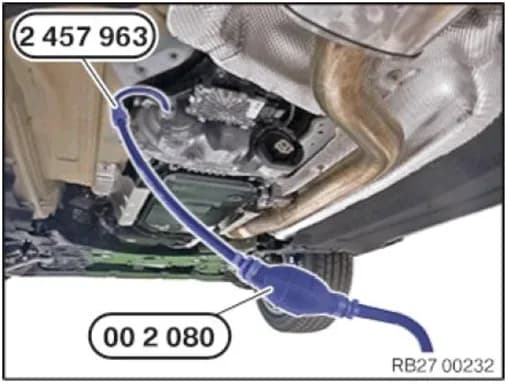
Si applica anche a
- BMW 740i
- 2025
Owners of certain 2025 BMW models, including the 530i and 740i, may notice an uncomfortable "jerking or shuddering from the driveline" under specific driving conditions. This issue, addressed by BMW Service Information Bulletin SIB 27 02 20, typically manifests without any warning lights or Check Control messages appearing on the dashboard. The BMW 530i driveline jerking can be a concerning symptom, but BMW has outlined a clear diagnostic and repair path.
This bulletin, identified as SIB 27 02 20 (Revision 4, dated March 2025), supersedes previous versions, including the one from August 2024. It provides updated procedures for tire inspection, includes additional affected models, and clarifies parts and claim information. The primary focus is on resolving the BMW 530i driveline jerking and shuddering experienced by drivers.
Symptoms
Drivers may observe a distinct "jerking or shuddering from the driveline" in their vehicle. This sensation is typically noticeable during one or both of the following scenarios:
- "Cornering or accelerating from low speeds"
- "Driving with low to medium loads"
Importantly, these symptoms occur without any accompanying warning lights or Check Control messages, making it difficult for owners to identify the root cause without professional diagnosis.
Cause
The root cause of the "jerking or shuddering from the driveline" has been identified as two main factors:
- Unevenly worn or incorrect fitment tires: If the tires installed on the vehicle are unevenly worn or do not meet the correct fitment specifications, they can contribute to the issue. This includes mismatched sizes, particularly on vehicles with staggered setups, or significant variances in rolling circumference.
- Transfer case oil: The factory-filled transfer case oil may not meet current BMW specifications, leading to improper lubrication or function of the xDrive transfer case (ATX13-X).
Important Warnings for Owners
Owners should be aware of specific conditions related to the repair and post-repair driving:
- "There will be a warning in the control display for the xDrive system which for this procedure is to be ignored. Cycling the ignition will re-activate the VTG." This applies during the diagnostic phase when the transfer case is temporarily deactivated.
- "The transfer case's newly replaced oil still needs a minimum drive time before it is fully saturated into the clutch plates inside the transfer case; a minimum of 125 miles of normal driving is required for this to occur. The shuddering should diminish during this run-in period before completely smoothing out." This means that after an oil change, the jerking or shuddering may not immediately disappear and requires a break-in period.
Diagnosis and Repair Procedure Summary
Addressing the BMW 530i driveline jerking involves a multi-step diagnostic and repair process:
Prerequisite Tire Inspection
The first step is a thorough inspection of the vehicle's tires:
- Check Tire Size and Brand: Verify that the tire size and brand are correct for the vehicle, typically by checking the tire placard on the driver's B-pillar.
- Inspect for Uneven Wear: One or more tires with extreme wear can keep the xDrive system engaged, contributing to the shuddering. If new tires were recently installed, the issue might stem from the old tires.
- Staggered Sizes: For vehicles with staggered tire sizes, ensure front and rear tires are not mismatched.
- Rolling Circumference: A highly recommended check is to measure the rolling circumference of all four tires to note variances that might not be visible from tread depth alone. Tire technical specifications and allowable tolerances can be found in Repair Instruction 3612.
- Documentation: All tire specifications must be recorded using Attachment 2 for warranty approval.
Transfer Case Diagnosis
If tire issues are ruled out or corrected and the symptoms persist, the transfer case (VTG) is diagnosed:
- Powertrain Control Unit Faults: Check for and diagnose any faults in the powertrain control units.
- Temporary Deactivation: Technicians can temporarily deactivate the all-wheel-drive system using the ISTA test plan "Temporary deactivation of all-wheel-drive system – (ABL-DIT-AW2710_TDEAKAWD11)". This involves navigating through Vehicle Management/Troubleshooting/Function structure/Drive/Transfer box and following the test plan instructions. A test drive with the transfer case clutch deactivated helps confirm if the transfer case is the source of the complaint.
Transfer Case Oil Change
If the complaint is resolved after disconnecting the transfer case, an oil change for the transfer case is performed. This procedure follows Repair Instruction 27 00 270, titled "Oil change in transfer box including used oil disposal."
- Remove Transmission Cross-Member: The transmission cross-member must be removed, following Repair Instruction 22 32 050, "Replacing the cross member for the transmission bearing."
- Extract Old Oil: Special tools 0 493 337 (00 2 080) and 2 457 963 are used to extract the old transmission oil from the transfer case.
- Fill New Oil: New DTF-1 Transfer case oil (part numbers 83 22 5 A4F 016 or 83 22 2 409 710) is added using special tool 0 493 337 (00 2 080) until it reaches the lower edge of the filler plug opening.
- Replace Plug: The oil filler plug (part number 33 11 7 525 064) is replaced and tightened to 60 Nm.
- Reinstall Cross-Member: The transmission cross-member is reinstalled.
VTG Recalibration
After the oil change, the VTG must be recalibrated using the ISTA test plan "Calibration (ABL-DIT-AS2710_KALIB_VTGG11)." This is accessed via ISTA path: Service functions/Drive/Transfer box VTG/Transfer box (VTG): Calibration.
Required Tools or Parts
To perform this repair, specific parts and special tools are necessary:
- DTF-1 Transfer case oil: Part numbers 83 22 5 A4F 016 (1000 ml/1 liter) or 83 22 2 409 710 (0.7 liter).
- Screw plug with O-ring: Part number 33 11 7 525 064 (M22 x 1.5-ZNS3).
- Special Tool: 0 493 337 (also referred to as 00 2 080).
- Special Tool: 2 457 963.
Additional materials like one-time use fasteners, gaskets, and seals should be sourced from the Electronic Parts Catalog (ETK) or other approved BMW Group resources as needed.
Claim Information
The procedures outlined in this bulletin, specifically steps 2 through 5, are covered under the terms of the BMW New Vehicle Limited Warranty for Passenger Cars and Light Trucks. The Repair Code for this issue is 2710003800, labeled as "Transfer box, complete jerking."
Specific labor operations and their allowances are provided for technicians, including:
- 00 00 006: Carrying out vehicle test (Main work)
- 00 00 556: Carrying out vehicle test (Plusposition work)
- 61 21 528: Supporting voltage of the vehicle electrical system / recharging vehicle battery
- 27 00 000**: Disconnecting the transfer case (VTG) with ISTA and test-driving vehicle for diagnosis (6 FRU WT)
- 27 00 770: Oil change in transfer box
- 27 00 000**: Recalibrating the VTG after oil change (4 FRU WT)
Note that standalone transfer box/case oil change procedures are generally not covered under an active BMW Certified Pre-Owned Program or Extended Service Contract, unless it's a continuing related concern that supports a required transfer box/case assembly replacement.
NHTSA ID: 11016472
Galleria
6 immagini
Frequently Asked Questions
- What does 'jerking or shuddering from the driveline' mean in my BMW?
- This refers to an irregular, vibrating, or jolting sensation felt through the vehicle's drivetrain, particularly during acceleration from low speeds or while cornering. It's a key symptom addressed by BMW SIB 27 02 20.
- What causes the BMW 530i driveline jerking issue?
- According to BMW SIB 27 02 20, the primary causes are unevenly worn or incorrectly fitted tires, or transfer case oil that does not meet BMW's specifications for the xDrive transfer case (ATX13-X).
- Will my dashboard show a warning light if my BMW has this problem?
- No, BMW Service Information Bulletin SIB 27 02 20 explicitly states that there are "no warning lights or Check Control messages" associated with this specific jerking or shuddering condition.
- What is the repair for the driveline jerking in my 2025 BMW 740i?
- The repair involves a thorough tire inspection and, if necessary, a transfer case oil change using specific DTF-1 Transfer case oil (part numbers 83 22 5 A4F 016 or 83 22 2 409 710) and subsequent recalibration of the VTG (transfer case control unit) using ISTA test plan "Calibration (ABL-DIT-AS2710_KALIB_VTGG11)".
- How long does it take for the shuddering to go away after a transfer case oil change?
- BMW advises that after replacing the transfer case oil, a minimum of 125 miles of normal driving is required for the new oil to fully saturate the clutch plates. The "shuddering should diminish during this run-in period before completely smoothing out."
Related Articles
2025 BMW 5, 7, M Series Washer Pump Strainer Leaking TSB
BMW has issued Technical Service Bulletin SIB 61 05 26 to address instances of washer fluid leaking from the lower reservoir area in 2025 BMW 5, 7, and M Series vehicles. This issue is typically caused by a torn rubber ring on the washer pump's filter, which can be resolved by replacing the…
2025 BMW 530i Parking Brake Actuator Service Action
BMW has issued a service action for the 2025 BMW 530i regarding electromechanical parking brake (EMF) actuators. Incorrectly manufactured actuators may fail, triggering warning lights and Check Control messages. Owners should contact a dealer for a free repair.
2025 BMW 5 Series Trim Return Bulletin TEC826
BMW Parts Bulletin TEC826 addresses certain trim parts, specifically part number 52 10 7 885 235, for 2025 BMW 530i and M5 vehicles that were delivered missing essential foam strips. This bulletin outlines the return procedure for affected inventory.
2025 BMW 530i Head Restraint Groaning Noise TSB
BMW has issued Service Information Bulletin SIB 52 07 25 to address groaning noises emanating from the front seat head restraints in certain 2025 BMW 5 Series Sedan and M5 models. The noise is caused by decorative trim rubbing against seat upholstery. The repair involves replacing the aperture trim.
2025 BMW Exterior Mirror Glass Stains
BMW Service Information Bulletin SIB 51 19 24 describes how to address a matte or milky stain on the exterior mirror glass of certain 2025 BMW models, including the 5 Series, 7 Series, X3, and M5. The issue is caused by dirt and water calcium buildup and can be resolved with a simple cleaning and…
Leave a comment
Comments are moderated and may take a moment to appear. Only your first name and the initial of your last name are shown publicly.
Comments
Be the first to comment.