2021 Audi Q8/SQ8/RS Q8 Cracking Roof Noise
Audi has issued Technical Service Bulletin (TSB) 2060145/4 to address cracking or snapping noises originating from the right rear roof area in 2021 Audi Q8, SQ8, and RS Q8 models. This TSB outlines a specific repair procedure involving the application of cavity wax.
 Marcus Weber2021 Audi Q8
Si applica anche a
- Audi RS Q8
- 2021
- Audi SQ8
- 2021
Owners of 2021 Audi Q8, SQ8, and RS Q8 vehicles may notice an unusual cracking or snap-type noise emanating from the right rear roof area, particularly during abrupt steering thrusts or when the vehicle's body flexes. This condition is addressed by Audi Technical Service Bulletin (TSB) 2060145/4.
This bulletin, identified as TSB 51 21 22 2060145/4, supersedes previous bulletin Group 51 number 20-19 dated December 18, 2020. Revisions to the TSB included updates to warranty labor operations, changes in work procedures, and adjustments to required parts and tools, specifically the deletion of foam and addition of cavity wax.
Symptoms
Owners typically report a distinct noise in the right rear roof area of the cabin. This noise is often heard during an abrupt steering maneuver or when the vehicle body flexes. The sound is specifically described as a 'cracking' or 'snap' type of noise.
Diagnosis and Trigger Conditions
Workshop findings indicate that the noise originates from the right rear-most area of the sunroof opening, within the roof structure itself. The underlying cause is attributed to structural tolerances between the roof panel and the roof support sheet metal, which can generate these noises intermittently when the body flexes.
Technicians are advised to first confirm the symptom by test driving with the customer. It is crucial to ensure the noise type and location are clearly attributable to the issue described in TSB 2060145/4. If the noise cannot be duplicated during the test drive, the repair outlined in this TSB should not be performed.
Important Warnings
- Do not perform the repair in this TSB if the symptom cannot be duplicated during a test drive with the customer.
- Do not perform the repair in this TSB if the noise type and location are not clearly attributable to the issue described in the Technical Background section of the TSB.
- Use extreme caution during the repair process to avoid damaging the outer roof sheet metal.
Repair Procedure Summary
The repair procedure outlined in TSB 2060145/4 involves several steps to address the Audi Q8 cracking noises:
- Preparation: The headliner and sliding sunroof assembly must be removed to access the affected area in the rear of the sunroof opening, starting with the right rear.
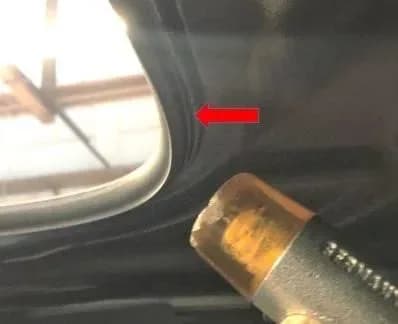
- Separation: The outer roof sheet metal needs to be carefully separated from the inner roof support. This creates a small gap, approximately 1mm wide, between the two components.
- Adhesive Release: If the sheet metal separation is difficult, a plastic mallet can be used for light strikes. For more stubborn areas, a small screwdriver or chisel may be used to carefully break away the adhesive.
- Cavity Filling: The newly created gap is then filled with 3M 08852 Cavity Wax Plus. This wax helps to dampen vibrations and prevent the metal components from rubbing, thus eliminating the cracking noise.
- Reassembly and Testing: After filling, the vehicle is reassembled. The procedure must be performed on both rear corners of the sunroof opening. A thorough test drive is required to ensure the noises have been eliminated.
- Sunroof Adaptation: Following reassembly, the sunroof panel and rollershade end stop adaptation must be reset using the appropriate switches. For instructions on this, technicians should refer to TSB 2054505, which covers issues with sunroof glass panel or sunroof rollershade operation.
Required Tools or Parts
To perform the repair for the Audi Q8 cracking noises, the following specific part is required:
- 3M 08852 Cavity Wax Plus: This product is available through the Audi Top Service Supplies & Touch Up Paint eStore.
Additionally, fasteners, bolts, nuts, and screws may be needed for reassembly, as detailed in the repair manual.
Warranty Information
This Technical Service Bulletin covers repairs for up to 48 months or 50,000 miles, whichever comes first. If the vehicle is outside of this warranty period, the TSB serves as informational guidance only. Warranty claims must adhere to the Audi Warranty Policies and Procedures Manual.
Labor operations for this repair include:
- Headliner remove and reinstall (7084 1900)
- Sunroof frame remove and reinstall (6028 1950)
- Perform roof rework (5103 9999) – 30 Time Units (TU)
- Cavity wax applied (5101 7552)
Diagnostic time (GFF) is not allowed. Road tests before and after the service procedure are allocated 10 TU each.
Revision History
TSB 2060145/4 has undergone several revisions:
- Revision 4: Updated labor operations for warranty.
- Revision 3 (December 19, 2020): Changed work procedure, revised required parts and tools (deletion of foam, addition of cavity wax), and adjusted labor operations.
- Revision 2 (October 17, 2020): Revised header to add Model Year 2021.
Source: NHTSA ID: 10193575
Galleria
9 immagini
Frequently Asked Questions
- What kind of noise might I hear from my 2021 Audi Q8's roof?
- You might hear a 'cracking' or 'snap' type of noise, specifically from the right rear roof area of the cabin. This often occurs during abrupt steering or when the vehicle body flexes.
- Is there a known fix for the Audi Q8 cracking noises?
- Yes, Audi Technical Service Bulletin (TSB) 2060145/4 addresses this issue. The repair involves separating the outer roof sheet metal from the inner support and filling the gap with 3M 08852 Cavity Wax Plus.
- Will my dealership charge me to fix the cracking roof noise?
- If your 2021 Audi Q8, SQ8, or RS Q8 is still within the 48 months or 50,000 miles warranty period, this repair should be covered. Outside of warranty, the TSB is for informational purposes, and charges may apply.
- What is TSB 2060145/4?
- TSB 2060145/4 is an Audi Technical Service Bulletin that provides instructions to technicians on how to diagnose and repair cracking noises in the right rear roof area of 2021 Audi Q8, SQ8, and RS Q8 models, caused by structural tolerances.
- What is Cavity Wax Plus and why is it used?
- 3M 08852 Cavity Wax Plus is a material used in the repair procedure to fill the gap between the roof panel and support sheet metal. It helps to prevent the metal components from rubbing against each other, thereby eliminating the Audi Q8 cracking noises.
Related Articles
2021-2025 Audi Engine Control Module Software Update 53ZC
Audi has issued an update to its Engine Control Module (ECM) software campaign 53ZC / WARR EXT – U82, dated March 20, 2026. This dealer communication indicates that additional vehicles have been added to the affected chart for this important software update. Owners of 2021-2025 Audi Q8, A7, A6…
2021-2025 Audi Fuel System DTCs P014800 and P008700
Audi Technical Service Bulletin (TSB) 2079461/3 details diagnostic and repair procedures for 2021-2025 Audi vehicles experiencing a 'MIL light on' or 'limp-home function' due to fuel system DTCs P014800 or P008700. This bulletin guides technicians on diagnosing and potentially replacing the…
2021-2025 Audi Black Trim Discoloration TSB
Audi has issued Technical Service Bulletin 2078651/4 to address red, purple, gray, or metallic discoloration on black exterior trim strips in 2021-2025 Audi models. This TSB explains the cause (paint UV resistance issue) and outlines the replacement procedure for affected components.
2021 Audi Virtual Cockpit Display Fault TSB 2078439/2
Audi TSB 2078439/2 addresses issues with the virtual cockpit display in 2021 A6, A7, A8, Q7, Q8 models, including a black screen or "Instrument cluster: fault" message, often accompanied by DTC B200049.
2021-2026 Audi TFSI Engine Oil Leak TSB 2053278/10
Audi has released Technical Service Bulletin 2053278/10 to address oil leaks from the cylinder head on 2.9 and 3.0 TFSI engines in various 2021-2026 models. Learn about symptoms, diagnosis, and the recommended repair process.
Leave a comment
Comments are moderated and may take a moment to appear. Only your first name and the initial of your last name are shown publicly.
Comments
Be the first to comment.