2021-2025 Audi MIL On, Rough Engine Due to Loose Oil Cap TSB
Audi Technical Service Bulletin 2070915/2 details how a loose engine oil filler cap can cause a Malfunction Indicator Lamp (MIL) to illuminate, rough engine running, and oil leaks in 2021-2025 Audi A3, A4, A5, A6, Q5, and Q7 models. It often triggers DTCs P227900, P006800, and P004F00.
 Marcus Weber2025 Audi Q7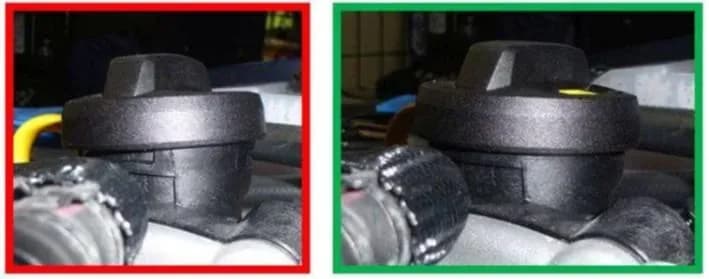
Si applica anche a
- Audi A3
- 2022–2024
- Audi A4
- 2021–2025
- Audi A4 allroad
- 2021–2025
- Audi A5
- 2021–2024
- Audi A6
- 2021–2025
- Audi Q5
- 2021–2025
- Audi Q7
- 2023–2024
- Audi S3
- 2022–2024
▸ Mostra altri 2▾ Mostra meno
Owners of various 2021-2025 Audi models equipped with the 2.0 ltr TFSI engine may encounter issues such as an illuminated Malfunction Indicator Lamp (MIL), rough engine operation, and visible oil leaks. Audi Technical Service Bulletin (TSB) 2070915/2, released on March 10, 2026, addresses these concerns, frequently linking them to a simple yet critical problem: an incorrectly installed engine oil filler cap. This bulletin provides guidance for technicians to diagnose and resolve the issue.
This TSB, identified as 2070915/2, is a revision of a previous bulletin, with the current version adding details on workshop findings and warranty information. The primary focus is to ensure the Audi loose oil filler cap is properly seated, which can prevent a range of performance and warning light issues.
Symptoms Owners May Notice
If your 2021-2025 Audi is affected, you might observe one or more of the following symptoms:
- "MIL on.": The Malfunction Indicator Lamp, commonly known as the check engine light, illuminates on your dashboard. This indicates that the engine control unit has detected a fault.
- "The engine is running rough.": You may experience noticeable vibrations, misfires, or a general lack of smoothness from the engine, particularly during idle or acceleration.
- "There is oil on the engine near the oil filler cap.": A visual inspection might reveal oil residue or seepage around the engine oil filler cap, indicating a poor seal.
Associated Fault Codes (DTCs)
While the engine control unit's event memory may not always contain an entry, the following Diagnostic Trouble Codes (DTCs) are commonly associated with an incorrectly installed Audi loose oil filler cap:
| Code | Description |
|---|---|
| P227900 | Intake Air System Leak |
| P006800 | MAP/MAF, Throttle Position Correlation |
| P004F00 | Fuel tank breather system, high-pressure faulty |
These DTCs point to issues that can arise from an unsealed or improperly sealed intake system, which a loose oil filler cap can contribute to by allowing unmetered air into the engine.
Diagnosis and Trigger Conditions
The technical background of TSB 2070915/2 indicates that the root cause of these symptoms and DTCs is often an incorrectly installed engine oil filler cap. Even though the fault codes might suggest complex system failures, the initial diagnostic step should involve checking the oil filler cap's seating. A visual inspection, as illustrated in the bulletin's figures, can quickly identify if the cap is not fully closed or is misaligned.
Repair Procedure Summary
The repair for an Audi loose oil filler cap is straightforward and focuses on ensuring a proper seal. The steps outlined in TSB 2070915/2 involve:
- Inspection: Verify that the oil filler cap is indeed not closed correctly or is improperly seated. This might be evident from the visual cues like oil seepage.
- Cleaning: Before attempting to re-install the cap, thoroughly clean the contact surfaces of both the oil filler cap and the filler neck on the engine. This removes any debris or oil residue that could prevent a proper seal.
- Correct Installation: Insert the oil filler cap into the correct position, ensuring it is fully tightened and sealed. This simple action can resolve the MIL illumination, rough running, and oil leak issues.
The TSB also lists labor operations such as
Galleria
1 immagine
Frequently Asked Questions
- What does Audi TSB 2070915/2 address?
- Audi TSB 2070915/2 addresses issues like a Malfunction Indicator Lamp (MIL) illumination, rough engine running, and oil leaks, often caused by an incorrectly installed engine oil filler cap in 2021-2025 Audi models with 2.0 ltr TFSI engines.
- What fault codes (DTCs) are associated with a loose Audi oil filler cap?
- An incorrectly installed Audi oil filler cap can trigger Diagnostic Trouble Codes such as P227900 (Intake Air System Leak), P006800 (MAP/MAF, Throttle Position Correlation), and P004F00 (Fuel tank breather system, high-pressure faulty).
- How is the loose engine oil filler cap issue resolved according to the TSB?
- The repair involves ensuring the engine oil filler cap is correctly installed. This includes thoroughly cleaning the contact surfaces of both the cap and the filler neck before re-inserting the cap to ensure a proper seal.
- Will Audi cover the repair for a loose oil filler cap under warranty?
- According to TSB 2070915/2, if your vehicle is outside of its warranty period, this Technical Service Bulletin is for informational purposes only, meaning the repair costs would typically not be covered by Audi.
Altre revisioni di questo TSB
Related Articles
2025 Audi Q7 Problems: TSBs and Common Issues
For the 2025 Audi Q7, there are no reported recalls or owner complaints to date. However, Audi has issued several technical service bulletins (TSBs) addressing various potential issues, from engine performance and electrical glitches to interior noises and body structure concerns.
2024-2025 Audi MIB3 Infotainment Phone Menu Issue
Audi has released Technical Service Bulletin (TSB) 2080958/1 to address an issue in 2024-2025 Audi vehicles equipped with the MIB3 infotainment system. Owners may notice a phone menu appearing under the STORE menu item, but its controls are not functional. This TSB is informational, explaining the…
2022-2026 Audi Easy-Entry Function Complaint TSB 2064695/6
Audi has released Technical Service Bulletin 2064695/6 addressing customer complaints regarding the easy-entry function not working correctly in various 2022-2026 models. This TSB describes the symptom but does not provide a repair procedure.
2017-2025 Audi Q5/Q7 Taillight Switching Issue B146C29
Audi has released Technical Service Bulletin 2070964/3 for 2017-2025 Q5 and Q7 series vehicles experiencing taillight switching issues or constant illumination. This can be caused by dirt affecting the rear lid sensor, triggering DTC B146C29.
2025 Audi Q7 Wind Noise at Front Window Guide TSB
Audi has released Technical Service Bulletin 2077162/1 to address wind noise originating from the front window guide area in certain 2025 Audi Q7 and SQ7 vehicles. The issue is caused by a crushed foam piece in the window guide transition area.
Leave a comment
Comments are moderated and may take a moment to appear. Only your first name and the initial of your last name are shown publicly.
Comments
Be the first to comment.