2022-2023 Audi Q5/SQ5 MIL On with DTC P044200
Audi Technical Service Bulletin 01 23 37 2069166/1 details the diagnostic procedure for 2022-2023 Audi Q5 and SQ5 vehicles experiencing an illuminated Malfunction Indicator Lamp (MIL) and storing Diagnostic Trouble Code P044200 related to an EVAP system small leak. Owners should consult their…
 Marcus Weber2023 Audi Q5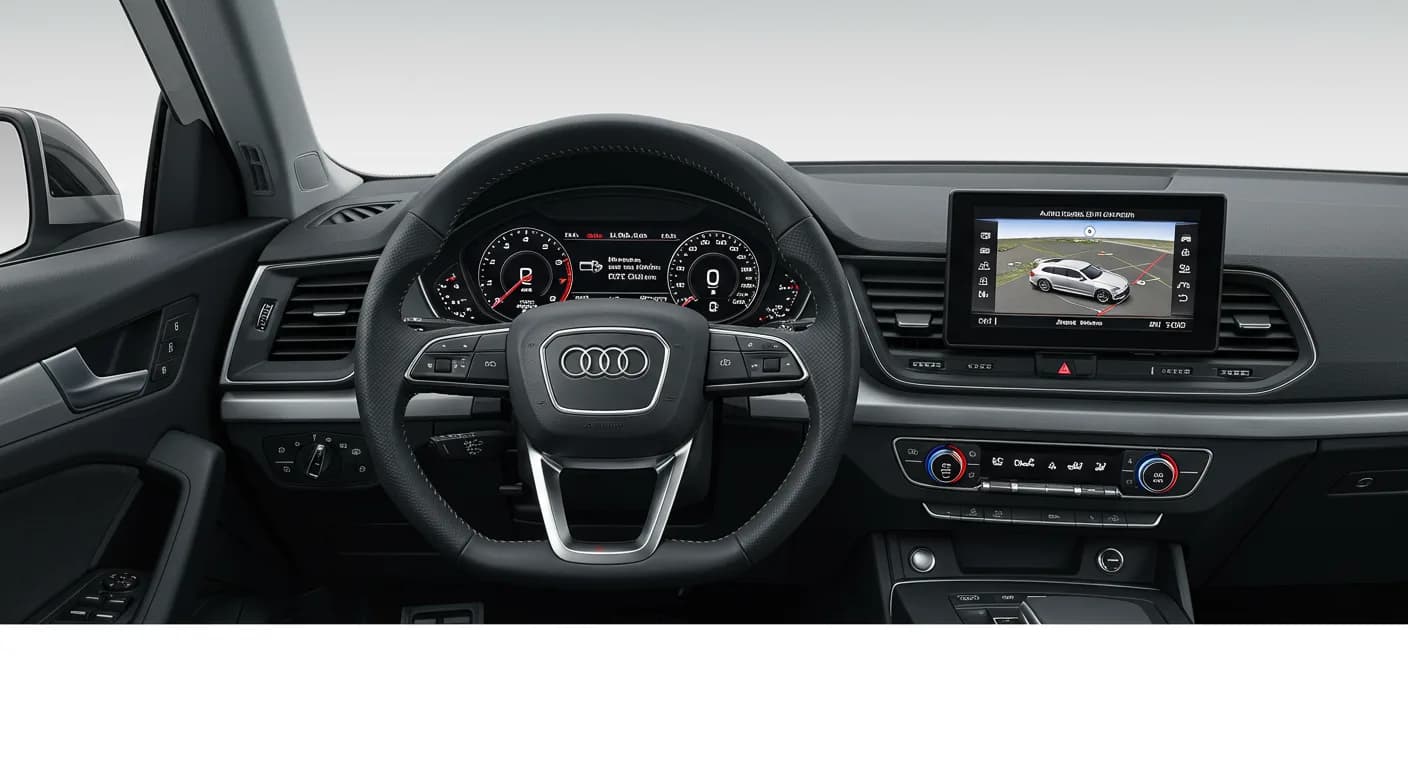
Si applica anche a
- Audi SQ5
- 2022–2023
Audi has issued Technical Service Bulletin (TSB) 01 23 37 2069166/1 to address instances where the Malfunction Indicator Lamp (MIL) illuminates in 2022-2023 Audi Q5 and SQ5 vehicles equipped with the 2.0L engine. This TSB specifically targets vehicles that store Diagnostic Trouble Code (DTC) P044200, indicating an EVAP system small leak.
This bulletin serves as a guide for technicians, emphasizing the importance of proper diagnosis and communication with Audi's technical support before proceeding with part replacements for the Audi Q5 P044200 MIL condition.
Symptoms
Owners of affected 2022-2023 Audi Q5 and SQ5 vehicles may notice that the "MIL is on" warning light is illuminated on their dashboard. This indicates a detected issue within the vehicle's emission control system.
Fault Codes / DTCs
When diagnosing the "MIL is on" condition, technicians may find the following Diagnostic Trouble Code (DTC) stored in the Engine Control Module (ECM), J623 (address word 0001):
- DTC P044200: "EVAP Emission Control System (Small Leak) Leak Detected (Passive/Active)"
Diagnosis / Trigger Conditions
The DTC P044200 is triggered when the ECM detects a small leak within the Evaporative Emission (EVAP) control system. This system is designed to prevent fuel vapors from escaping into the atmosphere.
To diagnose this condition, technicians are instructed to perform EVAP testing. This should be done according to the ELSA Repair Manual, specifically following the procedures outlined under Engine>>Using the Evaporative Emissions tester>> 20 Fuel Supply?? Fuel System EVAP Leak Test>>EVAP System Leak Test, Vehicles with Fuel Tank Leak Detection Control Module (NVLD)>>EVAP system testing.
Important Warnings for Owners
Audi has stated that no changes to production have been made for this condition, as no underlying issue has been identified in the manufacturing process. Furthermore, this TSB is informational only and is not applicable to any Audi warranty. This means that while the bulletin provides diagnostic guidance, it does not automatically cover the cost of repairs under warranty.
Repair Procedure Summary
For technicians, the primary steps for addressing the Audi Q5 P044200 MIL issue involve:
- Verifying the customer's reported condition of the illuminated MIL.
- Performing comprehensive EVAP system testing as detailed in the ELSA Repair Manual.
- If the vehicle is still within its New Vehicle Limited Warranty period, the technician must contact an Audi Technical Assistance Center (TAC) consultant before proceeding with any repairs or part replacements.
- It is mandatory to attach the DTC and diagnostic log to the TAC Web Ticket for review by Audi experts.
This approach ensures that Audi can gather more information on the DTC P044200 and assist in diagnosing potential issues without unnecessary part replacements.
Owner Action
If your 2022-2023 Audi Q5 or SQ5 displays the "MIL is on" warning light and you suspect it might be related to DTC P044200, you should schedule an appointment with an authorized Audi service center. Be prepared to inform them of the illuminated MIL. The service center will follow the diagnostic steps outlined in TSB 01 23 37 2069166/1, which includes contacting the Audi Technical Assistance Center (TAC) for guidance if your vehicle is under warranty.
Source: NHTSA ID: 10230586
Altre revisioni di questo TSB
- 2023-2026 Audi Fuel Tank Cap Leak & EVAP DTCs P045600 P044200P044200
- 2023-2026 Audi Models Fuel Cap Seal Leak TSB (P045600)P044200
- 2024-2025 Audi Fuel Cap Seal Leaking TSB 2078916/1P044200
- 2019-2021 Audi Q7/Q8 MIL On DTC P148D00 P044200 TSBP044200
- 2021 Audi Q7/Q8 MIL On with DTC P148D00 and P044200P044200
- 2022-2024 Audi Q5 EVAP System Leak DTC P044200 TSBP044200
- 2021-2023 Audi MIL On: EVAP System DTCs P148D00, P044200P044200
- 2022-2024 Audi Q5 MIL On with DTC P044200P044200
Related Articles
2023 Audi Q5 Health Check: Recalls and Bulletins
The 2023 Audi Q5 has no reported recalls, owner complaints, or federal investigations. However, Audi has issued several technical service bulletins (TSBs) addressing various potential issues, including engine faults, electrical system warnings, and airbag system concerns. This article details…
2022-2024 Audi Q5 / A4 / A5 Engine Faults P060C00 U041600
Audi has released Technical Service Bulletin (TSB) 2076356/4 to address engine control unit drive system faults P060C00 and U041600 in certain 2022-2024 Audi Q5, A4, and A5 models. Owners may notice the 'EPC light is on' or a 'drive system fault' message. The fix involves a software update for the…
2022-2025 Audi A4, A5, Q5 AC Buttons Not Working TSB
Audi Technical Service Bulletin 2078655/2 details issues with non-functional air conditioning operating unit buttons in 2022-2025 Audi A4, A5, and Q5 models, logging DTC B131207. This bulletin outlines symptoms, diagnostic steps, and the recommended repair procedure for technicians.
2022-2025 Audi Q5 MIL On with DTC U060B00
Audi has issued Technical Service Bulletin 2074392/2 for 2022-2025 Q5 models. It addresses a Malfunction Indicator Lamp (MIL) illuminated due to Diagnostic Trouble Code U060B00, indicating lost communication with the turbocharger/supercharger boost sensor. The fix involves repairing wiring at…
2023-2024 Audi Q5 Turbocharger Boost Control DTC P256300
Audi has issued a manufacturer communication regarding a 'turbocharger boost control position sensor circuit range/performance' fault (DTC P256300) affecting 2023-2024 Audi Q5 models. This document outlines initial diagnostic steps and emphasizes contacting Audi Helpline before attempting any…
Leave a comment
Comments are moderated and may take a moment to appear. Only your first name and the initial of your last name are shown publicly.
Comments
Be the first to comment.