2021-2026 Audi HV Module Replacement Documentation TSB
Audi TSB 2067544/6 advises technicians to document serial numbers of high-voltage cell modules when replaced in 2021-2026 BEV and PHEV models. This ensures proper traceability for analysis and recycling, and is crucial for warranty claims. Owners should be aware of this procedure.
 David Chen2023 Audi e-tron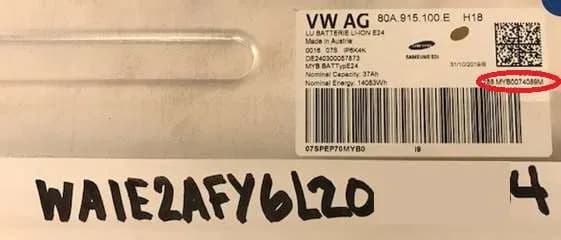
Si applica anche a
- Audi A7 e
- 2021–2022
- Audi A8 L e
- 2021
- Audi e-tron
- 2021–2022
- Audi e-tron GT
- 2022–2025
- Audi e-tron Sportback
- 2021–2022
- Audi Q5 e
- 2021, 2023, 2024, 2025
- Audi RS e-tron GT
- 2022–2026
- Audi S e-tron GT
- 2026
▸ Mostra altri 2▾ Mostra meno
Audi has issued Technical Service Bulletin (TSB) 2067544/6, effective January 13, 2026, to address the critical procedure for documenting high-voltage (HV) cell modules when they are replaced in certain electric and plug-in hybrid vehicles. This TSB applies to all 2021-2026 Audi BEV (Battery Electric Vehicle) and PHEV (Plug-in Hybrid Electric Vehicle) models. The primary purpose of this Audi HV module documentation requirement is to ensure proper traceability for analysis, recycling, and warranty claims related to high-voltage battery components.
Why This Documentation Matters
Audi AG has a strong interest in analyzing and potentially recycling high-voltage modules that have been removed from vehicles. Accurate documentation of these components is crucial for several reasons. It ensures better traceability for any future analysis requests or recycling processes.
Without proper documentation, it becomes difficult to track the history and specifications of individual modules. This Audi HV module documentation process helps maintain a comprehensive record of replaced parts, which is vital for quality control and environmental responsibility.
Understanding the Documentation Process
When a high-voltage cell module or an entire high-voltage battery is replaced during repair work, specific documentation steps must be followed. These steps are mandatory for warranty claims to be processed successfully.
First, technicians must use a waterproof pen to clearly write the vehicle's chassis number (VIN) on every high-voltage cell module that is removed. This ensures that each removed module is directly linked to its original vehicle.
Second, the serial number of each removed high-voltage cell module must be documented. This is done by uploading a clear picture of the information label from the module to the Doc-IT system, which is part of Audi Warranty Online. The information labels, such as those found on the LI-Ion Battery E61VLGP (part number 4KE.915.591.H) from an Audi e-tron Quattro or the 80A.915.100.E from an Audi Q5 PHEV, contain the necessary serial numbers and other identifying details.
Required Tools and Information
For technicians, the key requirements for this procedure include a waterproof pen for marking VINs and access to the Doc-IT system within Audi Warranty Online for uploading photos. The information labels on the high-voltage modules themselves are the source of the critical serial number data.
Additionally, technicians are advised to refer to Warranty Communication AWA-22-10, titled "HV Battery Photo Documentation," for further guidance on obtaining the necessary photographs. This ensures that the images captured meet Audi's specific requirements for clarity and content.
Important Safety and Warranty Information
Before any high-voltage battery or module is removed, it must be properly classified. Failure to classify these components correctly means they cannot be transported or recycled safely. This is a critical safety measure to prevent hazards associated with high-voltage systems.
It is important to note that this TSB is informational and does not directly apply to any Audi warranty in terms of coverage. However, adhering to the documentation procedure is essential for any warranty claim involving high-voltage module replacement to be paid. Audi also requests that importers be contacted before disposing of any removed high-voltage modules, as they may wish to analyze them.
Owner Action
As an owner of an affected 2021-2026 Audi BEV or PHEV, there is no direct action required from you regarding this TSB. This bulletin primarily outlines a procedure for Audi service technicians. However, if your vehicle requires high-voltage battery or module replacement, it's beneficial to be aware of this Audi HV module documentation process. Ensuring your service center follows these steps correctly will help facilitate any potential warranty claims and contribute to the proper handling of high-voltage components.
Source: NHTSA ID: 11028400
Galleria
1 immagine
Frequently Asked Questions
- What is Audi TSB 2067544/6 about?
- Audi TSB 2067544/6 details the mandatory procedure for documenting high-voltage (HV) cell modules when they are replaced in 2021-2026 Audi BEV and PHEV vehicles. This ensures traceability for analysis, recycling, and proper processing of warranty claims.
- Which Audi models are affected by TSB 2067544/6?
- This TSB affects all Audi BEV and PHEV models from model years 2021-2026, including the A7 e, A8 L e, e-tron, e-tron Sportback, e-tron GT, RS e-tron GT, S e-tron GT, and Q5 e.
- Why is documentation of high-voltage modules important?
- Documenting high-voltage modules, such as those with part numbers like 4KE.915.591.H or 80A.915.100.E, is crucial for Audi to maintain traceability for analysis and recycling efforts. It also ensures that warranty claims for replaced high-voltage components are processed correctly.
- What happens if the HV module documentation procedure isn't followed?
- If the specified documentation procedure, which includes writing the VIN on the module and uploading photos of the serial number label to Doc-IT, is not followed, related warranty claims for the replacement of high-voltage cell modules will not be paid.
Related Articles
Should 2023 Audi e-tron Owners Worry? Recall & TSB Roundup
The 2023 Audi e-tron faces significant safety concerns, including recalls for potential brake pedal detachment and charging cable overheating. Owners have also reported serious issues like unintended acceleration and electrical system malfunctions. This guide covers all known problems and solutions.
2023 Audi e-tron Brake Pedal Recall
Audi has issued a recall (NHTSA ID: 26V240000, Audi Recall 46P7) for certain 2019-2024 E-Tron and 2020-2024 E-Tron Sportback vehicles, including the 2023 Audi e-tron. The recall addresses a potential issue where the brake pedal may detach from the brake booster, leading to a loss of brake function.
2015-2027 Audi Noise Diagnosis with Frequency Analysis App TSB
Audi has released Technical Service Bulletin 2051095/11 detailing the Audi Frequency Analysis app. This app helps technicians diagnose noise complaints more precisely across 2015-2027 Audi models. Learn how the app works, where to download it, and its features for effective vehicle noise analysis.
2023 Audi e-tron AC/DC Charging Not Possible TSB
This manufacturer communication (NHTSA ID 11031035) provides critical information for 2023 Audi e-tron owners facing issues with AC/DC charging. It specifically highlights problems linked to software version 00C6: 0093/3119, which can prevent the vehicle from charging.
2023-2025 Audi Rear Seat Reminder Message TSB 2074943/2
Audi Technical Service Bulletin 2074943/2 explains the instrument cluster message 'Please check rear seats and be aware of door safelock' in various 2023-2025 Audi models. This informational TSB details the rear occupant detection system designed to prevent children and pets from being left in…
Leave a comment
Comments are moderated and may take a moment to appear. Only your first name and the initial of your last name are shown publicly.
Comments
Be the first to comment.