2021-2023 Audi e-tron AC Noise from Compressor TSB
Audi has released Technical Service Bulletin 2063467/4 to address a noise from the air conditioning compressor when the AC is active in 2021-2023 e-tron models. The noise is often caused by contact between refrigerant lines or other components.
 Ahmet Topcu2022 Audi e-tron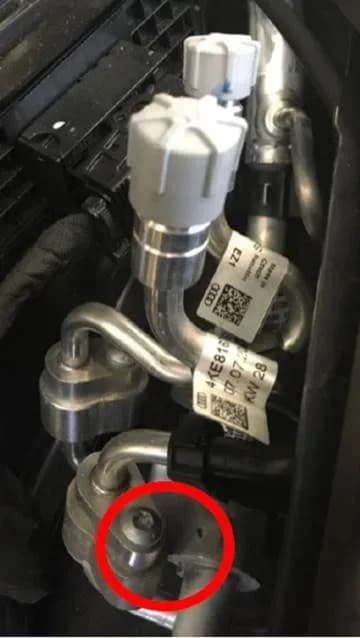
Si applica anche a
- Audi e-tron
- 2021, 2023
Symptoms
Owners of 2021-2023 Audi e-tron, including e-tron quattro and e-tron Sportback quattro models, may experience a noticeable noise inside the cabin when the air conditioning system is active. This noise is particularly evident when the AC compressor is running. A key indicator of this issue is that the noise completely disappears when the air conditioning system is turned off. This specific symptom helps differentiate it from other potential vehicle noises.
Technical Background
Audi has identified that the primary cause of this cabin noise is vibration transfer. The vibration originates from the air conditioning compressor when it's operating. This vibration is then transmitted into the vehicle's cabin due to direct contact between various components in the front motor compartment.
Specifically, the TSB highlights two main areas of contact:
- Adjacent refrigerant lines making contact with each other.
- A refrigerant line making contact with the Bowden cable clip, which is used for the front hood release.
When these components touch, the vibrations from the active AC compressor are effectively amplified and transferred, resulting in the audible Audi e-tron AC noise inside the vehicle. Workshop findings confirm that this symptom is easily reproducible and the noise source is external to the cabin.
Diagnosis and Trigger Conditions
Technicians diagnosing the Audi e-tron AC noise will look for several potential contact points that could be causing the vibration transfer. The TSB outlines a comprehensive inspection process to identify these specific areas:
- Refrigerant Line Contact: Inspect for any direct contact between adjacent refrigerant lines (as shown in Figure 1 and Figure 3 of the TSB).
- Bowden Cable Clip Interference: Check for contact between a refrigerant line and the Bowden cable clip for the front hood release (Figure 2 and Figure 7). The refrigerant line containing the service port is a common area for this type of interference.
- Coaxial Refrigerant Line Contact: An additional point of contact may occur where the coaxial refrigerant line crosses the refrigerant line containing the service port (Figure 8).
- Compressor Isolator Seating: The compressor isolator spring might not be correctly indexed in its rubber mounting, leading to an improperly seated compressor isolator assembly (Figure 9). This can create a gap between the rubber isolator and the mounting bracket.
- Service Port Mounting Interference: Inspect the service port mounting block for interference with an adjacent line (Figure 11).
These conditions trigger the vibration and subsequent noise when the AC system is active, making them crucial diagnostic points for resolving the Audi e-tron AC noise.
Repair Procedure Summary
The repair for the Audi e-tron AC noise focuses on eliminating the identified contact points to prevent vibration transfer. The general procedure involves separating and securing components that are making contact.
- Front Storage Compartment Removal: The initial step requires removing and reinstalling the front storage compartment to gain access to the affected areas.
- Separate Refrigerant Lines: Any refrigerant lines found to be in direct contact with each other or with the Bowden cable clip must be separated. Technicians will use a hose holder, clip, or tie-wrap to secure these lines in a separated position (Figure 5 and Figure 6). Special attention is given to the refrigerant line containing the service port, ensuring it's secured away from the Bowden cable clip.
- Compressor Isolator Inspection and Correction: If the compressor isolator spring is found to be improperly seated, the spring and/or rubber mount will be twisted to correctly index them. This ensures the isolator assembly lies flat against its bracket (Figure 10).
- Service Port Clearance: For any interference found at the service port mounting block, the service port will be gently pushed to create a permanent clearance from the adjacent line (Figure 12).
This procedure aims to ensure all components have adequate clearance, preventing the vibrations from being transmitted into the cabin.
Warranty Information
This Technical Service Bulletin (TSB 2063467/4) outlines specific warranty claim types for addressing the Audi e-tron AC noise.
- Standard Warranty: Repairs performed under this TSB are covered under the standard warranty for up to 48 months or 50,000 miles, whichever comes first. The claim type for this is 110.
- Certified Pre-Owned (CPO) Vehicles: For CPO vehicles, the claim type is G10, but verification of owner eligibility is required.
- Out-of-Warranty Vehicles: If the vehicle is outside of any applicable warranty period, this Technical Service Bulletin serves as informational guidance only, and repair costs may be the owner's responsibility.
The damage code associated with this issue is 0020, and the service number is 8744. All warranty claims must adhere to the Audi Warranty Policies and Procedures Manual and are subject to review by Audi Warranty.
Source: NHTSA ID: 10217904
Galleria
11 immagini
Frequently Asked Questions
- What causes the AC noise in 2021-2023 Audi e-tron vehicles?
- The "noise from the air conditioning compressor when the AC is active" in 2021-2023 Audi e-tron models is often caused by direct contact between refrigerant lines or between a refrigerant line and the front hood release's Bowden cable clip, transferring vibrations into the cabin.
- How is the Audi e-tron AC noise fixed?
- The repair involves identifying and separating any contacting refrigerant lines or other components using clips or tie-wraps, inspecting and correcting the seating of the compressor isolator spring, and ensuring proper clearance around the service port mounting block.
- Is the repair for the Audi e-tron AC noise covered by warranty?
- Yes, the repair for this issue, as outlined in TSB 2063467/4, is covered under the standard new vehicle warranty (up to 48 months/50,000 miles) and for Certified Pre-Owned vehicles, subject to Audi's warranty policies.
- What is Audi TSB 2063467/4 about?
- Audi TSB 2063467/4 addresses the "noise from the air conditioning compressor when the AC is active" in 2019-2023 Audi e-tron and e-tron Sportback quattro vehicles, providing diagnostic steps and repair procedures to eliminate the noise caused by component contact and vibration.
- What is the damage code for this Audi e-tron AC noise issue?
- The damage code associated with the Audi e-tron AC noise issue, as per TSB 2063467/4, is 0020.
Related Articles
2022 Audi e-tron Problems: Electrical System & Braking Concerns
The 2022 Audi e-tron has faced significant owner complaints regarding its electrical system, including sudden power loss and charging hazards, as well as various braking malfunctions. This profile details these issues and relevant service bulletins.
2022-2026 Audi Guided Fault Finding Reporting Obligation
Audi has issued Technical Service Bulletin TPI 2033392, also known as Transaction No. 2081531/1, regarding a reporting obligation for technicians when Guided Fault Finding produces an unexpected result. This TSB outlines the process for contacting Audi Product Support for diagnostic assistance.
2022-2026 Audi Infotainment System Complaints
Audi has released Technical Service Bulletin (TSB) 2081405/1 to address various customer complaints regarding infotainment systems in 2022-2026 Audi vehicles. This TSB helps technicians diagnose issues often caused by external media or mobile devices, rather than vehicle technology.
2018-2026 Audi Models Cracking Noise TSB 2061464/11
Audi Technical Service Bulletin 2061464/11 describes a cracking noise from the front or rear axle when changing direction in various 2018-2026 Audi models. The issue is due to stub axle movement and is resolved by bonding the stub axle to the wheel bearing with locking fluid.
2022-2026 Audi Parking Aid False Warnings TSB 2024323/13
Audi has released Technical Service Bulletin 2024323/13 to address customer complaints of false parking aid warnings. This bulletin details various environmental and vehicle-specific conditions that can cause the parking aid system to issue alerts even when no obstacles are present. It provides…
Leave a comment
Comments are moderated and may take a moment to appear. Only your first name and the initial of your last name are shown publicly.
Comments
Be the first to comment.