2022-2025 Alfa Romeo Stelvio IBS Warning Lamp & DTCs
Stellantis TSB S1408000384 Rev. F provides crucial information on diagnosing and resolving issues related to the Intelligent Battery Sensor (IBS), which can cause warning lamps like "Start Stop Charging Warning Lamp Illuminated On" and trigger DTCs such as B2193 and U113E in various 2022-2025…
 Marcus Weber2022 Alfa Romeo Stelvio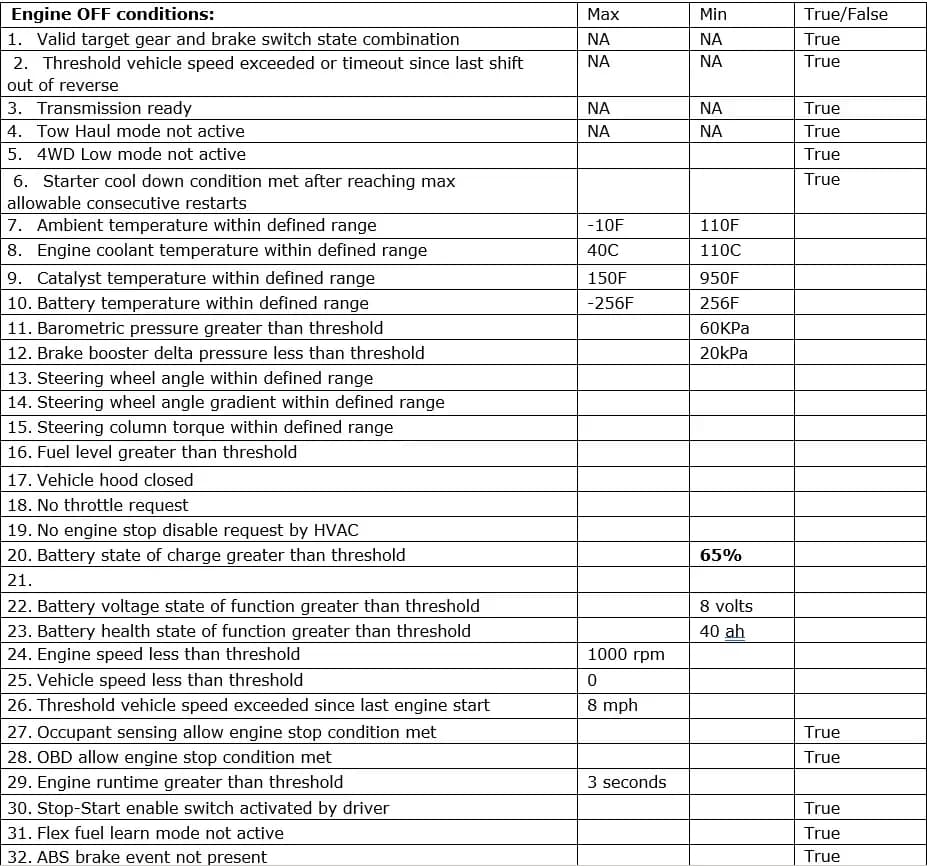
Si applica anche a
- Alfa Romeo Stelvio
- 2023–2024
- Dodge Challenger
- 2021–2023
- Dodge Charger
- 2021–2023
- Dodge Durango
- 2021–2025
- Dodge Hornet
- 2024
- Jeep Cherokee
- 2021–2023
- Jeep Compass
- 2021–2024
- Jeep Gladiator
- 2021–2025
- Jeep Grand Cherokee
- 2021–2025
- Jeep Grand Wagoneer
- 2023–2025
- Jeep Renegade
- 2021–2023
- Jeep Wagoneer
- 2023–2025
- Jeep Wrangler
- 2021–2024
- Ram 1500
- 2021–2024
- Ram 3500
- 2021–2024
- Ram 4500
- 2021–2024
- Ram 5500
- 2021–2024
▸ Mostra altri 11▾ Mostra meno
Symptoms of IBS Issues
Owners of 2022-2025 Alfa Romeo Stelvio and other Stellantis vehicles may experience various symptoms related to the Intelligent Battery Sensor (IBS). These include the "Start Stop Charging Warning Lamp Illuminated On" message, an "Intelligent Battery Sensor (IBS) State of Charge (SOC) Inaccurate" indication, a generic "Battery Charging Message," or the "Battery Warning Lamp On." These warnings suggest a problem with the vehicle's battery management system, specifically how the IBS monitors and reports battery status. This is a common indication of an "Alfa Romeo Stelvio IBS warning."
Another common symptom is the "Stop/Start Not Ready Battery Charging" message, which can appear on the instrument cluster. This indicates that the engine start/stop system is inhibited due to battery conditions, often linked to the IBS's assessment of the battery's state of charge.
Fault Codes (DTCs) Related to IBS
Several Diagnostic Trouble Codes (DTCs) can be set when there are issues with the Intelligent Battery Sensor or its communication. These codes help technicians pinpoint the nature of the problem.
| Code | Description | Module |
|---|---|---|
| B2193 | Intelligent Battery Sensor Internal | BCM |
| U113E | Lost communication with intelligent battery | BCM |
| P00FD | ECM diagnostic of the Aux battery | ECM |
It is crucial to note that DTC P00FD is related to the Engine Control Module's (ECM) diagnostic of the auxiliary battery and is explicitly not related to the IBS. Therefore, the IBS should never be replaced solely based on the presence of P00FD.
Important Warnings for Owners
Stellantis TSB S1408000384 Rev. F highlights several critical points to prevent unnecessary repairs and ensure proper battery maintenance:
- Avoid Unnecessary IBS Replacement: "This document provides added information about the IBS to avoid incorrect and unnecessary IBS replacement." The manufacturer emphasizes that "A replacement IBS is not required on a vehicle without DTCs."
- IBS Does Not Always Need Replacement with New Batteries: "IBS DOES NOT NEED TO BE REPLACED WITH NEW OR RECHARGED BATTERIES." However, it might require SOC adaptation.
- IBS Self-Recovery: "In most cases, the IBS can self-recover from a functional software defect if the two-way connection gets cycled (i.e., resets/reboot the module)." After a reset, the IBS will function normally but needs 2-4 hours of quiescent (vehicle completely sleep) time to calibrate the State of Charge (SOC) to the connected battery.
- DTC P00FD is Not IBS-Related: "Never replace IBS for P00FD." This DTC is an ECM diagnostic for the auxiliary battery.
- Proper Battery Charging: "DO NOT BLIND CHARGE." When charging the battery, do not place the negative clamp on the IBS pole clamp. Instead, charge through the IBS or tie the negative clamp to the body/engine ground. Improper charging can create "Blind charging."
- IBS Replacement Criteria: "The IBS should only be replaced if a DTC for the IBS is active."
Diagnosis and Trigger Conditions
The Intelligent Battery Sensor (IBS) measures voltage, current, and temperature to estimate battery characteristics like State of Charge (SOC) and internal resistance. The Body Control Module (BCM) monitors IBS data when the ignition is on.
IBS Functional Internal Monitoring
The IBS software continuously monitors itself for defective behavior. This can sometimes trigger DTC B2193 in the BCM, indicating an "Intelligent Battery Sensor Internal" fault. This defect occurs on rare occasions.
DTC U113E, "Lost communication with intelligent battery," is set by the BCM if the Local Interconnect Network (LIN) communication with the IBS is unresponsive. Sometimes, an IBS power reboot (reset) can help clear these faults.
IBS SOC Adaptation (Learning)
For the IBS to accurately adapt to a battery, it requires one engine crank and 2-4 hours of quiescent or sleep time. Quiescent/Sleep time is defined as a battery current draw between -500mA and 50mA. If there's uncertainty about the quiescent state current, disconnecting the vehicle ground cable from the IBS can ensure no current flows through the battery during this period. The IBS 2-way connection and clamp to the battery negative post must remain connected for the IBS to operate. After the quiescent state, the ground cable can be reconnected.
Repair Procedure Summary
This section outlines the general steps for diagnosing and addressing IBS-related issues, as detailed in Stellantis TSB S1408000384 Rev. F.
Addressing DTC B2193
If an active DTC B2193 is observed, technicians should first attempt to reset the IBS by cycling its 2-way connection. After resetting, start the vehicle and wait approximately 30 seconds to see if the DTC clears or changes to a stored fault. If the fault is no longer active, the existing IBS can be retained. If an active B2193 persists, the IBS should be replaced.
Diagnosing DTC U113E
For an active DTC U113E, indicating a LIN bus defect, a root cause inspection is necessary:
- Read all vehicle DTCs with the ignition ON.
- Wiggle the IBS 2-way harness takeout (LIN and IBS feed) and monitor the state of DTC U113E. If this action affects the DTC's behavior, the issue likely stems from a harness failure.
- Verify power to the IBS by back-probing the IBS 2-way connector (pin 2, “RD” wire). If the voltage is below 11.8V, follow standard low battery diagnostic procedures.
- Check the IBS feed fuse and replace it if necessary.
- Verify LIN bus activity using a Mopar scope, configuring it for LIN monitoring if feasible. If LIN diagnostics confirm an IBS issue, then replacement may be warranted.
New IBS Installation and Adaptation
If a new IBS sensor is required, it should be installed onto a fully charged battery. After installation, allow the sensor to read the SOC for up to 4 hours without any added system loads. To improve calibration accuracy, perform 3 to 5 drive cycles, each preceded by an 8-hour key-off period. Continue these drive cycles to allow for proper adaptation of the battery sensor's State of Charge (SOC) and State of Function (SOF).
Proper IBS Installation
Correct installation of the Intelligent Battery Sensor is crucial for its accurate operation.
- Placement: Place the IBS onto the negative battery post. Ensure the connector direction is parallel to the battery.
- Seating: Push the IBS down until it is properly seated on the cone of the post, ensuring there is no canting and any gap is within specifications.
- Ground Terminal: Fasten the ground terminal to the M8 bolt, torquing it to 7 Nm +/- 2 Nm.
- Pole Clamp: Secure the M6 pole clamp, torquing it to 7 Nm +/- 1 Nm.
Stop-Start System Operation Conditions
The Engine Stop/Start (ESS) system may become inoperative (ESS INOP) due to various factors, not all of which are related to the IBS. The ESS can be inhibited if the battery's State of Charge (SOC) falls below the allowed level. Battery performance is affected by temperature, and the SOC level varies accordingly. The Powertrain Control Module (PCM) and BCM monitor battery temperature and SOC, which are critical for the start/stop engine on conditions.
For the stop-start system to engage, several conditions must be met:
- Valid gear and brake switch conditions.
- Initial engine key start completed.
- Occupant sensed, allowing engine start.
- OBD conditions for engine start SOC values met (monitored via wiTech 2).
- Vehicle hood closed.
Additionally, the engine OFF conditions, which allow the stop-start system to shut off the engine, include:
- Battery state of charge greater than 65%.
- Battery voltage state of function greater than 8 volts.
- Battery health state of function greater than 40 Ah.
- Engine speed less than 1000 rpm.
- Vehicle speed less than 0.
- Threshold vehicle speed exceeded since last engine start is 8 mph.
- Occupant sensing allows engine stop.
- OBD allows engine stop.
- Engine runtime greater than 3 seconds.
- Stop-Start enable switch activated by driver.
- Flex fuel learn mode not active.
- ABS brake event not present.
Source: NHTSA ID 11002828, Stellantis Manufacturer Communication S1408000384 Rev. F
Galleria
8 immagini
Frequently Asked Questions
- What does the "Start Stop Charging Warning Lamp Illuminated On" message indicate?
- This message, along with other battery warnings like "Battery Warning Lamp On" or "Stop/Start Not Ready Battery Charging," often points to an issue with the Intelligent Battery Sensor (IBS) or the vehicle's battery management system. It suggests the IBS might be reporting inaccurate State of Charge (SOC) information.
- Are DTC B2193 and U113E always a sign of a faulty IBS that needs replacement?
- Not necessarily. While DTC B2193 ("Intelligent Battery Sensor Internal") and U113E ("Lost communication with intelligent battery") are IBS-related, the TSB S1408000384 Rev. F states that the IBS can often self-recover after a reset. Replacement is only recommended if active DTCs persist after diagnostic steps and resets.
- Can I charge my battery normally if my vehicle has an IBS?
- Yes, but with caution. The TSB advises, "DO NOT BLIND CHARGE." When charging, do not place the negative clamp directly on the IBS pole clamp. Instead, connect the negative clamp to the body/engine ground or charge through the IBS itself to ensure proper monitoring and prevent "Blind charging."
- Why is my vehicle's Stop/Start system not working?
- The Stop/Start system (ESS) can be inhibited by many factors, including the battery's State of Charge (SOC) falling below a required level, which the IBS monitors. Other conditions like engine temperature, vehicle speed, or even the hood being open can also prevent the system from engaging. An "Alfa Romeo Stelvio IBS warning" could be a contributing factor.
- What is IBS SOC adaptation?
- IBS SOC (State of Charge) adaptation is the process where the Intelligent Battery Sensor calibrates itself to accurately read the battery's charge level. This typically requires one engine crank and 2-4 hours of vehicle quiescent (sleep) time. New IBS installations also require several drive cycles with key-off periods for proper adaptation.
Related Articles
2022-2026 Stellantis Aluminum Panel Corrosion TSB
Stellantis Technical Service Bulletin (TSB) 31-001-25 provides comprehensive guidance for diagnosing and repairing aluminum corrosion and bubbling on body panels, including hoods, hinges, doors, and liftgates, affecting various 2022-2026 Stellantis models.
2013-2026 Stellantis Aluminum Body Panel Corrosion TSB
Stellantis has issued Technical Service Bulletin (TSB) 31-001-25 REV. B to address aluminum corrosion or bubbling on exterior body panels. This TSB covers a wide range of 2013-2026 models, providing detailed diagnosis and repair procedures for affected areas.
2022-2024 Alfa Romeo Stelvio Timing Cover Oil Leak TSB
Alfa Romeo has issued Technical Service Bulletin 09-013-25 REV. B for 2022-2024 Stelvio models. This TSB addresses oil leakage from the timing cover, often caused by loose fasteners, and outlines the repair procedure.
2021-2025 Stellantis EVAP System Hard to Fill TSB
This manufacturer communication, TSB 9100471, details diagnostic and repair procedures for 'Hard to Fill' fuel tank conditions and other evaporative system issues in various 2021-2025 Stellantis vehicles. It covers checks for the ESIM detector, vapor canister, and associated hoses.
2022 Alfa Romeo Stelvio PCM Update for MIL & DTCs
A Technical Service Bulletin (TSB 18-013-25) addresses Malfunction Indicator Lamp (MIL) illumination and various Diagnostic Trouble Codes (DTCs) in 2022 Alfa Romeo Stelvio vehicles. The fix involves updating the Powertrain Control Module (PCM) software.
Leave a comment
Comments are moderated and may take a moment to appear. Only your first name and the initial of your last name are shown publicly.
Comments
Be the first to comment.