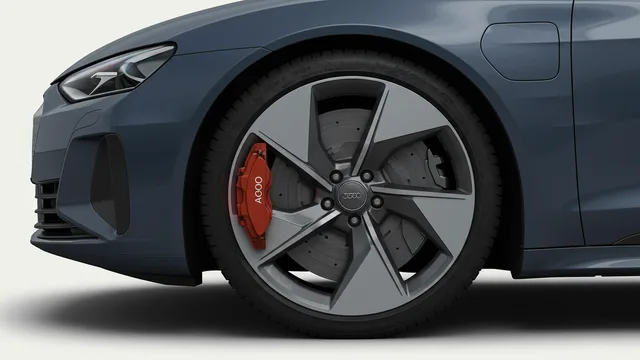
Volkswagen Group of America, Inc. (Audi) is recalling certain 2019-2026 vehicles. Please see the recall report for a complete list of models. A software error may prevent the rearview camera image from displaying as intended. As such, these vehicles fail to comply with the requirements of Federal Motor Vehicle Safety Standard number 111, "Rear Visibility."
Volkswagen Group of America, Inc. (Audi) is recalling certain 2022-2023 RS E-TRON GT and E-TRON GT vehicles. The passenger occupant detection system (PODS) may experience a fault in the wiring and deactivate the front passenger air bag when the seat is occupied.
Volkswagen Group of America, Inc. (Audi) is recalling certain 2022-2024 E-TRON GT, and RS E-TRON GT vehicles. The high-voltage battery may experience a short circuit within the battery module.
Volkswagen Group of America, Inc. (Audi) is recalling certain 2022-2024 Audi RS E-Tron GT and Audi E-Tron GT vehicles. The front axle brake hoses can develop tears, causing a leak and a brake circuit failure.
Volkswagen Group of America, Inc. (Volkswagen) is recalling certain 2022-2023 Audi RS E-Tron GT and E-Tron GT vehicles. The high-voltage battery may experience a short circuit within the battery modules.

Audi has issued Special Notice SM 48-2024, instructing dealers to return certain hose part numbers for the 2022-2025 e-tron GT models. This ensures that customers receive the most current and improved parts. Dealers must return inventory by September 16, 2024, to receive credit.
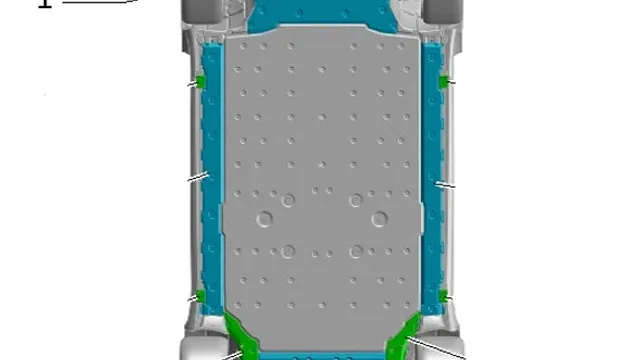
Audi has released Technical Service Bulletin 93R5 for 2022-2023 e-tron GT vehicles to prevent water from entering the high-voltage connector housing. This proactive update involves retrofitting a connector housing cap to address a production irregularity and ensure vehicle safety and reliability.
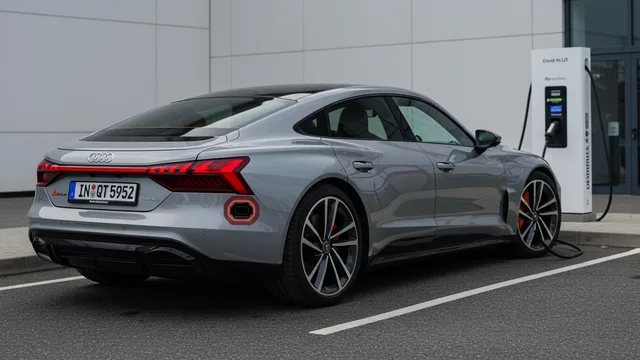
Audi has released Update 93R5 for 2022-2023 e-tron GT and RS e-tron GT vehicles to address a production irregularity that could allow water to enter the high-voltage connector housing. This update involves installing a new connector housing cap to protect the electrical system. Owners will not…
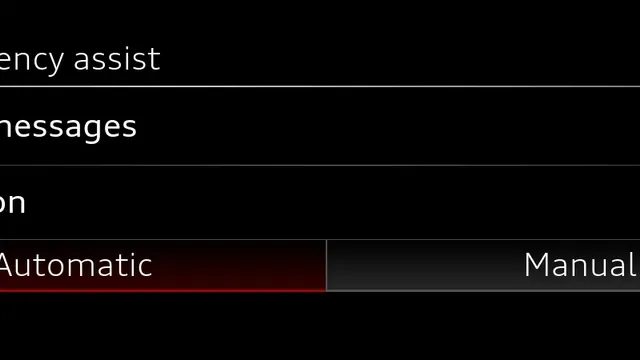
Audi has issued Technical Service Bulletin 93 22 75 2067487/1 for 2022-2023 e-tron GT models regarding drive select and recuperation settings. Owners may observe these settings reverting to default after an ignition cycle. Audi states this behavior is normal and by design.
While I was driving my Audi e-tron GT, the vehicle spontaneously caught fire. I believe the fire resulted from a catastrophic high-voltage battery failure, although the cause has not yet been confirmed. The fire created an immediate risk of injury to me and others nearby. I am reporting this as a serious safety concern.
While I was driving my Audi e-tron GT, the vehicle spontaneously caught fire. I believe the fire resulted from a catastrophic high-voltage battery failure. The fire created an immediate risk of injury to me and others nearby. I am reporting this as a serious safety concern.
I own a 2023 Audi e-tron GT Premium Plus, VIN [XXX]. The vehicle was included in NHTSA Recall 24V726 / Audi Recall 931A concerning high-voltage battery modules that may internally short and create a fire risk. Audi previously completed the 931A remedy by installing the advanced HV battery monitoring software. After the recall remedy was completed, the vehicle displayed an Electrical System Malfunction and the Battery Energy Module reported: “Hybrid/high-voltage battery – Cell module 20 faulty.” I have photographic evidence of this fault, although I later cleared the DTC. Audi’s 24V726 documentation states that the final monitoring software is designed to detect future HV battery module anomalies and that affected modules will be replaced when anomalies are identified. I presented the issue to an authorized Audi dealership and requested diagnosis of Module 20 to determine whether it represents the condition associated with Recall 24V726. The dealership refused to evaluate the HV battery because the vehicle has a rebuilt title. I also contacted Audi of America. Audi stated that Recall 931A is already completed because the monitoring software was installed. My concern is not that the software was never installed. My concern is that the vehicle developed a potentially serious HV battery module fault after installation of the recall remedy, and Audi/dealer have not determined whether Module 20 is the battery anomaly the recall monitoring system was designed to detect. I am asking NHTSA to review this as a potential recall-remedy effectiveness and vehicle safety issue, particularly because Recall 24V726 concerns HV battery internal short circuits and fire risk. INFORMATION REDACTED PURSUANT TO THE FREEDOM OF INFORMATION ACT (FOIA), 5 U.S.C. 552(B)(6)
No injuries · No fire · No crash
While driving my children to school, the vehicle suffered a sudden and complete electrical malfunction in the middle of moving traffic. The vehicle began violently rising and falling. It became inoperable and stopped in the roadway. The door locks failed and would not release — my children were trapped inside a disabled vehicle in live traffic. The only opening that would function was the driver's window. I had to pull my children out through the driver's side window, one at a time, into the road, with traffic around us, in order to get them out of the car. That is not an inconvenience or a quality complaint. That is a safety failure with children in the vehicle, and it is the direct result of a defect that Audi has still not repaired. All motherboards had to be replaced
No injuries · No fire · No crash
The Audi e-tron GT contains a design defect where the 12v battery cannot be charged in the event it becomes depleted. The battery is stored in the front trunk, but this can only be opened when the car has electrical power - there is no manual release. This leaves the vehicle immobilized to the point it must be towed to a dealer using special equipment because the four wheel drive train is locked in position when de-powered. This is a safety issue because it will leave a driver unexpectedly stranded in a remote location or otherwise unable to use their vehicle in an emergency situation. There is no way to mitigate this risk (e.g. via routine replacement of 12v battery) because any electrical fault separate from the battery itself is sufficient. In my case, a malfunctioning light switch caused a parasitic drain on the 12v leaving the car totally immobilized. I was unable to start the car and it took two days for Audi to send a tow truck with the correct equipment to tow the vehicle. It then took them several weeks to diagnose and resolve the problem. Meanwhile, there are thousands of similar components on the car that could potentially cause the same issue to reoccur. The Porsche Taycan, which shares the same platform as the e-tron GT, allows the front trunk to be opened by connecting jumper cables to a fuse box in the driver's side foot well after accessing the passenger cabin with a manual key. The 12v battery in the front trunk can then be charged so the car can be driven in an emergency or to a service center. A recall should be issued requiring Audi to provide the driver some way of accessing the 12v system in an emergency. Failed Component: 12v battery / light switch. Unsure if dealer kept failed part. Safety Risk: Driver left stranded - no way to mitigate via proper maintenance. Confirmation of Issue: Dealer confirmed issue. Inspection of parts: Unsure beyond servicing dealer. Warning: No symptoms or warning of problem. Car simply died overnight.
No injuries · No fire · No crash