Honda Mobile Power Pack e: Targets Zero-Emissions Airport Use
Honda is set to display its Mobile Power Pack e: (MPP) swappable battery technology at the ACI-NA 2026 Annual Conference and Exhibition. Now available for U.S. business-to-business integrations, this zero-emissions solution aims to power various airport equipment and support environmental goals.

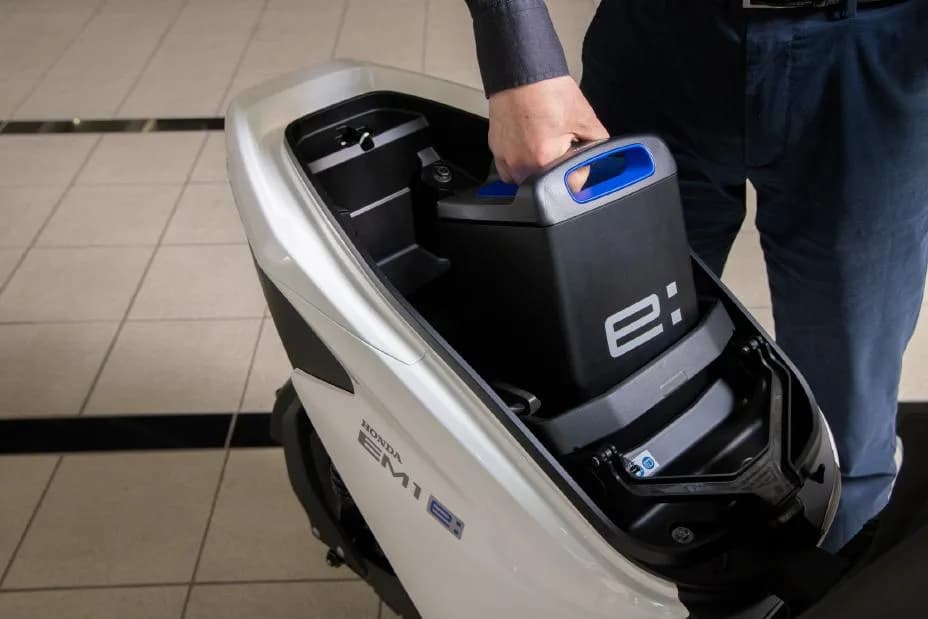
Honda is set to showcase its Mobile Power Pack e: (MPP) swappable battery technology at the Airports Council International North America (ACI-NA) 2026 Annual Conference and Exhibition, taking place from September 14-17 in Philadelphia, PA. This zero-emissions solution, now available for U.S. business-to-business product integrations, aims to provide a standardized energy source for various airport operations.
Swappable Battery Technology for Airport Operations
The Honda Mobile Power Pack e: is designed to overcome common challenges associated with electric mobility products, including lengthy charging times, limited operating range, and the high cost of integrated batteries. By offering a portable and easily swappable battery unit, the MPP e: provides a flexible power solution for commercial applications.
This technology can be integrated into a diverse range of equipment crucial for airport functionality. Potential applications include passenger assistance vehicles, baggage and utility carts, aircraft tugs, and ramp supervisor vehicles. The standardized nature of the MPP e: also allows for its use with electric products manufactured by other original equipment manufacturers (OEMs).
According to Joe Juliano, Business Unit Lead of Sustainability & Business Development at American Honda Motor Co., Inc., airports are complex environments with significant mobility requirements both inside and outside terminal buildings. The Mobile Power Pack e: offers a reliable, standardized, and zero-emissions energy solution capable of powering various equipment without causing operational downtime.
U.S. Market Introduction and Environmental Targets
The introduction of the Honda Mobile Power Pack e: for commercial product integrations marks its new availability in the U.S. market. Honda anticipates that this technology will play a substantial role in supporting zero-emissions initiatives across airport operations nationwide.
This effort aligns with broader industry and corporate environmental objectives. Airports Council International (ACI) World, in collaboration with its members, established a long-term goal for all member airports to achieve net-zero carbon emissions by 2050. Similarly, Honda has committed to a global company goal of achieving net-zero environmental impact, which includes carbon neutrality for all its products and corporate activities, also by 2050.
Honda's Comprehensive Sustainability Efforts
Honda's long-standing focus on environmental responsibility is structured around three core action areas: decarbonization, clean energy, and resource circularity. Decarbonization focuses on reducing CO2 emissions across all products and corporate activities. Clean energy involves utilizing carbon-free energy sources, while resource circularity aims to maximize the use of recycled and biomass materials, converting end-of-life products back into raw materials for reuse.
As part of this strategy, Honda is actively increasing the sales of its hybrid-electric vehicles and has begun the electrification of its powersports and power equipment product lineups. In North America, the company is addressing CO2 emissions from its operations by sourcing renewable energy, with long-term virtual power purchase agreements (VPPAs) for carbon-free wind and solar power covering over 80% of the electricity consumed.
Beyond its own direct operations, Honda also works to decarbonize its offices, warehouses, and manufacturing facilities. The company extends its support to suppliers and independent dealerships across North America, assisting them in their decarbonization efforts through programs such as the Honda Green Excellence Academy and the Honda Environmental Leadership Program.
The availability of the Honda Mobile Power Pack e: for U.S. commercial integration represents a practical step towards sustainable energy solutions in demanding sectors like aviation. This development reflects Honda's broader strategy to achieve its environmental goals and contribute to the global shift towards electric and zero-emission technologies.
Galerie
4 images
Leave a comment
Comments are moderated and may take a moment to appear. Only your first name and the initial of your last name are shown publicly.
Comments
Be the first to comment.