2019-2025 Jeep/RAM Headlamp Condensation TSB 23-008-25
Stellantis TSB 23-008-25 addresses headlamp condensation in 2019-2025 Jeep and RAM vehicles. This bulletin outlines a procedure to clear light condensation and identifies conditions requiring headlamp replacement, along with specific failure codes.
 Ahmet Topcu2023 Jeep Wrangler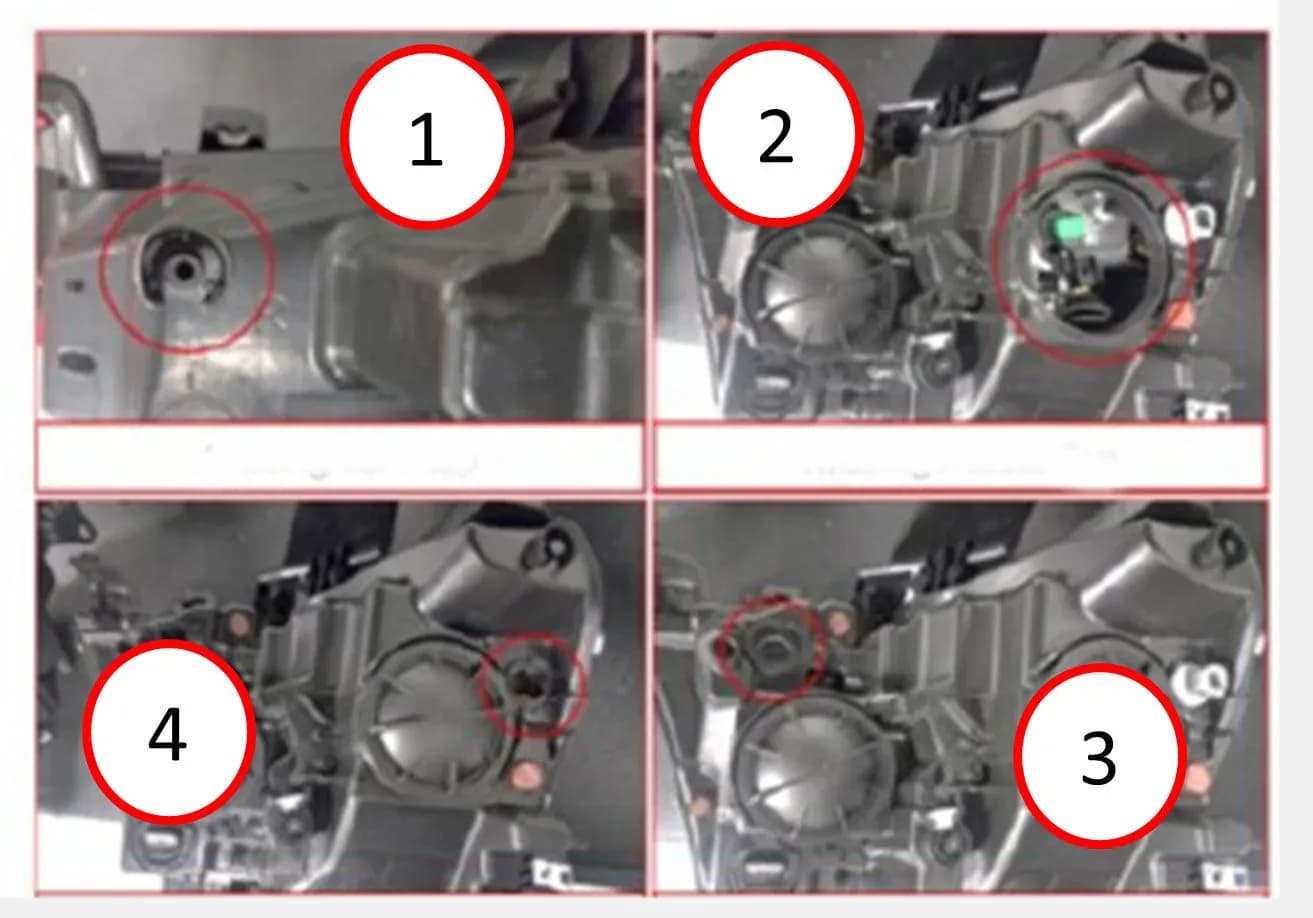
S'applique également à
- Jeep Cherokee
- 2021–2023
- Jeep Compass
- 2021–2025
- Jeep Gladiator
- 2021–2025
- Jeep Grand Cherokee
- 2021–2025
- Jeep Grand Cherokee L
- 2021–2025
- Jeep Grand Wagoneer
- 2022–2025
- Jeep Renegade
- 2021–2025
- Jeep Wagoneer
- 2022–2025
- Jeep Wrangler
- 2021, 2022, 2024, 2025
- Dodge Durango
- 2021–2025
- Ram 1500
- 2021–2025
▸ Afficher 5 de plus▾ Afficher moins
Stellantis has released Technical Service Bulletin (TSB) 23-008-25, dated February 14, 2025, to address customer reports of headlamp condensation. This bulletin, which supersedes TSB 23-004-24 REV. A, issued on August 06, 2024, provides guidance on how to evaluate and resolve light condensation within exterior headlamp assemblies for various 2019-2025 Jeep and RAM models. This TSB is especially relevant for owners experiencing Jeep Wrangler headlamp condensation.
Symptoms of Headlamp Condensation
Owners may observe a light layer of condensation on the inside of their vehicle's exterior headlamp lenses. This can happen after the headlamps have been on and then rapidly cooled, such as during rain or a car wash. Condensation can also appear under specific atmospheric conditions, like a warm, humid day followed by a clear, cool night, especially if the vehicle has been parked outside overnight.
Diagnosis and Evaluation
To determine if the condensation is normal or indicates a problem, a specific evaluation procedure should be followed:
- Ensure all water is dry from the outside surface of the headlamp lens.
- Operate all outside lamps for 20 minutes by starting the vehicle engine, turning on the headlamps, and activating the hazard warning flashers.
If the condensation begins to clear from the headlamp lens after 20 minutes of operation, it indicates that the lamp sealing has not been breached. In this scenario, the headlamp does NOT need to be replaced.
Important Warnings for Owners
It's crucial for owners to understand the distinction between normal condensation and a sealing issue. If the condensation clears after the prescribed 20-minute operation, the headlamp is functioning as designed, and replacement is unnecessary. However, a headlamp that exhibits internal moisture permanently, or has large amounts of water droplets on most internal surfaces, should be replaced as this indicates a sealing problem.
Common Causes for Persistent Condensation
If headlamp condensation does not clear, or if significant moisture is present, it often points to a sealing issue. The TSB identifies two primary causes for heavy, non-normal condensation or fogging:
- Damage: Breakage on the headlamp housing, such as cracks or holes, can allow moisture to enter. This type of issue would be recorded with the failure code "11/BROKEN OR CRACKED."
- Missing or Damaged Sealing Components: Missing vent caps, access caps, or bulb sockets, or incorrectly installed components, can compromise the headlamp's seal. This condition would be recorded with the failure code "1C / CONNECTOR LOOSE NOT ATTACHED."
Repair Procedure Summary
For light condensation that clears after the evaluation procedure, no repair is needed, as this is considered normal operation. Turning the headlamps ON will usually accelerate the clearing process. If the evaluation reveals persistent moisture or significant water ingress, indicating a sealing problem, the headlamp assembly will require replacement. Technicians are directed to refer to detailed service procedures in DealerCONNECT/Service Library under "Service Info>08 - Electrical / 8L - Lamps and Lighting / Lamps/Lighting - Exterior / Unit, Front Lamp / Removal and Installation" for replacement instructions. This TSB, 23-008-25, is for informational purposes regarding the proper diagnosis and resolution of Jeep Wrangler headlamp condensation.
Owner Action
If you observe Jeep Wrangler headlamp condensation or similar issues in your 2019-2025 Jeep or RAM vehicle's headlamps, first try the recommended clearing procedure by operating your headlamps for 20 minutes. If the condensation does not clear, or if you see significant water droplets, it's advisable to contact your authorized Stellantis dealer for diagnosis. They can perform the evaluation and determine if a headlamp replacement is necessary based on the guidelines in TSB 23-008-25.
Source: NHTSA ID: 11014385
Galerie
6 images
Frequently Asked Questions
- What causes headlamp condensation in Jeep and RAM vehicles?
- Headlamp condensation can be caused by normal atmospheric conditions, such as temperature fluctuations, or rapid cooling of the headlamps after being on. It can also indicate a sealing issue if moisture persists.
- When should a headlamp with condensation be replaced according to TSB 23-008-25?
- A headlamp should be replaced if internal moisture is permanent, if large water droplets are visible on internal surfaces, or if the condensation does not clear after 20 minutes of headlamp operation. Light condensation that clears typically does not require replacement.
- What are the common failure codes associated with persistent headlamp moisture?
- If headlamp damage is the cause, the failure code is "11/BROKEN OR CRACKED". If missing or incorrectly installed sealing components are the issue, the failure code is "1C / CONNECTOR LOOSE NOT ATTACHED".
- Does TSB 23-008-25 apply to my 2023 Jeep Wrangler?
- Yes, TSB 23-008-25 applies to 2019-2025 Jeep Wrangler models, along with various other Jeep and RAM vehicles within that year range, addressing concerns about headlamp condensation.
Related Articles
2023 Jeep Wrangler Problems: Recalls & Service Bulletins
The 2023 Jeep Wrangler faces a significant recall for its defrost system, potentially reducing driver visibility. Owners may also encounter engine misfire DTCs, heated steering wheel issues, and various other concerns addressed by numerous service bulletins. This guide details known problems and…
2023 Jeep Wrangler Misfire DTCs PCM Software Update
A Technical Service Bulletin (TSB 18-048-26) addresses Malfunction Indicator Lamp (MIL) illumination and various misfire Diagnostic Trouble Codes (DTCs) in 2023 Jeep Wrangler vehicles. Symptoms include rough idle, engine miss, and noisy valvetrain, all caused by PCM software. The fix involves…
2023 Jeep Wrangler PCM Update for MIL & Misfire DTCs
Jeep has released TSB 18-046-26 for 2023 Wrangler models experiencing Malfunction Indicator Lamp (MIL) illumination, various misfire DTCs (P0300-P0306), rough idle, or a "Service Transmission" message. The fix involves a Powertrain Control Module (PCM) software update to improve engine performance…
2023 Jeep Wrangler Heated Steering Wheel Not Working TSB 08-120-26
Owners of 2023 Jeep Wrangler vehicles may experience a heated steering wheel that does not get hot enough or fails to work. Technical Service Bulletin (TSB) 08-120-26 provides a software update for the Comfort Seat Wheel Module (CSWM) to resolve this issue.
2023 Jeep Wrangler Heated Steering Wheel Not Working TSB
Owners of 2023 Jeep Wrangler vehicles with heated steering wheels may experience the steering wheel not heating up sufficiently or not working at all. Technical Service Bulletin (TSB) 08-120-26 provides a software update for the Comfort Seat Wheel Module (CSWM) to resolve this issue.
Leave a comment
Comments are moderated and may take a moment to appear. Only your first name and the initial of your last name are shown publicly.
Comments
Be the first to comment.