2021-2023 Hyundai Engine Replacement Guidelines TSB 22-EM-010H
Hyundai Technical Service Bulletin 22-EM-010H outlines critical inspection and replacement guidelines for intake and exhaust system components when performing engine short block or sub-assembly replacements. Following these steps helps prevent reoccurring damage to the new engine assembly.
 Sarah Mitchell2021 Hyundai Tucson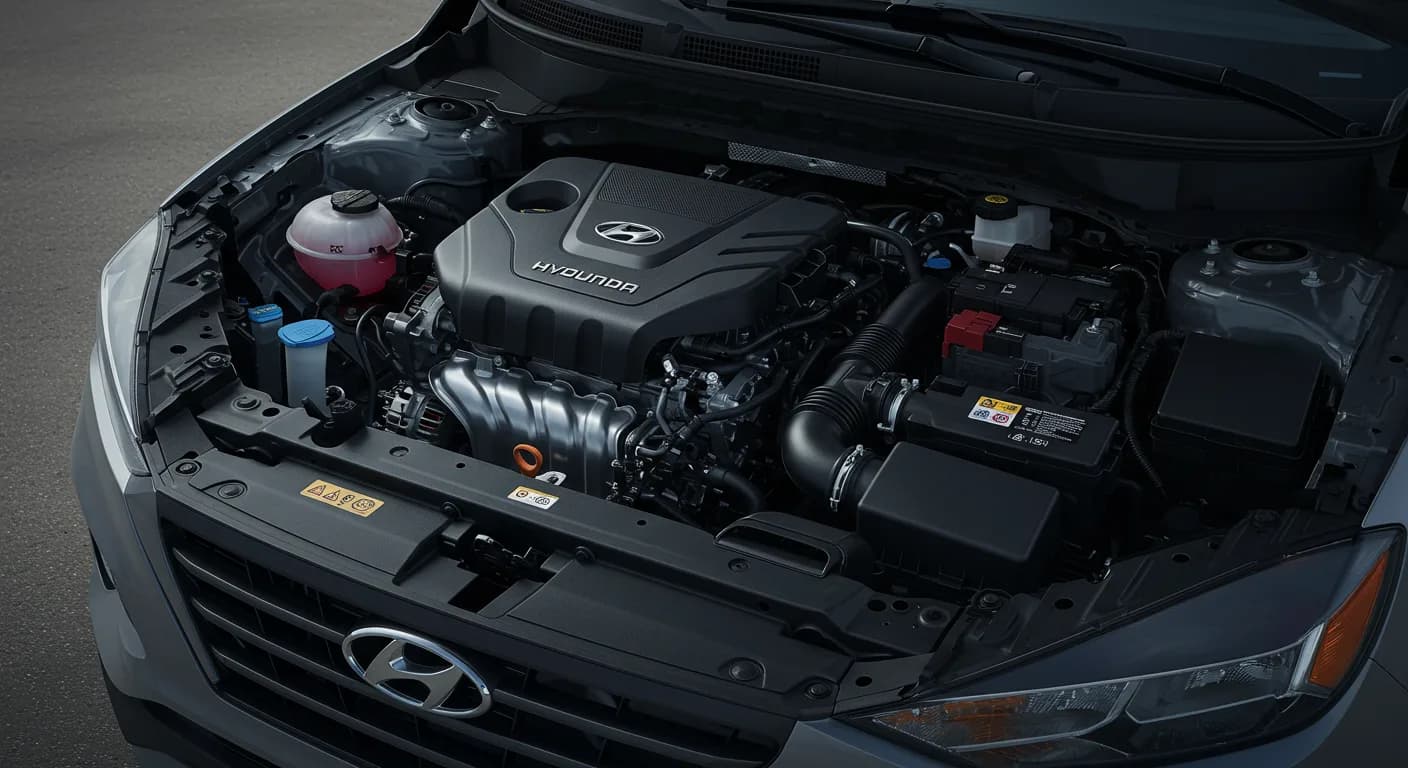
S'applique également à
- Hyundai Accent
- 2021–2022
- Hyundai Elantra
- 2021–2023
- Hyundai Kona
- 2021–2022
- Hyundai Palisade
- 2021–2022
- Hyundai Santa Cruz
- 2022
- Hyundai Santa Fe
- 2021–2022
- Hyundai Sonata
- 2021–2022
- Hyundai Tucson
- 2022
- Hyundai Veloster
- 2021
- Hyundai Venue
- 2021–2022
▸ Afficher 4 de plus▾ Afficher moins
Hyundai has issued Technical Service Bulletin (TSB) 22-EM-010H to provide detailed guidelines for technicians performing engine short block or sub-assembly replacements. These guidelines are crucial for inspecting, cleaning, or replacing specific components within the engine's intake and exhaust systems. The primary goal of TSB 22-EM-010H is to ensure the longevity and proper function of the new engine assembly by addressing potential sources of reoccurring damage.
This bulletin, dated July 2022, applies to all engine-equipped Hyundai models, including the 2021-2023 Hyundai Tucson, Elantra, Accent, Palisade, Kona, Venue, Santa Cruz, Santa Fe, Sonata, and Veloster. It supersedes previous TSB 17-EM-001, introducing updated criteria specifically for intake manifold replacement.
Important Warnings
Hyundai emphasizes that failure to follow the instructions outlined in TSB 22-EM-010H can lead to reoccurring damage to the newly installed engine assembly. This highlights the critical importance of adhering to these inspection and replacement procedures. For additional information regarding engine oil pump replacement during an engine swap, technicians are directed to refer to TSB 10-EM-003 (ENGINE OIL PUMP REPLACEMENT GUIDELINES DURING ENGINE REPLACEMENT).
Engine Conditions Requiring Inspection
The TSB identifies two primary engine conditions that necessitate specific inspection and service actions for intake and exhaust system components when performing a Hyundai engine replacement:
- Any physical damage to one or more combustion chambers, valves, cylinder walls, and/or piston tops due to internal engine issue. This includes severe internal engine damage such as broken pistons or valves, connecting rod interference with the cylinder block, a seized crankshaft, or large debris/fragments found in the oil pan.
- Engine oil consumption and/or excessive combustion blow by due to reduced seal between cylinder walls and piston rings. This condition indicates a problem with the engine's sealing capabilities.
Recommended Inspection and Replacement Actions
Depending on the engine condition, specific actions are required for various components to ensure the new engine's integrity. These guidelines are central to preventing further issues after a Hyundai engine replacement.
For Physical Internal Engine Damage
If severe physical internal engine damage is observed, the following actions are recommended for the associated components:
- MUST REPLACE: The Intake Manifold and the Engine Oil Pump/Balance Shaft Module must be replaced. Specifically, if severe physical internal engine damage is observed, the intake manifold and oil pump/BSM must not be reused. These components should be replaced if they are not supplied with the replacement engine.
- REPLACE if debris is found inside: The Air Intake Filter, Air Intake Carbon Trap (if equipped), Intercooler (if equipped), and Exhaust Manifold with Catalyst Assembly should be replaced if debris is found within them.
- Inspect and CLEAN (Replace if damaged or debris is stuck): The Throttle body, PCV System / Valve Cover Baffle, Air Intake Hose / Pipe, MAF Sensor, Exhaust Manifold (Non-Catalyst Type), Intercooler Pipe (if equipped), and Turbocharger (if equipped) must be inspected. These components should be cleaned thoroughly using an appropriate cleaning agent, ensuring all residual liquids are drained and dried with shop air. If any debris remains stuck or the component is damaged, it must be replaced.
For Engine Oil Consumption and/or Excessive Blow By
When engine oil consumption or excessive combustion blow by is the primary concern, the following components require specific attention:
- Inspect and CLEAN: The Intake Manifold, Throttle Body, PCV System / Valve Cover Baffle, Air Intake Hose / Pipe, Intercooler Pipe (if equipped), and Intercooler (if equipped) should be inspected and cleaned. Similar to the previous condition, cleaning should be thorough, and replacement is necessary if damage or stubborn debris prevents effective cleaning.
Warranty Information
Hyundai states that normal warranty applies to the procedures outlined in TSB 22-EM-010H. Owners should consult their dealership for specific warranty coverage details related to these inspections and repairs.
Service Procedure
This TSB provides the guidelines for component inspection and replacement but directs technicians to refer to the applicable Shop Manual for the detailed service procedures required to perform these actions correctly during a Hyundai engine replacement.
Source: NHTSA ID: 10217251
Frequently Asked Questions
- What is Hyundai TSB 22-EM-010H about?
- Hyundai TSB 22-EM-010H provides essential guidelines for inspecting, cleaning, and replacing specific intake and exhaust system components when a vehicle undergoes an engine short block or sub-assembly replacement. Its purpose is to prevent reoccurring damage to the new engine.
- Why is it important to follow the Hyundai engine replacement guidelines in TSB 22-EM-010H?
- Following the Hyundai engine replacement guidelines in TSB 22-EM-010H is crucial because failure to do so can result in reoccurring damage to the newly installed engine assembly. This ensures the new engine operates correctly and reliably.
- Which components are affected by the intake and exhaust system inspection guidelines?
- The guidelines in TSB 22-EM-010H affect components such as the Intake Manifold, Engine Oil Pump/Balance Shaft Module, Air Intake Filter, Intercooler, Exhaust Manifold w/Catalyst Assembly, Throttle body, PCV System / Valve Cover Baffle, Air Intake Hose / Pipe, MAF Sensor, and Turbocharger, depending on the specific engine condition.
- Does TSB 22-EM-010H apply to all Hyundai models?
- Yes, TSB 22-EM-010H applies to all engine-equipped Hyundai models, including various 2021-2023 Hyundai vehicles like the Tucson, Elantra, Accent, Palisade, Kona, Venue, Santa Cruz, Santa Fe, Sonata, and Veloster.
- What should be done if physical internal engine damage is found?
- If physical internal engine damage is found, the Intake Manifold and Engine Oil Pump/Balance Shaft Module MUST be replaced. Other components like the Air Intake Filter, Intercooler, and Exhaust Manifold w/Catalyst Assembly should be replaced if debris is found, while others like the Throttle body and MAF Sensor should be inspected and cleaned, or replaced if damaged or if debris cannot be removed.
Related Articles
2021 Hyundai Tucson Health Check: Engine & Paint TSBs
For the 2021 Hyundai Tucson, there are no reported recalls, owner complaints, or federal investigations. However, owners should be aware of several manufacturer service bulletins (TSBs) addressing engine emissions, potential engine bearing issues, white paint peeling, and an anti-theft ignition…
2021 Hyundai Tucson Emissions Logic Update (9C2)
Hyundai Service Campaign 9C2 addresses elevated engine-out emissions in certain 2021 Hyundai Tucson models by updating the Engine Control Module (ECM) software. This update helps ensure compliance with emissions standards and prevents failed inspections.
2015 Hyundai Sonata GDS Event 1383 Campaign Suspended
Hyundai Motor America has temporarily suspended Service Campaign 9C2, related to software GDS event #1383, for the 2015 Hyundai Sonata (LFA) 2.4L. Vehicles will not show this campaign as open in WebDCS during the suspension period.
2021 Hyundai Tucson GDS Event #1383 Engine Investigation
Hyundai is actively investigating a software-related engine issue, identified as GDS event #1383. While primarily concerning 2015 Sonata 2.4L vehicles, this manufacturer communication is linked by NHTSA to the 2021 Hyundai Tucson, indicating an ongoing review for a resolution.
2010-2021 Hyundai Engine Bearing TSB 26-01-033H
Hyundai Technical Service Bulletin (TSB) 26-01-033H is a critical reference for Op codes and part numbers under Service Campaign T6G. This campaign addresses engine bearing inspection and replacement for various Hyundai models from 2010-2021, often triggered by DTC P1326 and "Abnormal Engine Noise."
Leave a comment
Comments are moderated and may take a moment to appear. Only your first name and the initial of your last name are shown publicly.
Comments
Be the first to comment.