Audi has released Technical Service Bulletin 2079680/3 to address MMI function problems and 'Emergency call fault' messages in 2023-2025 Audi Q7, Q8, A6, A7, A8, and other models. A software update is available.
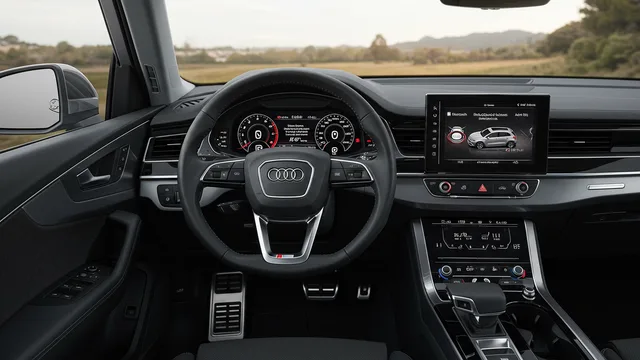
Audi has identified a software issue causing slow Bluetooth and smartphone interface connections in certain 2024-2025 models. A solution is expected by Q2 2026, and component replacement is not recommended as it will not resolve the problem.
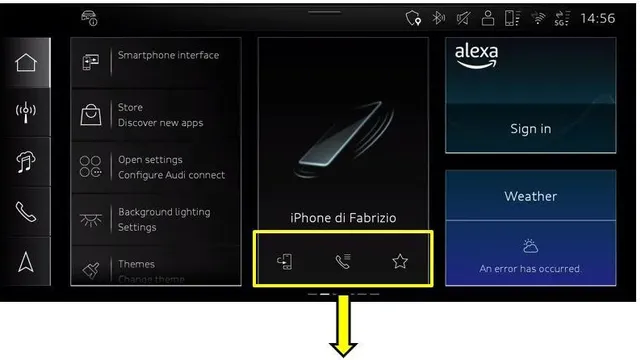
This Technical Service Bulletin (TSB 2080958/2) addresses an issue in 2024-2025 Audi vehicles equipped with the MIB3 infotainment system where owners may find 'no tiles in main menu' or encounter a phone menu with 'controls are not working'. A software update is available.
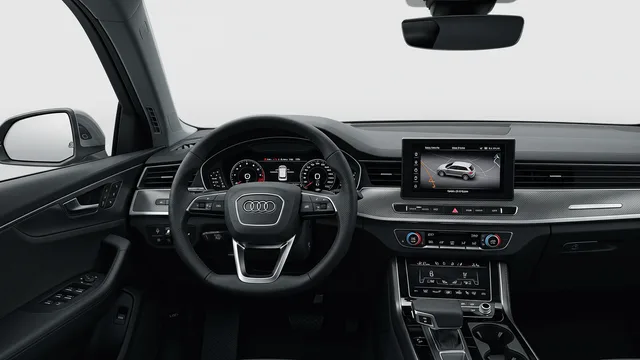
Audi Technical Service Bulletin 2079416/4 provides an overview of customer service packages for MLB and MQB vehicles with MIB3 systems, addressing common infotainment and connectivity complaints in 2024-2025 Audi models. Learn about diagnostic steps and related software updates.
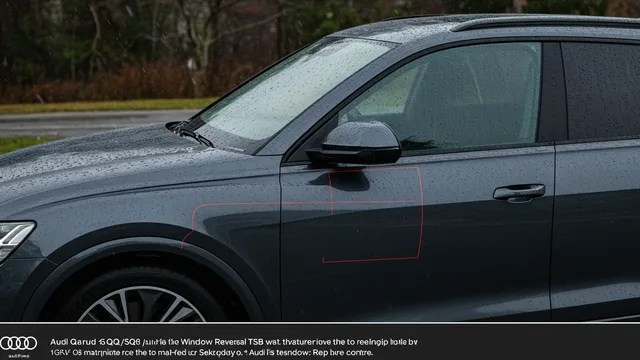
If your 2021-2025 Audi Q8, SQ8, or RS Q8 window opens again after attempting to close it, Technical Service Bulletin 2080696/1 details a software issue. This TSB addresses the diagnostic trouble code B148754 related to the window regulator and provides a software update.
Audi Technical Service Bulletin 2079681/3 provides a critical software update for the MMI and connectivity box in various 2023-2025 Audi models, including the Q8, Q7, A6, A7, and A8. This update resolves issues like MMI malfunctions and the 'Emergency call fault' message.
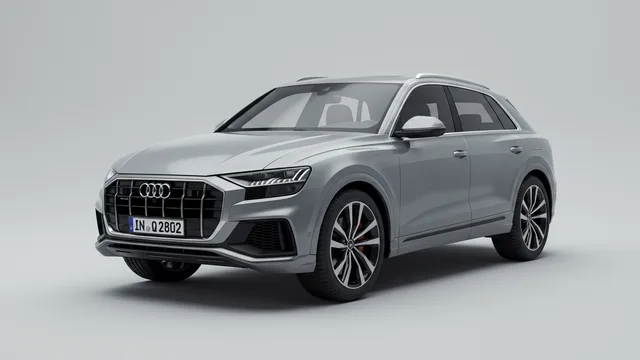
Audi has released Technical Service Bulletin (TSB) 2066297, an on-car analysis list for the VIN-4-PIN reporting program. This bulletin addresses two distinct issues: Bang & Olufsen (B&O) extendable tweeters getting stuck or shuttering, and PPE/PPC vehicles experiencing a time synchronization error…
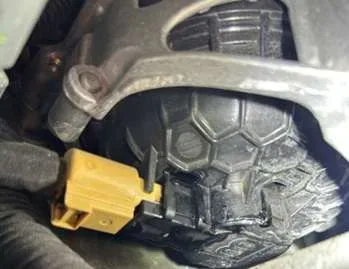
Audi Technical Service Bulletin 2080494/1 addresses the discovery of minor oil residue on engine mountings in various 2020-2026 Audi models. This informational TSB explains that this residue is often a normal manufacturing byproduct and advises against repairs unless specific symptoms like…
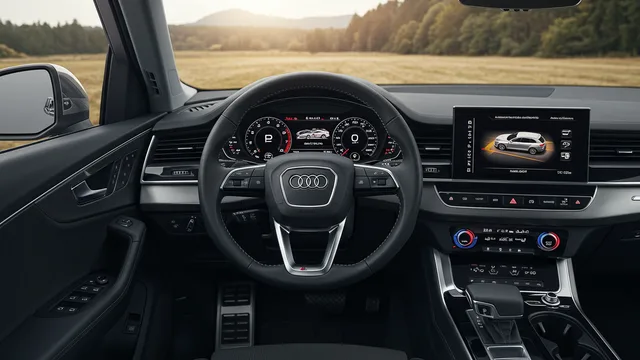
Audi has released Technical Service Bulletin (TSB) 2079416/3 to provide an overview of customer service packages for MLB and MQB vehicles equipped with the MIB3 system. This TSB addresses various complaints related to infotainment and connectivity, including the 'Connection offline' message.
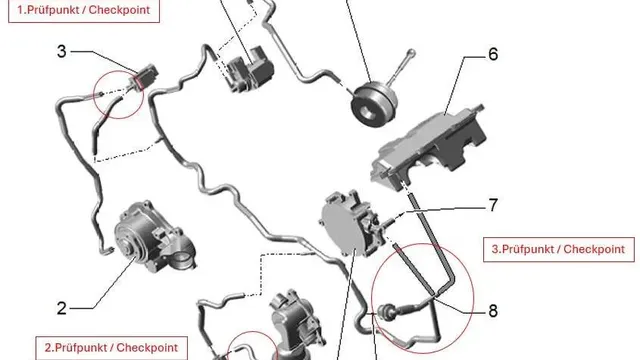
Audi Technical Service Bulletin 2070349/5 details diagnosis and repair for coolant leaks, coolant warning lamp, engine warning lamp, and potential DTC P0299 in 2021-2024 Audi models with 2.9L/3.0L V6 TFSI engines. The TSB identifies the mechanical coolant pump as a common source.
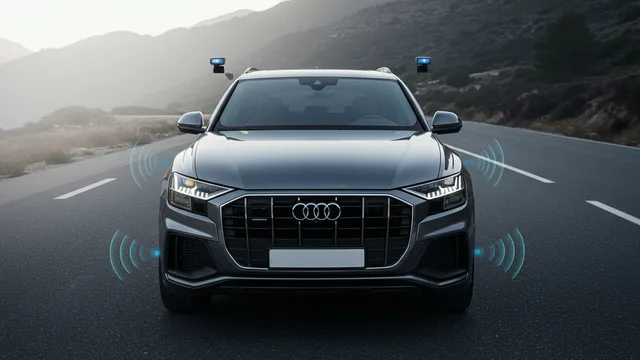
A Technical Service Bulletin (TSB 2079971/1) from Audi addresses customer inquiries regarding the 'close boot lid via sensor control' function in certain 2024-2025 Q series and e-tron models. Audi clarifies that this function was deactivated as standard and is not a fault.
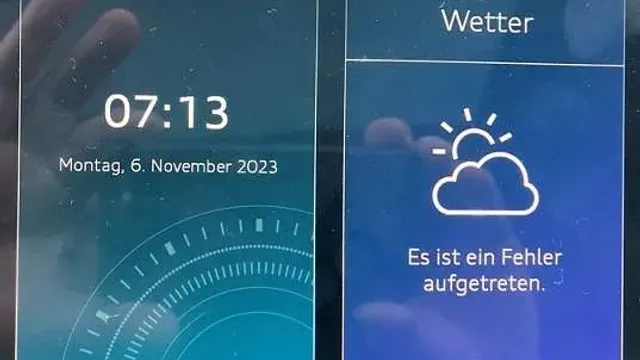
Audi has released Technical Service Bulletin 2079915/1 for 2024 Audi models, including the Q8, addressing a software issue causing the weather widget to display 'An error has occurred' or 'Connection offline'. The fix involves an MMI software update.
While traveling on a major freeway between 65mph and 70mph, vehicle alarms started sounding and numerous alarm / warning messages appeared on the dashboard display, while at the same time, the automatic door opening mechanism (e-latch system) unlatched and partially opened the driver’s side door. The partial opening of the door at high speed is hazardous, and could also cause a major distraction, resulting in a crash and/or danger to others in the vehicle and/or on the highway. The vehicle is currently being inspected at a dealership. There were no warning lamps, messages or other symptoms of the problem prior to the failure. The warning lamps, messages or other symptoms as described appeared during the incident as described.
No injuries · No fire · No crash
On [XXX] about [XXX], I was driving my 2024 Audi Q8 e-tron Premium Plus (VIN [XXX]) in a private parking garage while on the clock for work. I had just left a work meeting and was traveling back to my office. I was backing out of a parking space next to a concrete column when my passenger-side mirror contacted the column. The vehicle’s proximity sensors beeped, which appeared normal. I then pulled forward slowly to straighten the vehicle and assess the mirror. My foot was initially on the accelerator because I was attempting to move forward slowly. The vehicle suddenly jerked and accelerated extremely rapidly and unexpectedly. I immediately moved my foot completely from the accelerator to the brake. I am certain I was not touching the accelerator. The brake pedal felt normal, but the vehicle continued accelerating and would not stop. The vehicle struck a second concrete column approximately one parking space away with substantial force. The impact stopped the vehicle. The vehicle remained powered on after the collision. There was no apparent collision-assistance intervention. I did not observe a brake-system or collision-assistance warning immediately before the event. I was not yet wearing my seatbelt because I was still maneuvering out of the parking space. My head struck the rearview mirror during the collision, causing an avulsion wound to my forehead requiring stitches. I was treated in the ER, underwent CT imaging, and was kept overnight for observation. After the crash, I discovered that my exact VIN has an unrepaired NHTSA safety recall 26V240 / Audi 46P7, issued April 15, 2026. The recall concerns the brake pedal input rod/brake booster actuator rod connection, which may disconnect and result in loss of normal braking. I received the recall letter in April but had not yet had an opportunity to take the vehicle to Audi before the crash. letter did not instruct me not to drive the vehicle. I’m concerned the defect caused the acciden INFORMATION REDACTED PURSUANT TO THE FREEDOM OF INFORMATION ACT (FOIA),
2024 Audi Q8 e-tron, VIN [XXX], [XXX]. Vehicle has had four documented electrical/drive system malfunctions in 12 months, all tied to high heat. We regularly drive our [XXX] child in this vehicle and no longer feel safe doing so. XXX: Electrical system malfunction warning while driving. Taken to Audi dealer. XXX: Same malfunction recurred, taken to Audi dealer again. Both times dealer advised waiting for cooler temps rather than repairing the vehicle. Mid-XXX: Charging began degrading in extreme heat. Day before report: Charging stopped completely, leaving vehicle unusable. Day of report: Drive system malfunction error, vehicle would not shift into drive, had to be towed. A dealer service advisor confirmed Q8 e-tron batteries commonly degrade and fail in Arizona heat and described it as a known regional issue. Safety concern: this vehicle repeatedly loses drive function and charging capability without warning in extreme heat, creating a real risk of being stranded on the road, including with a young child in the car. This is not a comfort or convenience issue, it is a recurring safety failure that Audi has been made aware of multiple times without resolution. Documentation available: text correspondence with Audi, dealer service records, tow record. INFORMATION REDACTED PURSUANT TO THE FREEDOM OF INFORMATION ACT (FOIA), 5 U.S.C. 552(B)(6)
No injuries · No fire · No crash
Opened passenger door, then closed it. Door would not latch and could not be closed or secured despite numerous attempts. Had to tie door shut via interior to safely get vehicle to repair shop. No warning or error lights came on besides door ajar warning. The handles and locking mechanism on this q8 etron have already failed and been replaced numerous times.
No injuries · No fire · No crash
While operating my 2024 Audi Q8 e-tron at 30 mph, I attempted to slow the vehicle to make a turn. Upon pressing the brake pedal, the regenerative braking system failed to engage properly, and the expected deceleration did not occur. The brake pedal felt very soft and the vehicle continued to move forward with nearly no braking force, despite significant pressure being applied to the pedal. The failure appears to be a total malfunction of the 'brake blending' system—the critical handover between the electric regenerative system and the hydraulic friction brakes. Even as a secondary safety measure, the hydraulic brakes failed to provide adequate stopping power. This resulted in a significantly extended deceleration distance that nearly caused a collision. No warning lights appeared on the dashboard prior to this event, making the failure sudden and unpredictable. Please note that this happened shortly after driving 10 miles on a very hilly road and extensively using paddle shifters while driving downhill to force battery charging. The breaks continued to have issues for the next 2h of driving and didn't work as expected for about 60% of the time. The next day, I tried driving short distance and was not able reproduce the problem. This happened on March 21, 2026 between hours of 2 and 4pm.
No injuries · No fire · No crash