2021 Mercedes-Benz AMG GT Brake Noise TSB
Mercedes-Benz has released Technical Service Bulletin LI42.10-P-063502 to address complaints of brake noise and squealing in 2021 AMG GT models. This TSB outlines diagnostic steps and repair procedures for frictional vibrations in the service brake system.
 Ahmet Topcu2021 Mercedes-Benz AMG GT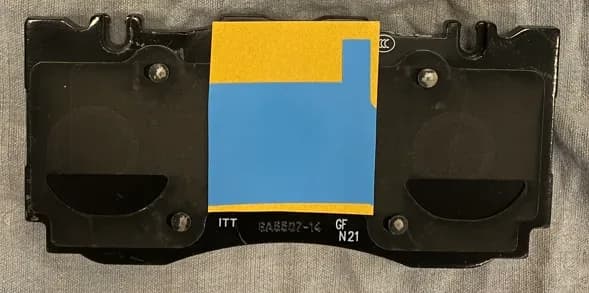
Symptoms
Owners of 2021 Mercedes-Benz AMG GT vehicles may experience various forms of brake noise from the service brake system. These noises can occur in different driving situations and ambient conditions. The reported symptoms include:
- Chassis/suspension > Brake system > Service brake > Noises > General
- Chassis/suspension > Brake system > Service brake > Noises > Squeals
- Chassis/suspension > Brake system > Service brake > Noises > Whirring/howling
- Chassis/suspension > Brake system > Service brake > Noises > Makes noise
If you hear any of these sounds, it indicates a potential Mercedes-Benz AMG GT brake noise issue.
Cause
The root cause of the Mercedes-Benz AMG GT brake noise is identified as frictional vibrations within the brake system. AMG brake systems are designed for high loads, which can sometimes lead to these noises under specific operating conditions and driving styles. Factors like speed, brake pressure, and ambient conditions (temperature, air humidity) can influence their occurrence.
Important Warnings
Technicians performing this repair must observe a critical warning:
- "IMPORTANT: Be absolutely certain to not allow paste between friction surfaces of the pad and disc!" This prevents critical safety issues and ensures proper brake function.
Diagnosis
To accurately diagnose the Mercedes-Benz AMG GT brake noise, technicians follow a structured process:
- Initial Checks: The technician will first check for any other relevant documents for the specific model series. They will attempt to reproduce the complaint and identify which axle (front or rear) and side the noises originate from, ideally during a test drive with the customer.
- Component Inspection: The affected brake system components are inspected for wear, mechanical damage, or localized overheating damage. Any damaged components must be replaced before re-assessing the noise.
- Lift Inspection: With the vehicle secured on a lift, the engine is started, and the brake pedal is depressed 3-4 times. Each wheel is then checked manually to ensure it turns freely. If a wheel does not turn freely, this underlying issue must be resolved first.
- Rotor and Pad Assessment: The condition of the brake rotors and pads is assessed visually and according to Workshop Information System (WIS) guidelines, looking for signs of stagnation or other issues.
Repair Procedure Summary
The repair procedure varies slightly depending on whether the noise originates from the front or rear axle.
For Front Axle Noise:
- Remove the front axle brake linings.
- Clean all contact points on the brake lining, brake caliper, and carrier.
- Clean the bonding surface where pistons contact the back of the brake pad. Apply adhesive film to the backplate of the piston-side brake lining. For 6-piston calipers, apply only in the center piston area. For other caliper configurations, apply where the piston(s) makes contact with the back of the pad.
- After installing the brake linings, actuate the brake for 30 seconds.
For Rear Axle Noise:
- Remove the rear axle brake pads.
- Clean all contact points on the brake lining, brake caliper, and carrier.
- Grease the contact points (specifically the red areas shown in the attachment) between the brake lining and the guide of the brake caliper with heat-resistant lubricating paste.
- Clean the bonding surface where pistons contact the back of the brake pad. Apply adhesive film to the backplate of the piston-side brake lining.
Required Tools or Parts
Specific parts are required for this repair:
- 3M F9469PC: Alternate Adhesive Transfer Tape (Quantity 1)
- A001 989 87 51: Heat-resistant lubricating paste (Quantity <1)
- A 190 423 32 00: Adhesive Transfer Tape (Quantity 1, may need modification to fit or an alternate can be used)
Brake Bedding Process
After the repair, a specific brake bedding process is crucial to ensure optimal performance and reassess the Mercedes-Benz AMG GT brake noise:
- Customer Mileage Clarification: Before the trip, the customer should be informed that approximately 30 miles will be incurred.
- Route Selection: Choose a suitable route where speeds of approximately 65 MPH can be achieved.
- Braking Cycles: Brake the vehicle 15 times from 62 MPH down to 30 MPH, using a brake pressure of approximately 30 bar (which can be read out using XENTRY). Crucially, avoid emergency stops and braking within the ESP control range. Maintain a cooling distance of about 1 mile between each brake application.
- Final Cooling: Drive approximately 3 miles to allow the brake system to cool down.
- Reassessment: After this process, the noise should be reassessed.
Owner Action
If your 2021 Mercedes-Benz AMG GT is experiencing brake noise or squealing, it is recommended to contact an authorized Mercedes-Benz service center. They can perform the diagnostic and repair procedures outlined in TSB LI42.10-P-063502 to resolve the issue.
Source: NHTSA ID 11012904
Gallery
2 images
Frequently Asked Questions
- What causes brake noise in a 2021 Mercedes-Benz AMG GT?
- Brake noise, including squealing, whirring, and howling, in a 2021 Mercedes-Benz AMG GT is primarily caused by frictional vibrations within the service brake system, as detailed in TSB LI42.10-P-063502.
- How is the Mercedes-Benz AMG GT brake noise issue fixed?
- The repair involves specific steps for front or rear axles, including cleaning contact points, applying adhesive film to brake linings, and for rear axles, applying heat-resistant lubricating paste. A post-repair brake bedding process is also required.
- Are there any special instructions after the brake noise repair for my AMG GT?
- Yes, after the repair, a specific brake bedding procedure must be followed. This includes 15 braking cycles from 62 MPH to 30 MPH with specific brake pressure, maintaining cooling distances, and a final cooling drive.
- What parts are used to fix the Mercedes-Benz AMG GT brake noise?
- The repair for the Mercedes-Benz AMG GT brake noise typically uses Alternate Adhesive Transfer Tape (part numbers 3M F9469PC or A 190 423 32 00) and heat-resistant lubricating paste (part number A001 989 87 51).
Related Articles
2021 Mercedes-Benz AMG GT Technical Reference Guide
This Mercedes-Benz technical bulletin LI00.01-P-078887 provides a comprehensive reference for workshops, detailing common acronyms, control unit identification methods, network/wiring architecture groups, and platform-to-baumuster mappings for the 2021 Mercedes-Benz AMG GT.
2021 Mercedes-Benz AMG GT Parking System Malfunctions
This Mercedes-Benz technical service bulletin (TSB) L154.65-P-080132 addresses various parking system malfunctions in the 2021 AMG GT, including sensor activations, a "Red Ring Around Vehicle" warning, and "Active Parking and Parking Assist Inoperative" messages.
2021 Mercedes-Benz AMG GT Headlamp Fogging TSB
Mercedes-Benz issued TSB LI82.10-P-078301 for headlamp and fog lamp fogging in the 2021 AMG GT. This document explains that fogging is a natural phenomenon and provides a procedure to clear condensation, distinguishing it from defects.
2021 Mercedes-Benz AMG GT Parking Assist Faults TSB
This Mercedes-Benz Technical Service Bulletin (TSB) L154.65-P-080132 details various parking assist system faults for the 2021 AMG GT, such as "Red Ring Around Vehicle" and "Active Parking and Parking Assist Inoperative" messages. It provides diagnostic guidance for issues related to PARK sensor…
2021 Mercedes-Benz AMG GT ECU Software Update
Mercedes-Benz has issued service campaign 2024100016 to update the Engine Control Unit (ECU) software on certain 2021 AMG GT vehicles. This update ensures the ECU software meets current production specifications, preventing potential issues with on-board diagnostics and exhaust gas emissions…
Leave a comment
Comments are moderated and may take a moment to appear. Only your first name and the initial of your last name are shown publicly.
Comments
Be the first to comment.