2021-2025 Jeep Turbocharger Noise and Oil Leak TSB
Jeep has issued service guidance (TSB 9100363) for 2021-2025 Wrangler, Compass, and Grand Cherokee models addressing turbocharger noise, rattle, and oil leak concerns. This communication advises technicians on servicing individual turbo components rather than replacing the entire assembly…
 Ahmet Topcu2023 Jeep Wrangler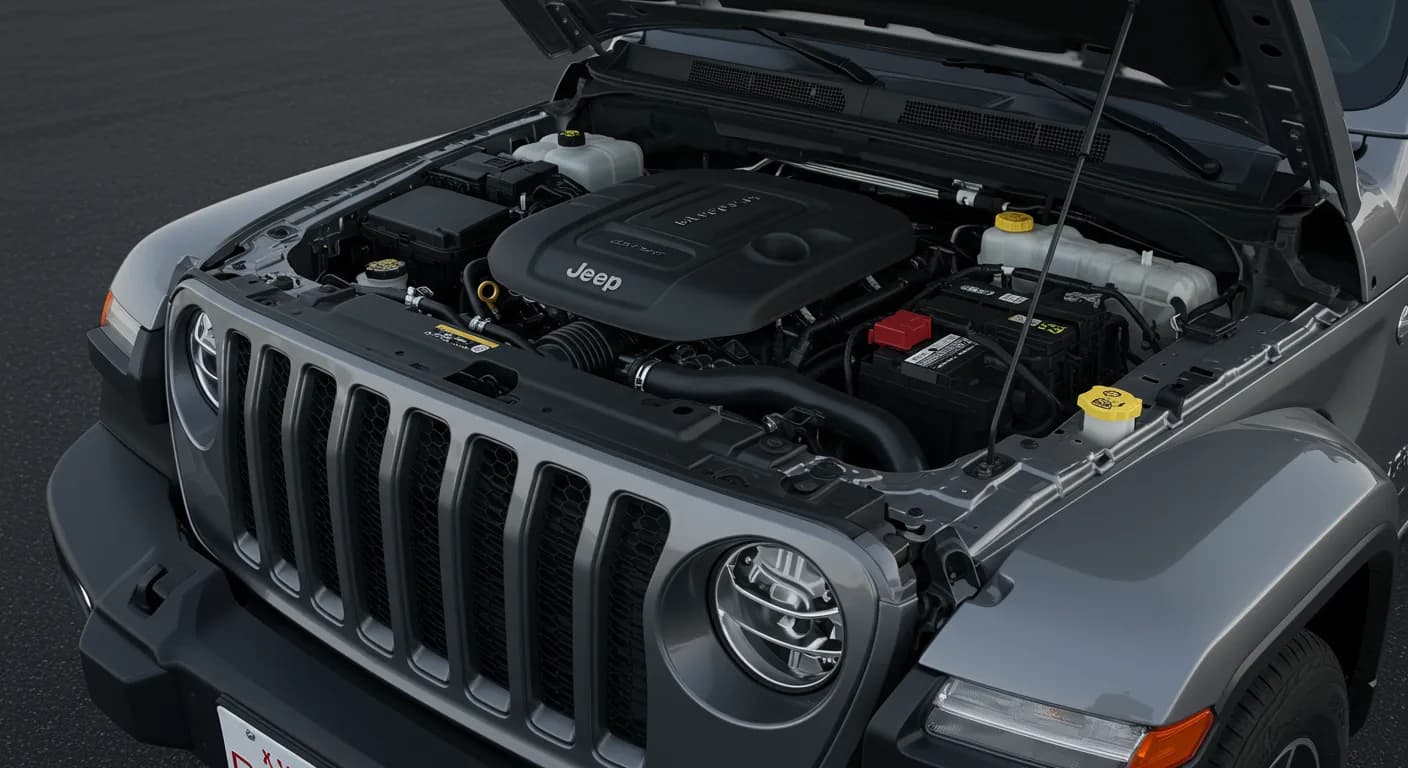
Also applies to
- Jeep Compass
- 2023–2024
- Jeep Grand Cherokee
- 2022–2024
- Jeep Wrangler
- 2021, 2022, 2024, 2025
Jeep has released a manufacturer communication, identified as bulletin 9100363, to provide guidance on diagnosing and repairing turbocharger-related issues in various models. This bulletin, titled "GPOP - Issue Review System," emphasizes that a complete turbocharger replacement is often unnecessary for concerns like noise, rattle, or oil leaks, as individual components can be serviced separately.
This guidance is crucial for owners of 2021-2025 Jeep Wrangler, Compass, and Grand Cherokee vehicles experiencing these problems, as it can help prevent potentially expensive and unneeded full turbo replacements. The bulletin highlights specific areas for technicians to inspect and repair.
Symptoms
Owners may notice one or more of the following symptoms related to their vehicle's turbocharger system:
- Noise: An unusual sound emanating from the turbocharger area.
- Rattle: A rattling sound, particularly when the engine is running.
- Oil Leak Concern: Visible oil leaks around the turbocharger assembly.
If you experience any of these Jeep Wrangler turbocharger issues, it's important to have your vehicle inspected by a qualified technician.
Diagnosis and Trigger Conditions
Jeep's bulletin 9100363 provides specific instructions for technicians to diagnose the root cause of the turbocharger issues. For vehicles exhibiting noise or a rattle, the primary diagnostic step involves inspecting the wastegate for binding. A wastegate that isn't operating smoothly can lead to various performance and noise issues.
If the concern is an oil leak, technicians are instructed to carefully inspect the area around the turbo oil feed o-ring for signs of leakage. This o-ring is a common point of failure for oil leaks and can be serviced independently.
Repair Procedure Summary
The core message of bulletin 9100363 is to avoid unnecessary complete turbocharger replacement. Instead, technicians should focus on servicing individual components. Here's a summary of the recommended approach:
- For Noise or Rattle: If the turbo is being replaced due to noise or a rattle, the technician should first inspect the wastegate for binding. If binding is found, only the wastegate mechanism or related components may need attention, not the entire turbo assembly.
- Actuator Kit Service: The actuator kit, which controls the wastegate, is available and serviced separately. If issues are traced to the actuator, only this kit should be replaced.
- For Oil Leak Concerns: If the turbo is being replaced due to an oil leak, the technician must inspect the area around the turbo oil feed o-ring. If a leak is identified from this component, the o-ring can be serviced separately, without requiring a full turbo replacement.
This targeted approach ensures that only the faulty component is addressed, making repairs more efficient and potentially less costly. The part numbers associated with these turbocharger kit components include 05281614AS, 68570195AS, and 68604560AS.
Important Warnings
Jeep explicitly states in this communication: "Please note many parts of the Turbo Assembly can be serviced separately and complete turbo replacement may not be necessary." This is a critical warning for both technicians and owners. It means that if your vehicle is experiencing Jeep Wrangler turbocharger issues, a full turbo replacement might be an over-repair. Owners should be aware of this guidance to ensure their service center follows the recommended diagnostic and repair procedures, potentially saving significant costs by replacing only the affected component, such as the actuator kit or the turbo oil feed o-ring, rather than the entire turbocharger.
Owner Action
If your 2021-2025 Jeep Wrangler, Compass, or Grand Cherokee is exhibiting symptoms such as turbocharger noise, rattle, or an oil leak, schedule an appointment with your authorized Jeep dealership. Inform them about the specific symptoms you are experiencing. It may be beneficial to mention your awareness of manufacturer communication 9100363, which advises against automatic full turbocharger replacement and suggests inspecting individual components like the wastegate, actuator kit, and turbo oil feed o-ring.
This proactive approach can help ensure that your vehicle receives the most accurate diagnosis and cost-effective repair, adhering to Jeep's latest service guidance.
Source: NHTSA Manufacturer Communication 11011997 (TSB 9100363)
Frequently Asked Questions
- What kind of turbocharger problems does Jeep TSB 9100363 address?
- Jeep TSB 9100363 addresses turbocharger noise, rattling sounds, and oil leak concerns in affected vehicles. It provides guidance on how to diagnose and repair these specific Jeep Wrangler turbocharger issues.
- Do I need a full turbocharger replacement for noise or an oil leak?
- Not necessarily. According to Jeep's bulletin 9100363, many parts of the turbo assembly can be serviced separately. For noise or rattle, the wastegate should be inspected for binding. For oil leaks, the turbo oil feed o-ring should be checked, as it can be replaced independently.
- Which Jeep models are covered by this turbocharger service guidance?
- This service guidance applies to 2021-2025 Jeep Wrangler, Jeep Compass, and Jeep Grand Cherokee models that may experience turbocharger noise, rattle, or oil leak issues.
- What are the relevant part numbers mentioned in this bulletin?
- The bulletin mentions part numbers 05281614AS, 68570195AS, and 68604560AS, which are associated with the Turbocharger Kit and its components that can be serviced separately.
Related Articles
2023 Jeep Wrangler Problems: Recalls & Service Bulletins
The 2023 Jeep Wrangler faces a significant recall for its defrost system, potentially reducing driver visibility. Owners may also encounter engine misfire DTCs, heated steering wheel issues, and various other concerns addressed by numerous service bulletins. This guide details known problems and…
2023 Jeep Wrangler Misfire DTCs PCM Software Update
A Technical Service Bulletin (TSB 18-048-26) addresses Malfunction Indicator Lamp (MIL) illumination and various misfire Diagnostic Trouble Codes (DTCs) in 2023 Jeep Wrangler vehicles. Symptoms include rough idle, engine miss, and noisy valvetrain, all caused by PCM software. The fix involves…
2023 Jeep Wrangler PCM Update for MIL & Misfire DTCs
Jeep has released TSB 18-046-26 for 2023 Wrangler models experiencing Malfunction Indicator Lamp (MIL) illumination, various misfire DTCs (P0300-P0306), rough idle, or a "Service Transmission" message. The fix involves a Powertrain Control Module (PCM) software update to improve engine performance…
2023 Jeep Wrangler Heated Steering Wheel Not Working TSB 08-120-26
Owners of 2023 Jeep Wrangler vehicles may experience a heated steering wheel that does not get hot enough or fails to work. Technical Service Bulletin (TSB) 08-120-26 provides a software update for the Comfort Seat Wheel Module (CSWM) to resolve this issue.
2023 Jeep Wrangler Heated Steering Wheel Not Working TSB
Owners of 2023 Jeep Wrangler vehicles with heated steering wheels may experience the steering wheel not heating up sufficiently or not working at all. Technical Service Bulletin (TSB) 08-120-26 provides a software update for the Comfort Seat Wheel Module (CSWM) to resolve this issue.
Leave a comment
Comments are moderated and may take a moment to appear. Only your first name and the initial of your last name are shown publicly.
Comments
Be the first to comment.