2018-2021 Hyundai Tucson Emissions Update TSB 26-01-013H
Hyundai has released Technical Service Bulletin (TSB) 26-01-013H, also known as Service Campaign 9C2, to address elevated engine-out emissions in certain 2018-2021 Hyundai Tucson vehicles equipped with the 2.4L GDI Theta II engine. This bulletin provides instructions for an Engine Control Module…
 Ahmet Topcu2021 Hyundai Tucson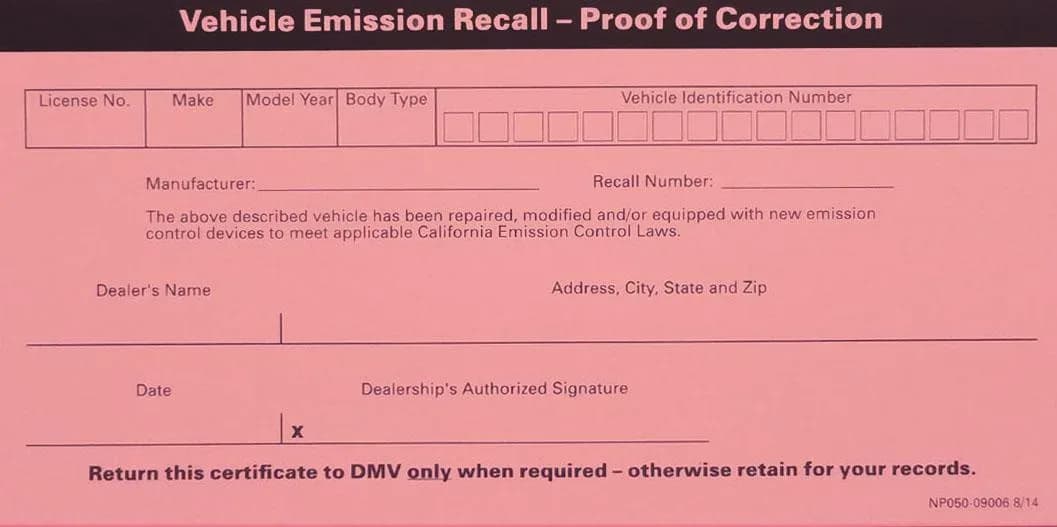
Introduction to Service Campaign 9C2
Hyundai has released Technical Service Bulletin (TSB) 26-01-013H, also identified as Service Campaign 9C2, to address a condition where certain vehicles, including the 2018-2021 Hyundai Tucson, 2019-2020 Santa Fe (TMA), 2017-2018 Santa Fe Sport (AN), and 2016-2019 Sonata (LFA) equipped with the 2.4L GDI Theta II engine, may exhibit elevated engine-out emissions. This bulletin outlines the necessary steps for updating the Engine Control Module (ECM) software to improve emissions performance. This TSB supersedes a previous bulletin, 25-01-087H-1, by expanding coverage to include 2016-2017MY Sonata (LFA) and 2017-2018MY Santa Fe Sport (AN) vehicles, and introducing new software events 1367, 1372, and 1373, along with associated GDS, Warranty, ROM ID, and Manual Mode Password information.
This update is crucial for maintaining optimal engine performance and compliance with emissions standards. Owners of affected vehicles should ensure this software update is performed to resolve the potential for elevated engine-out emissions. This Hyundai Tucson emissions update is a proactive measure to ensure your vehicle meets environmental standards.
Symptoms
The primary symptom addressed by this service campaign is elevated engine-out emissions. Owners may not directly observe this symptom, as it typically requires specialized diagnostic equipment to detect. The purpose of this update is to proactively improve the emissions profile of the affected vehicles, preventing potential issues related to emissions compliance.
Important Warnings for Owners
Hyundai has issued several critical instructions and warnings related to Service Campaign 9C2:
- Dealers must perform this service campaign on all affected vehicles prior to customer retail delivery and whenever an affected vehicle is in the shop for any maintenance or repair.
- Owners should be aware that the vehicle's battery charge must be above 11.0 Volts and the diagnostic tablet's battery charge above 30% before performing the software update to prevent update failures.
- During the update process, technicians are instructed to NOT leave the head lamp switch in auto mode and to turn OFF all lamps and accessories.
- It is critical that technicians do NOT disconnect any cables connected to the vehicle or the scan tool during the update.
- Technicians are explicitly instructed to do NOT start the engine during the update procedure.
- The ignition switch must NOT be turned OFF during the update.
- For GDS screenshots, the VIN/Date/Time/Mileage photo imprint is NOT required.
- If the STUI camera function is NOT used, the last 6 digits of the VIN and the date of repair must be written on a piece of paper for inclusion in the photo documentation.
- The Vehicle Emission Recall - Proof of Correction Card is required only for vehicles registered in specific states (CA, CO, CT, DE, ME, MD, MA, NJ, NY, OR, PA, RI, VT, WA). If your state is NOT applicable, the service procedure is complete after the software update and emissions label application.
Repair Procedure Overview
The repair involves updating the Engine Control Module (ECM) software using the GDS-Smart diagnostic system. The process includes verifying the current software version (ROM ID), performing the update, clearing any incidental fault codes, and applying an emissions label. This Hyundai Tucson emissions update is a software-based solution.
Detailed Service Steps
- Initial ECU Update: The ECU update must initially be performed in Auto Mode using the GDS-Smart system. If the update begins but then fails in Auto Mode, the technician must perform the update in Manual Mode to recover. Refer to TSB # 25-GI-011H, "ECU Update Procedure for Tablet-Based GDS-Smart", for additional information.
- ROM ID Verification: Before attempting the software update, technicians must verify the current ROM ID version by selecting the Engine system to scan the vehicle's current ROM ID and compare it to the ROM ID Information table provided in the TSB. This ensures the correct software event is applied.
- Battery Check: Prior to starting the software update, it is critical to ensure the vehicle's battery charge is above 11.0 Volts and the diagnostic tablet's battery charge is above 30%. This prevents interruptions and potential failures during the update process.
- Software Installation: The GDS-Smart system is used to download and install the new ECM software. During this process, the ignition switch must be in the ON position, and all lamps and accessories must be turned OFF. Technicians are strictly instructed not to disconnect any cables or start the engine during the update.
- Update Failure Recovery: If the update fails, the technician must remove the power connector from the indoor fuse box for at least 5 seconds, then reconnect it. Alternatively, disconnecting the negative (-) 12V battery terminal for at least 5 seconds, then reconnecting it, can also resolve the issue before retrying the update.
- Post-Update Reset: Once the ECU update process shows 100% complete, the technician must follow the on-screen prompts to cycle the ignition OFF for at least 10 seconds (or up to 30 seconds for certain models) to reset the control unit. The
Gallery
9 images
Frequently Asked Questions
- What is Hyundai TSB 26-01-013H / Service Campaign 9C2?
- Hyundai TSB 26-01-013H, also known as Service Campaign 9C2, is an Engine Control Module (ECM) software update designed to address and improve elevated engine-out emissions in certain Hyundai vehicles, including the 2018-2021 Hyundai Tucson.
- Which Hyundai models are affected by Service Campaign 9C2?
- This service campaign primarily affects the 2018-2021 Hyundai Tucson, as well as certain 2019-2020 Santa Fe (TMA), 2017-2018 Santa Fe Sport (AN), and 2016-2019 Sonata (LFA) vehicles equipped with the 2.4L GDI Theta II engine.
- What is the repair for the elevated engine-out emissions?
- The repair involves updating the Engine Control Module (ECM) software using the GDS-Smart diagnostic system. This software update is intended to optimize engine performance and reduce emissions, specifically addressing the 'Tucson TL ECU UPGRADE - EMISSION LOGIC IMPROVEMENT' for the 2018-2021 Hyundai Tucson.
- Are there any special requirements for the ECU software update?
- Yes, the vehicle's battery must be above 11.0 Volts and the diagnostic tablet's battery above 30%. During the update, the engine must not be started, and no cables should be disconnected. The update should initially be performed in Auto Mode, with a fallback to Manual Mode if needed, referencing TSB # 25-GI-011H for detailed procedures.
- Do I need a 'Proof of Correction Card' after the update?
- A 'Vehicle Emission Recall - Proof of Correction Card' (part number NP050-09006) is required for vehicles registered in specific states, including California, Colorado, Connecticut, Delaware, Maine, Maryland, Massachusetts, New Jersey, New York, Oregon, Pennsylvania, Rhode Island, Vermont, and Washington. If your vehicle is not registered in one of these states, this card is not applicable.
Related Articles
2021 Hyundai Tucson Health Check: Engine & Paint TSBs
For the 2021 Hyundai Tucson, there are no reported recalls, owner complaints, or federal investigations. However, owners should be aware of several manufacturer service bulletins (TSBs) addressing engine emissions, potential engine bearing issues, white paint peeling, and an anti-theft ignition…
2021 Hyundai Tucson Emissions Logic Update (9C2)
Hyundai Service Campaign 9C2 addresses elevated engine-out emissions in certain 2021 Hyundai Tucson models by updating the Engine Control Module (ECM) software. This update helps ensure compliance with emissions standards and prevents failed inspections.
2015 Hyundai Sonata GDS Event 1383 Campaign Suspended
Hyundai Motor America has temporarily suspended Service Campaign 9C2, related to software GDS event #1383, for the 2015 Hyundai Sonata (LFA) 2.4L. Vehicles will not show this campaign as open in WebDCS during the suspension period.
2021 Hyundai Tucson GDS Event #1383 Engine Investigation
Hyundai is actively investigating a software-related engine issue, identified as GDS event #1383. While primarily concerning 2015 Sonata 2.4L vehicles, this manufacturer communication is linked by NHTSA to the 2021 Hyundai Tucson, indicating an ongoing review for a resolution.
2010-2021 Hyundai Engine Bearing TSB 26-01-033H
Hyundai Technical Service Bulletin (TSB) 26-01-033H is a critical reference for Op codes and part numbers under Service Campaign T6G. This campaign addresses engine bearing inspection and replacement for various Hyundai models from 2010-2021, often triggered by DTC P1326 and "Abnormal Engine Noise."
Leave a comment
Comments are moderated and may take a moment to appear. Only your first name and the initial of your last name are shown publicly.
Comments
Be the first to comment.