2021 Hyundai Tucson ECU Software Update for Emissions
Hyundai has issued Service Campaign 9C2 (TSB 25-01-087H-1) to address elevated engine-out emissions in certain 2021 Hyundai Tucson vehicles equipped with the 2.4L GDI Theta II engine. This update involves reprogramming the Engine Control Module (ECM) software.
 Sarah Mitchell2021 Hyundai Tucson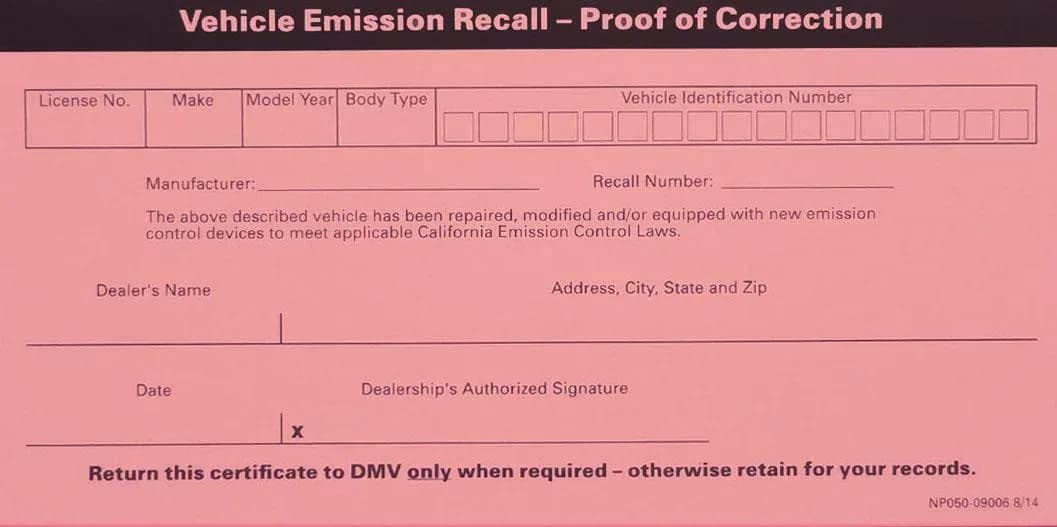
Hyundai has released Service Campaign 9C2, detailed in Technical Service Bulletin (TSB) 25-01-087H-1, to improve emissions performance for certain vehicles, including the 2021 Hyundai Tucson equipped with the 2.4L GDI Theta II engine. This bulletin outlines the procedure for updating the Engine Control Module (ECM) software to correct conditions that may lead to elevated engine-out emissions.
This TSB supersedes a previous bulletin, 25-01-087H, and expands its scope to include additional model years and software events. The primary goal is to ensure vehicles meet emissions standards and operate efficiently.
Symptoms
The main symptom addressed by this service campaign is "elevated engine-out emissions." While not typically a direct warning light for the driver, this condition indicates that the vehicle's exhaust gases contain higher levels of pollutants than intended, potentially impacting environmental compliance and engine efficiency. Owners may not notice a specific drivability issue related to this, but the update is crucial for regulatory and performance reasons.
Important Warnings for Owners
Owners should be aware of several critical points regarding this service campaign:
- Dealer Action Required: Dealers are mandated to perform this service campaign on all affected vehicles prior to customer retail delivery and whenever an affected vehicle is in the shop for any maintenance or repair. This ensures that the Hyundai Tucson emissions update is applied proactively.
- No Customer Notification: Hyundai is NOT notifying consumers directly about this service campaign. Owners must proactively check if their vehicle is affected by contacting a Hyundai dealer or checking for open campaigns via WebDCS.
- Do NOT Interrupt Update: During the ECU software update, it is critical that the process is not interrupted. Technicians are specifically instructed: "Do NOT disconnect any cables connected to the vehicle or scan tool during update," "Do NOT start the engine during update," and "Do NOT turn OFF the ignition switch during update." These warnings highlight the sensitivity of the update process.
- Tool Availability: The older VCI 2 tool (G1XDDMN001) can still be used for these updates, but it "can NO longer be ordered." Dealers must use VCI 3 (GOVHNNN06) for future tool acquisitions.
Diagnosis and Trigger Conditions
This service campaign is not triggered by a specific diagnostic trouble code (DTC) or a vehicle warning light. Instead, it is a proactive measure to address a potential emissions issue. Technicians identify affected vehicles by accessing the "Vehicle Information" screen via WebDCS to check for open campaigns, including Service Campaign 9C2. They then verify the current ROM ID of the Engine Control Module (ECM) against the information provided in the TSB to confirm the need for the software update.
Repair Procedure Summary
The repair involves updating the Engine Control Module (ECM) software and applying an emissions label. The process is as follows:
- Initial ECU Update: The technician performs the ECU software update using a GDS-Smart tablet in Auto Mode. If the update fails, it can be recovered by performing the update in Manual Mode.
- Pre-Update Checks: Before starting, the vehicle's battery charge must be above 11.0 Volts, and the tablet's battery charge must be above 30% to prevent update failure. All lamps and accessories must be turned OFF, and the ignition switch must be in the ON position.
- ROM ID Verification: The technician verifies the vehicle's current ROM ID by scanning the engine system and comparing it to the ROM ID Information tables in the TSB.
- Post-Update Reset: After the update completes, the ignition is cycled OFF for at least 10 seconds (up to 30 seconds for some models) to reset the control unit.
- Documentation: A screenshot of the ECU Update "Success" screen is taken and uploaded. The VIN/Date/Time/Mileage photo imprint is NOT required for GDS screenshots.
- Fault Code Erase: An "All Systems Fault Code" search is performed, and any DTC history incidentally generated during the update is erased.
- Power Cycle: The power connector from the indoor fuse box is disconnected for at least 5 seconds and reconnected. Alternatively, the negative (-) 12V battery terminal can be disconnected for 5 seconds.
- Engine Operation Check: The engine is started to confirm proper vehicle operation.
- Emissions Label Application: A new emissions label (part number NP001-SC9C2) is filled out with the dealer code and date, then applied adjacent to the existing label under the hood. A photo of the applied label is taken.
- Proof of Correction Card: For vehicles registered in specific states (CA, CO, CT, DE, ME, MD, MA, NJ, NY, OR, PA, RI, VT, WA), a Vehicle Emission Recall - Proof of Correction card (part number NP050-09006) must be completed and given to the owner. This card serves as evidence of campaign completion for vehicle registration renewal.
Required Tools or Parts
To perform the Hyundai Tucson emissions update, specific tools and parts are necessary:
- VCI 3 (GOVHNNN06): The primary diagnostic and programming tool.
- VCI 2 (G1XDDMN001): An older tool that can still be used for these updates, though it is no longer available for order.
- Emissions Label (NP001-SC9C2): Required for all vehicles after the update.
- Vehicle Emission Recall - Proof of Correction Card (NP050-09006): Required for vehicles registered in specific states.
- Causal Parts: Specific causal part numbers are associated with the warranty claim, including 28510-2GAVO for Sonata, 28510-2GBB0 for Santa Fe, and 28510-2EMNO for Tucson.
Software Update Details (ROM IDs)
The TSB provides extensive tables detailing the current and latest ROM IDs for the Engine Control Module software across various models and software events. For the 2021 Hyundai Tucson (TL), event 1269 and 1331 are applicable. For example, specific current ROM IDs like TPDLNC4ERG3A are updated to TPDLNC4ERGXA for the 2021 Tucson. These tables ensure technicians apply the correct software version for each vehicle configuration.
Warranty Information
This service campaign is covered under warranty. Dealers should submit claims as "Campaign" type. Operation codes such as 50D115R3 are used for the software update and emissions label application for the Tucson. If both campaigns 953 and 9C2 are open on a vehicle, separate claims must be submitted for each.
Owner Action
If you own a 2021 Hyundai Tucson, it is recommended to contact your authorized Hyundai dealer to determine if your vehicle is affected by Service Campaign 9C2. Since Hyundai is not directly notifying consumers, checking with your dealer is the best way to ensure your vehicle receives this important emissions update. The repair will be performed free of charge.
Source: NHTSA ID: 11027005
Gallery
10 images
Frequently Asked Questions
- What is Service Campaign 9C2 for the Hyundai Tucson?
- Service Campaign 9C2, detailed in TSB 25-01-087H-1, is a Hyundai initiative to update the Engine Control Module (ECM) software in certain vehicles, including the 2021 Hyundai Tucson, to address and improve "elevated engine-out emissions."
- Will I receive a notification from Hyundai about this emissions update?
- No, Hyundai is explicitly NOT notifying consumers about Service Campaign 9C2. Owners must proactively contact their Hyundai dealer to check if their 2021 Hyundai Tucson is affected and to schedule the necessary software update.
- What is involved in the Hyundai Tucson emissions update procedure?
- The update involves reprogramming the vehicle's Engine Control Module (ECM) software, applying a new emissions label under the hood, and, for certain states, completing a Vehicle Emission Recall - Proof of Correction card. The procedure is performed by a Hyundai technician at a dealership.
- Is there a cost for the Service Campaign 9C2 repair?
- No, the ECU software update and associated procedures under Service Campaign 9C2 are performed free of charge by authorized Hyundai dealerships, as it is a warranty campaign.
- What should I do if the ECU update fails during the process?
- If the ECU update starts but fails in Auto Mode, the technician is instructed to perform the update in Manual Mode to recover. If the update still fails, they must disconnect the power connector from the indoor fuse box or the negative (-) 12V battery terminal for at least 5 seconds before retrying the update.
Related Articles
2021 Hyundai Tucson Health Check: Engine & Paint TSBs
For the 2021 Hyundai Tucson, there are no reported recalls, owner complaints, or federal investigations. However, owners should be aware of several manufacturer service bulletins (TSBs) addressing engine emissions, potential engine bearing issues, white paint peeling, and an anti-theft ignition…
2021 Hyundai Tucson Emissions Logic Update (9C2)
Hyundai Service Campaign 9C2 addresses elevated engine-out emissions in certain 2021 Hyundai Tucson models by updating the Engine Control Module (ECM) software. This update helps ensure compliance with emissions standards and prevents failed inspections.
2015 Hyundai Sonata GDS Event 1383 Campaign Suspended
Hyundai Motor America has temporarily suspended Service Campaign 9C2, related to software GDS event #1383, for the 2015 Hyundai Sonata (LFA) 2.4L. Vehicles will not show this campaign as open in WebDCS during the suspension period.
2021 Hyundai Tucson GDS Event #1383 Engine Investigation
Hyundai is actively investigating a software-related engine issue, identified as GDS event #1383. While primarily concerning 2015 Sonata 2.4L vehicles, this manufacturer communication is linked by NHTSA to the 2021 Hyundai Tucson, indicating an ongoing review for a resolution.
2010-2021 Hyundai Engine Bearing TSB 26-01-033H
Hyundai Technical Service Bulletin (TSB) 26-01-033H is a critical reference for Op codes and part numbers under Service Campaign T6G. This campaign addresses engine bearing inspection and replacement for various Hyundai models from 2010-2021, often triggered by DTC P1326 and "Abnormal Engine Noise."
Leave a comment
Comments are moderated and may take a moment to appear. Only your first name and the initial of your last name are shown publicly.
Comments
Be the first to comment.