2021-2023 Hyundai Load Capacity Label TSB
Hyundai Technical Service Bulletin 22-GI-006H outlines the requirements for applying a 'Load Carrying Capacity Reduced' label to 2021-2023 Hyundai vehicles if added accessories exceed specific weight thresholds, ensuring compliance with FMVSS 110.
 Ahmet Topcu2021 Hyundai Tucson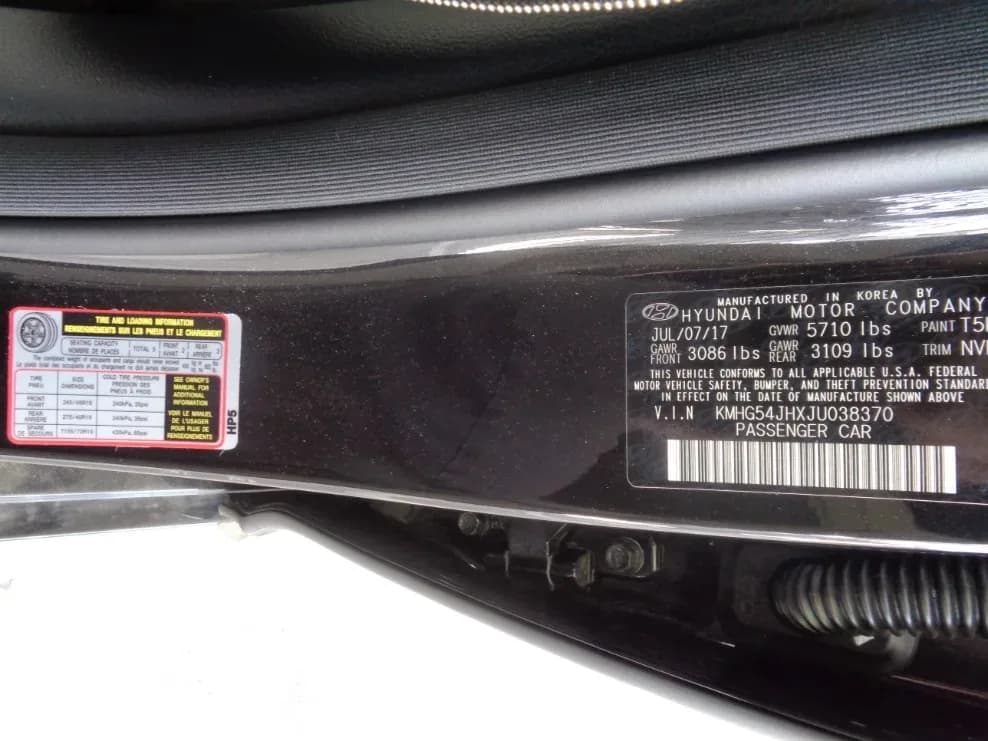
Also applies to
- Hyundai Accent
- 2021–2022
- Hyundai Elantra
- 2021–2023
- Hyundai Ioniq 5
- 2022
- Hyundai Kona
- 2021–2022
- Hyundai Nexo
- 2021–2023
- Hyundai Palisade
- 2021–2022
- Hyundai Santa Cruz
- 2022
- Hyundai Santa Fe
- 2021–2022
- Hyundai Sonata
- 2021–2022
- Hyundai Tucson
- 2022
- Hyundai Veloster
- 2021
- Hyundai Venue
- 2021–2022
▸ Show 6 more▾ Show fewer
Why This Matters
Federal Motor Vehicle Safety Standard 110 (FMVSS 110), effective June 2, 2008, sets crucial guidelines for vehicle loading information. This standard ensures that the load carrying capacity indicated on a vehicle's tire placard is accurate, especially when the vehicle's weight has been increased by accessories before retail sale. Accurate load information is vital for safe vehicle operation, preventing overloading, and maintaining vehicle stability and tire performance.
What the TSB Addresses
Hyundai Technical Service Bulletin 22-GI-006H, issued in July 2022, revises a previous bulletin (TSB 19-GI-002H) to provide updated information regarding load capacity label requirements. The bulletin mandates that if the total weight of added accessories (port or dealer installed) exceeds a specific limit, a "Load Carrying Capacity Reduced" label must be affixed. This label, which includes the phrase "CAUTION: LOAD CARRYING CAPACITY REDUCED" and states "Modifications to this vehicle have reduced the original load carrying capacity by: ___ kg or ___ lbs", ensures that the vehicle's true load capacity is clearly communicated.
How the Load Capacity is Calculated
To determine if a "Load Carrying Capacity Reduced" label is necessary, dealers must calculate the total weight added by accessories. This involves using the "Accessory Part Weight Calculation" worksheet available on HyundaiTechInfo.com. Technicians first enter the Gross Vehicle Weight Rating (GVWR) from the vehicle's B-pillar VIN placard. Next, they add the Port Installed Accessory Weight, typically found on the Monroney Label, and any Dealer Installed Accessories weight, usually detailed in their installation instructions. If the combined weight of these accessories exceeds the lesser of 1.5% of the GVWR or 100 pounds (45.4 kg), then a new Hyundai load capacity label is required.
Label Application Procedure
If the calculation indicates that a "Load Carrying Capacity Reduced" label is needed, the procedure is straightforward. Using a black, fine-point indelible marker, the technician must write the exact reduced carrying capacity in both kilograms and pounds onto the label. This value is derived directly from the "Accessory Part Weight Calculation" worksheet. The completed label, identified by Part # NP070-09003 (Revision 4/08), must then be applied to the driver-side B-pillar, within 25mm (1 inch) of the original tire placard. This ensures the Hyundai load capacity label is prominently displayed and easily visible to the owner.
Required Tools or Parts
For this procedure, technicians will need the following:
- Load Carrying Capacity Reduced Label: Part # NP070-09003 (Revision 4/08), supplied in sheets of 40.
- Black, fine-point indelible marker: Used to accurately write the reduced load capacity on the label.
- Access to HyundaiTechInfo.com: To download and utilize the "Accessory Part Weight Calculation" Excel worksheet.
Important Warnings
Owners should be aware of a key procedural change: "Effective immediately, all ports will stop the installation of the Load Capacity Label when there are no port accessories installed." This means that if a Hyundai vehicle leaves the port without any accessories installed, a load capacity label will not be applied at that stage. The responsibility for assessing and applying the correct Hyundai load capacity label then falls to the dealer if they install accessories before retail sale.
Owner Action
If you own a 2021-2023 Hyundai vehicle and have had accessories installed by either the port or your dealer, it's advisable to ensure that your vehicle's load carrying capacity information is accurate and compliant. While this procedure is typically handled by dealers before a vehicle is sold, if you have concerns about the presence or accuracy of your "Load Carrying Capacity Reduced" label, contact your authorized Hyundai dealer. They can verify if your vehicle meets the criteria for this label and ensure proper compliance with FMVSS 110.
Source: NHTSA ID: 10217258
Gallery
6 images
Frequently Asked Questions
- What is Hyundai TSB 22-GI-006H about?
- Hyundai Technical Service Bulletin 22-GI-006H addresses the requirements for applying a "Load Carrying Capacity Reduced" label to 2021-2023 Hyundai vehicles. This is necessary when the weight of installed accessories exceeds a specific threshold, ensuring compliance with Federal Motor Vehicle Safety Standard 110 (FMVSS 110).
- Why is a "Load Carrying Capacity Reduced" label important?
- This label is crucial for safety. It provides accurate information about a vehicle's maximum load capacity after accessories have been added, preventing potential overloading. Overloading can negatively impact vehicle handling, braking, and tire performance, posing a safety risk.
- How is the need for the "Load Carrying Capacity Reduced" label determined?
- The need for the label is determined by calculating the total weight of all port and dealer-installed accessories. If this total exceeds the lesser of 1.5% of the vehicle's Gross Vehicle Weight Rating (GVWR) or 100 pounds (45.4 kg), the label is required. This calculation is performed using a specific worksheet from HyundaiTechInfo.com.
- What should I do if I think my Hyundai needs this load capacity label?
- If you own a 2021-2023 Hyundai and believe your vehicle might require a "Load Carrying Capacity Reduced" label due to installed accessories, or if you have concerns about your current label, you should contact your authorized Hyundai dealer. They can assess your vehicle and ensure it meets all federal safety standards.
Related Articles
2021 Hyundai Tucson Health Check: Engine & Paint TSBs
For the 2021 Hyundai Tucson, there are no reported recalls, owner complaints, or federal investigations. However, owners should be aware of several manufacturer service bulletins (TSBs) addressing engine emissions, potential engine bearing issues, white paint peeling, and an anti-theft ignition…
2021 Hyundai Tucson Emissions Logic Update (9C2)
Hyundai Service Campaign 9C2 addresses elevated engine-out emissions in certain 2021 Hyundai Tucson models by updating the Engine Control Module (ECM) software. This update helps ensure compliance with emissions standards and prevents failed inspections.
2015 Hyundai Sonata GDS Event 1383 Campaign Suspended
Hyundai Motor America has temporarily suspended Service Campaign 9C2, related to software GDS event #1383, for the 2015 Hyundai Sonata (LFA) 2.4L. Vehicles will not show this campaign as open in WebDCS during the suspension period.
2021 Hyundai Tucson GDS Event #1383 Engine Investigation
Hyundai is actively investigating a software-related engine issue, identified as GDS event #1383. While primarily concerning 2015 Sonata 2.4L vehicles, this manufacturer communication is linked by NHTSA to the 2021 Hyundai Tucson, indicating an ongoing review for a resolution.
2010-2021 Hyundai Engine Bearing TSB 26-01-033H
Hyundai Technical Service Bulletin (TSB) 26-01-033H is a critical reference for Op codes and part numbers under Service Campaign T6G. This campaign addresses engine bearing inspection and replacement for various Hyundai models from 2010-2021, often triggered by DTC P1326 and "Abnormal Engine Noise."
Leave a comment
Comments are moderated and may take a moment to appear. Only your first name and the initial of your last name are shown publicly.
Comments
Be the first to comment.