2019-2025 Audi Overhead View Camera System Repair TSB
Audi has released Technical Service Bulletin (TSB) 2076264/2 to address issues with the overhead view camera system in various 2019-2025 models. This TSB provides detailed repair instructions for faults found during Guided Fault Finding (GFF) diagnostics.
 Sarah Mitchell2024 Audi Q8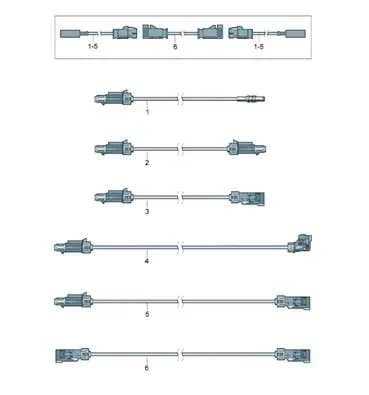
Also applies to
- Audi A6
- 2021–2025
- Audi A6 allroad
- 2021–2025
- Audi A7
- 2021–2025
- Audi A7 e
- 2021–2022
- Audi A8 L e
- 2021
- Audi e-tron
- 2021–2023
- Audi e-tron GT
- 2022–2025
- Audi e-tron Sportback
- 2021–2022
- Audi Q7
- 2021–2025
- Audi Q8
- 2021, 2022, 2023, 2025
- Audi RS 6 Avant
- 2021–2025
- Audi RS 7
- 2021–2025
- Audi RS e-tron GT
- 2022–2024
- Audi RS Q8
- 2021–2025
- Audi S e-tron GT
- 2026
- Audi S6
- 2021–2025
- Audi S7
- 2021–2025
- Audi S8
- 2021–2025
- Audi SQ7
- 2021–2025
- Audi SQ8
- 2021–2025
▸ Show 14 more▾ Show fewer
Audi has issued Technical Service Bulletin (TSB) 2076264/2 to provide comprehensive repair instructions for technicians addressing issues with the overhead view camera system. This TSB, released on October 7, 2025, covers various 2019-2025 Audi models, including the A6, A7, A8, Q7, Q8, e-tron, and e-tron GT. It specifically targets faults stored in the Diagnostic Trouble Code (DTC) memory, often detected during the Guided Fault Finding (GFF) process.
TSB Revision History
This Technical Service Bulletin 2076264/2 is a revision of an earlier publication. The revision history is as follows:
- Revision 2: This current version, released on October 7, 2025, includes a revised warranty section, specifically modifying labor time details.
- Revision 1: The initial publication of this TSB was on December 16, 2024.
Important Warnings for Technicians and Owners
This Technical Service Bulletin 2076264/2 includes a critical directive regarding its application. Audi states that "It is only permitted to perform this TSB if another TSB instructed you to refer to this TSB number or if you were requested to do so by Product Support." This means that technicians should not perform the repairs outlined in TSB 2076264/2 unless explicitly directed by another official Audi communication or by Product Support. Owners should be aware that this TSB is not a general repair guide but rather a specific set of instructions for particular diagnostic scenarios.
Symptoms of Overhead View Camera Faults
Owners of affected Audi vehicles, such as those experiencing an Audi Q8 camera fault, might notice various symptoms related to their overhead view camera system. These can include a non-functional 360-degree camera display, distorted or flickering images from the cameras, or a complete absence of the overhead view. The TSB specifically addresses situations where a "fault stored in the DTC memory" is present, indicating that the vehicle's diagnostic system has registered an issue with the camera components or their associated wiring. While no specific DTC codes are listed in this bulletin, the presence of any fault code related to the overhead view camera system would prompt the application of these repair procedures. This TSB is relevant for vehicles equipped with the PR number KA6, which designates the overhead view camera system.
Diagnosis and Trigger Conditions
This TSB is applicable when a vehicle undergoes service, specifically through "vehicle service -> vehicle diagnosis -> Guided Fault Finding (GFF)." The primary trigger condition for this bulletin is the detection of a "control modules, services -> with fault stored in the DTC memory" related to the overhead view camera. Technicians will use the Guided Fault Finding system to pinpoint the exact nature of the fault, which then directs them to follow the steps outlined in TSB 2076264/2 for resolution. The GFF process ensures a structured approach to identifying and rectifying complex electrical and electronic system issues, particularly those affecting the driver assist systems.
Detailed Repair Procedure
TSB 2076264/2 outlines a multi-step repair process designed to systematically address the overhead view camera fault. The procedure begins with an initial check and progresses through component replacements if necessary.
Step 1: Check Repair History
The first step for technicians is to thoroughly review the repair history of the affected vehicle. This is crucial to determine if any of the subsequent repair steps (Step 2 or Step 3) have already been performed. If a previous repair addressed one of these steps, the technician is instructed to proceed directly to the next relevant step, avoiding redundant work. This ensures an efficient diagnostic and repair process.
Step 2: Replacing Exterior Mirror Mountings
If the issue persists or if the repair history indicates that the exterior mirror mountings have not been addressed, the next step involves replacing both exterior mirror mountings. These mountings are integral to the overhead view camera system, as they often house side-view cameras that contribute to the 360-degree image. The replacement must be performed according to the detailed instructions provided in the Workshop Manual. This step aims to resolve potential issues stemming from faulty camera components or wiring within the mirror assemblies themselves, which can often cause an Audi Q8 camera fault.
Step 3: Replacing Video Cables (Conditional)
This is a conditional step, to be performed only if the overhead view camera fault persists after the exterior mirror mountings have been replaced. This step involves a comprehensive replacement of various video cables and associated wiring harnesses throughout the vehicle.
Video Cables for Vehicle Interior
Technicians are instructed to replace all video cables that connect the "driver assist systems control unit J1121" to the various "overhead view cameras." These include the "front camera R243," "rear camera R246," "left camera R244," and "right camera R245." The TSB specifies using adapter cables sourced from "ETKA diagram 971-805" for the vehicle interior wiring harness. Figure 1 in the TSB illustrates these adapter cables, showing different lengths and connector versions (items 1-5 define adaptation, item 6 determines length). These cables are crucial for transmitting video signals from the cameras to the control unit. Figure 2 provides guidance on how to route these new cables along the existing interior wiring harness, ensuring proper installation and preventing future issues. A key instruction is that while the connectors must be unplugged from the faulty cable, the original cable itself must remain in the vehicle. Technicians are directed to refer to "parts bulletin 0-413" for further details on this specific procedure.
Wiring Harnesses for Driver and Front Passenger Doors
In addition to the interior video cables, the two door wiring harnesses must also be replaced. These are identified as the "Wiring harness for driver door XXX.971.029.XX" (referencing "diagram 972-033 / 972-330") and the "Wiring harness for front passenger door XXX.971.030.XX" (referencing "diagram 972-035 / 972-350"). These harnesses facilitate the connection of the side cameras within the exterior mirrors to the main vehicle network. Figure 3 in the TSB provides a visual representation of these door wiring harnesses, detailing their complex structure and numerous connections, which are vital for proper camera function.
Wiring Harness for Bumper
Finally, the corresponding adapter wiring harness located in the front bumper must be replaced. This harness, identified as "XXX.971.192.X," connects to the "front overhead view camera R243." Technicians are directed to refer to "diagram 907-045 / 907-260" for specific installation details. Figure 4 in the TSB illustrates the bumper wiring harness and its connection points, highlighting its role in the front camera's operation and ensuring a clear signal path. This replacement ensures that all critical video signal paths are renewed, addressing potential issues with the front camera feed.
Should the complaint persist even after completing all these steps, technicians are advised to submit a technical repair query to the Technical Assistance Center (TAC) for further guidance.
Warranty and Claim Information
For warranty claims related to TSB 2076264/2, specific service and damage codes, along with labor operations, must be used. All warranty claims must adhere to the Audi Warranty Policies and Procedures Manual and are subject to review or audit by Audi Warranty. It is important to note that if the vehicle is outside of its warranty period, this Technical Service Bulletin is for informational purposes only, meaning the repairs may not be covered free of charge.
Claim Details
- Service Number: 9083
- Damage Code: 0040
- Claim Comment: As per TSB 2076264/2
Labor Operations
| Step | Description | Labor Operation | Time Units (TU) | Applicable Models |
|---|---|---|---|---|
| Step 2 | Replace 2 exterior mirrors | 6689 5699 | 150 | A6, A7, A8, e-tron, e-tron GT |
| Replace 2 exterior mirrors | 6689 5699 | 120 | Q7 | |
| Replace 2 exterior mirrors | 6689 5699 | 130 | Q8 | |
| Step 3 | Repair overhead view camera | 9083 4199 | Bill according to time required | All affected models |
| Guided Fault Finding (GFF) | 0150 0060 | Time stated on the diagnostic protocol | All affected models |
What Owners Should Know
If you own a 2019-2025 Audi A6, A7, A8, Q7, Q8, e-tron, or e-tron GT and are experiencing an Audi Q8 camera fault or any other issue with your overhead view camera system, it is recommended to visit an authorized Audi service center. While this TSB provides detailed repair steps for technicians, it also highlights the complexity of modern vehicle systems. Ensuring that your vehicle is diagnosed using the Guided Fault Finding (GFF) process will allow technicians to accurately identify the underlying cause and apply the appropriate repair procedures as outlined in TSB 2076264/2. Be aware of the warranty implications, as repairs may not be covered if your vehicle is outside its warranty period.
Source: NHTSA ID: 11025302
Gallery
2 images
Frequently Asked Questions
- What is Audi TSB 2076264/2 about?
- Audi TSB 2076264/2 provides repair instructions for technicians to address malfunctions in the overhead view camera system across various 2019-2025 Audi models, particularly when a "fault stored in the DTC memory" is detected during diagnostics.
- Which Audi models are affected by this overhead view camera issue?
- This TSB applies to a range of 2019-2025 Audi models, including the A6, A7, A8, Q7, Q8, e-tron, and e-tron GT, among others. If you experience an Audi Q8 camera fault, your vehicle may be covered by these repair procedures, especially if it has the KA6 PR number.
- What are the common symptoms of an overhead view camera fault?
- Common symptoms include the overhead view camera not working, displaying distorted or flickering images, or the vehicle's diagnostic system indicating a "fault stored in the DTC memory" related to the camera system. No specific DTC codes are listed in this TSB.
- Will I have to pay for the repairs outlined in TSB 2076264/2?
- If your vehicle is still under warranty, the repairs should typically be covered. However, if your Audi is outside of its warranty period, the TSB states that the information is for reference only, meaning you may be responsible for the cost of the repair. All claims are subject to Audi Warranty Policies and Procedures Manual.
- What is the repair process for an Audi overhead view camera fault?
- The repair process involves checking the vehicle's repair history, potentially replacing the exterior mirror mountings, and if the issue persists, replacing specific video cables connecting the driver assist systems control unit J1121 to the various overhead view cameras (R243, R244, R245, R246) and associated wiring harnesses in the doors and bumper, following instructions in ETKA diagram 971-805 and parts bulletin 0-413.
Related Articles
2023-2025 Audi MMI Emergency Call Fault Software Update
Audi has released Technical Service Bulletin 2079680/3 to address MMI function problems and 'Emergency call fault' messages in 2023-2025 Audi Q7, Q8, A6, A7, A8, and other models. A software update is available.
2024-2025 Audi Bluetooth / Smartphone Interface Connection Issue
Audi has identified a software issue causing slow Bluetooth and smartphone interface connections in certain 2024-2025 models. A solution is expected by Q2 2026, and component replacement is not recommended as it will not resolve the problem.
2024-2025 Audi MIB3: No Tiles in Main Menu, Phone Controls Not Working
This Technical Service Bulletin (TSB 2080958/2) addresses an issue in 2024-2025 Audi vehicles equipped with the MIB3 infotainment system where owners may find 'no tiles in main menu' or encounter a phone menu with 'controls are not working'. A software update is available.
2024-2025 Audi MMI Connectivity and Infotainment TSB
Audi Technical Service Bulletin 2079416/4 provides an overview of customer service packages for MLB and MQB vehicles with MIB3 systems, addressing common infotainment and connectivity complaints in 2024-2025 Audi models. Learn about diagnostic steps and related software updates.
2021-2025 Audi Q8/SQ8/RS Q8 Window Reversal TSB
If your 2021-2025 Audi Q8, SQ8, or RS Q8 window opens again after attempting to close it, Technical Service Bulletin 2080696/1 details a software issue. This TSB addresses the diagnostic trouble code B148754 related to the window regulator and provides a software update.
Leave a comment
Comments are moderated and may take a moment to appear. Only your first name and the initial of your last name are shown publicly.
Comments
Be the first to comment.