2019-2025 Audi MHEV Electrical Fault U046900 TSB
Audi Technical Service Bulletin 2073284/2 details an electrical system fault affecting 2019-2025 Audi A6, A7, A8, Q7, and Q8 models with 48V Mild Hybrid Electric Vehicle (MHEV) systems. Owners may see a warning light and risk power loss due to battery discharge. The TSB clarifies that replacing…
 Marcus Weber2025 Audi Q8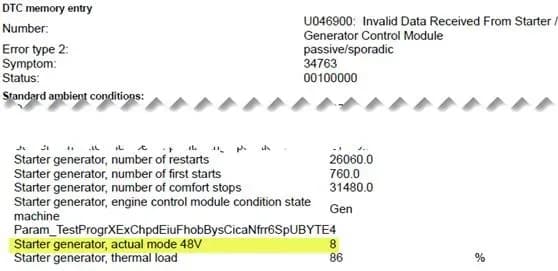
Also applies to
- Audi A6
- 2021–2025
- Audi A6 allroad
- 2021–2025
- Audi A7
- 2021–2025
- Audi A7 e
- 2021–2022
- Audi A8 L e
- 2021
- Audi Q7
- 2021–2025
- Audi Q8
- 2021–2024
- Audi RS 6 Avant
- 2021–2025
- Audi RS 7
- 2021–2025
- Audi RS Q8
- 2021–2025
- Audi S6
- 2021–2025
- Audi S7
- 2021–2025
- Audi S8
- 2021–2025
- Audi SQ7
- 2021–2025
- Audi SQ8
- 2021–2025
▸ Show 9 more▾ Show fewer
Audi Technical Service Bulletin (TSB) 2073284/2, issued on June 5, 2024, provides critical information regarding an Audi MHEV electrical fault affecting various 2019-2025 Audi models. This bulletin supersedes TSB Group 27 number 24-68 dated March 9, 2024, and focuses on diagnosing and resolving an electrical system fault related to the 48V Mild Hybrid Electric Vehicle (MHEV) system.
This issue can manifest as a warning in the instrument cluster and, if left unaddressed, may lead to the vehicle losing power due to excessive battery discharge. Understanding the root cause and proper repair procedure is crucial for owners of affected vehicles.
Symptoms Owners May Notice
Owners of 2019-2025 Audi A6, A7, A8, Q7, and Q8 models may experience an "Electrical system fault" message appearing in the instrument cluster. This warning indicates a problem within the vehicle's electrical system, specifically related to the 48V MHEV components. A significant risk associated with this fault is the potential for the vehicle to lose power if the battery becomes severely discharged while driving.
Fault Codes / DTCs
Technicians may find one or more of the following Diagnostic Trouble Codes (DTCs) stored in the Engine Electronics (-J623-, address word 0001) or Brake Electronics (-J104-, address word 0003) control modules. For DTC U046900, the error type is often recorded as "passive/sporadic" with a status of "00100000" and symptom code 34763.
| Code | Description | Module | Symptom |
|---|---|---|---|
| U046900 | Lost Communication with Starter/Generator Control Module | Engine Electronics (0001) | 34763 |
| U002900 | Sensor/Hybrid CAN No Communication | Engine Electronics (0001) | |
| U002800 | Sensor/Hybrid CAN Faulty | Engine Electronics (0001) | |
| C054A00 | Brake Servo Pressure Sensor | Brake Electronics (0003) | |
| C11EC04 | Brake Servo Pressure Sensor | Brake Electronics (0003) |
Important Warnings and What Not To Do
This TSB highlights critical information to prevent misdiagnosis and incorrect repairs, ensuring the Audi MHEV electrical fault is addressed correctly:
- Do not replace the 48V Starter/Generator. The bulletin explicitly states that replacing this component will not resolve the problem. The DTC U046900, indicating "Lost Communication with Starter/Generator Control Module," is a symptom of another underlying electrical system issue on the vehicle's CAN bus, not a fault of the Starter/Generator itself. The technical background notes that this is often documented in event memory with the value "Starter generator, actual mode 48V = 8".
- Do not assume a faulty Starter/Generator if it cannot be reached in ODIS. If the Starter Generator (diagnostic address 00CC) cannot be accessed via ODIS (Offboard Diagnostic Information System), this does not automatically mean the component is defective.
- Warranty Information: This Technical Service Bulletin is informational only and is not applicable to any Audi Warranty.
Technical Background and Root Cause
The core of the Audi MHEV electrical fault lies not with the 48V Starter/Generator itself, but with other electrical system problems, particularly on the vehicle's CAN bus. The Starter/Generator is designed to freewheel when the Engine Electronics commands it. This can happen if sensor faults in the Engine Electronics or Brake Electronics, or communication errors, influence the vehicle data bus system.
As a result, the Engine Electronics commands the 48V Starter/Generator to freewheel, and the electrical system faults may then occur because the battery will not be charged. The TSB includes Figure 1, which illustrates the 'Starter generator, actual mode 8' condition, and Figure 2, which depicts various connector failures that can contribute to these issues.
Diagnosis and Repair Focus
To properly address the Audi MHEV electrical fault, technicians must process the sensor faults in the Engine Electronics, Brake Electronics, and any communication error faults to find the root cause. Specifically, fault codes U002900 ("Sensor/Hybrid CAN No Communication") and U002800 ("Sensor/Hybrid CAN Faulty") stored in diagnostic address 0001 (Engine Electronics) point to several potential causes:
- Communication Connectors: These may not have been plugged in or fastened correctly. Pins within the connectors could be failing (bent or widened), or there might be short circuits in the associated wiring.
- Incorrect Connector Swaps: Issues can arise from incorrect attempts to swap connectors, such as a failure to connect vehicle ground cables.
Therefore, diagnosis should focus on inspecting these areas rather than immediately replacing the Starter/Generator.
What Owners Should Do
If you experience an "Electrical system fault" message in your instrument cluster, it is important to have your vehicle inspected by an authorized Audi service center. Do not attempt to replace the 48V Starter/Generator yourself, as this TSB indicates it will not resolve the underlying problem. An Audi technician will perform diagnostics to identify and correct sensor faults, communication errors, or connector issues on the CAN bus that are causing the Audi MHEV electrical fault.
Source: NHTSA ID 11002962
Frequently Asked Questions
- What is the Audi MHEV electrical fault?
- The Audi MHEV electrical fault refers to an electrical system issue in certain 2019-2025 Audi models, specifically those equipped with a 48V Mild Hybrid Electric Vehicle system. It can cause an "Electrical system fault" warning in the instrument cluster and potentially lead to power loss due to battery discharge.
- What does DTC U046900 mean for my Audi?
- DTC U046900, or "Lost Communication with Starter/Generator Control Module" (symptom 34763), indicates that the engine electronics are not communicating correctly with the 48V Starter/Generator. However, Audi Technical Service Bulletin 2073284/2 clarifies that this code is often a symptom of other CAN bus electrical problems, not a faulty Starter/Generator itself, often recorded with a "passive/sporadic" error type.
- Will replacing the 48V Starter/Generator fix this issue?
- No, according to Audi TSB 2073284/2, replacing the 48V Starter/Generator will not fix this problem. The issue typically stems from sensor faults in the Engine or Brake Electronics, or communication errors on the CAN bus, which then affect the Starter/Generator's operation.
- What should I do if I see an "Electrical system fault" message in my Audi?
- If you see an "Electrical system fault" message, it is recommended to have your vehicle inspected by an authorized Audi service center. They can diagnose the underlying cause by processing sensor faults and communication errors, particularly checking communication connectors and wiring for issues like bent pins or short circuits, rather than immediately replacing the 48V Starter/Generator.
Other revisions of this TSB
- 2024-2026 Audi Q8 48V Starter Generator DTCs P0A1A00 P19F800U046900
- 2024-2026 Audi 48V Starter Generator DTCs P0A1A00 P19F800U046900
- 2021-2023 Audi MHEV Electrical System Fault TSB 2073284/4U046900, U002900, U002800
- 2024-2025 Audi Q7 Q8 Starter Generator DTCs P0A1A00 P19F800U046900
- 2021-2023 Audi 48V Electrical System Warning U046900 TSBU046900
- 2024-2025 Audi Q7 / Q8 48V Starter Generator DTCs P0A1A00 P19F800U046900
- 2021-2023 Audi 48V Electrical System Malfunction TSB 2058831/15U046900
- 2019-2025 Audi MHEV Electrical System Fault TSBU046900, U002900, U002800
Related Articles
2024-2026 Audi MMI Weather Widget 'An error has occurred' TSB
Audi Technical Service Bulletin 2081500/1 addresses the 'An error has occurred' message on the MMI weather widget in 2024-2026 Audi models. This issue typically indicates a missing data plan for the Audi Application Store.
2018-2026 Audi V6 TFSI Drive System Malfunction TSB
Audi Technical Service Bulletin 2081342/1 addresses a "Drive system fault active in instrument cluster" message and associated knock sensor DTCs (P032700, P033200, P032800, P033300) in 2018-2026 V6 TFSI models. This issue is often caused by temporary moisture absorption in the knock sensor housing.
2024-2026 Audi Q8 48V Starter Generator DTCs P0A1A00 P19F800
Audi has released Technical Service Bulletin (TSB) 2076994/7 to address issues with the 48V starter generator (BSG) in 2024-2026 Audi Q8, A6, A7, Q7, and A6 allroad models equipped with MHEV. Owners may experience an illuminated engine warning lamp and various diagnostic trouble codes (DTCs)…
2025 Audi Q8 Bluetooth/Smartphone Interface Connection TSB
Audi Technical Service Bulletin 2079837/2 addresses customer complaints regarding slow or interrupted Bluetooth and Audi smartphone interface connections in 2025 Audi models, including the Q8. The issue stems from a software fault in the emergency call module control unit (DA 0075). The…
2023-2025 Audi On-Car Analysis List for Technicians
Audi's TSB 2066297 outlines an on-car analysis list for technicians, addressing common concerns such as the 48V battery cooling fan DTC P0A8200, B&O extendable tweeter operational issues, and PPE/PPC vehicle time synchronization problems for 2023-2025 Audi models.
Leave a comment
Comments are moderated and may take a moment to appear. Only your first name and the initial of your last name are shown publicly.
Comments
Be the first to comment.