2022-2024 Audi Roof Corrosion TSB 2068999/1
Audi Technical Service Bulletin (TSB) 2068999/1 details how to diagnose visible corrosion forming at the joint between the roof and roof side member. This issue, often linked to paint cracks from external impacts, requires extensive documentation for any potential warranty consideration.
 Sarah Mitchell2023 Audi Q8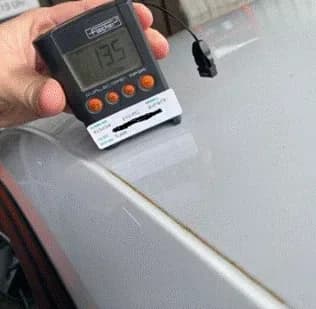
Also applies to
- Audi A4
- 2021–2024
- Audi A4 allroad
- 2021–2022
- Audi A6
- 2021–2024
- Audi A6 allroad
- 2021–2022
- Audi A8 L e
- 2021
- Audi Q3
- 2021–2024
- Audi Q5
- 2021, 2023, 2024
- Audi Q5 e
- 2024
- Audi Q7
- 2021–2024
- Audi Q8
- 2021, 2022, 2024
- Audi RS 6 Avant
- 2022–2024
- Audi RS Q8
- 2021–2024
- Audi S4
- 2021–2024
- Audi S6
- 2021–2024
- Audi S8
- 2021–2024
- Audi SQ5
- 2021–2024
- Audi SQ7
- 2021–2024
- Audi SQ8
- 2021–2024
- Audi TT
- 2021–2023
- Audi TT RS
- 2021–2022
- Audi TTS
- 2021–2023
▸ Show 15 more▾ Show fewer
Symptoms of Roof Corrosion
Owners of affected Audi vehicles, including the 2023 Audi Q8, may observe a "Visible corrosion at joint between roof and roof side member." This typically appears as a visible line of corrosion forming in the roof, specifically along the right or left roof channel seams. Workshop findings confirm this corrosion often forms under what appear to be cracks in the top coat of the paint.
Understanding the Cause
Audi Technical Service Bulletin 2068999/1 explains that this corrosion likely originates from underlying metal being exposed and unprotected due to cracks in the paint's top coat. These paint cracks in the roof channel seams can be caused by external impacts, such as heavy snow loads, contact with cargo carriers, or hail storms. Even microscopic cracks, if left unrepaired according to Audi's collision repair guidelines, can lead to corrosion over time. Repairs like paintless dent removal may also leave subtle waviness in the roof panel, potentially masking unaddressed paint cracks that leave the metal vulnerable.
Diagnostic Procedure
To properly assess the "Visible corrosion at joint between roof and roof side member," Audi technicians follow a detailed diagnostic process:
- Visual Inspection: The initial step involves confirming the presence of corrosion and identifying any associated paint cracks. These cracks may require viewing under magnification for detection.
- Impact Assessment: Technicians carefully examine the roof panel for any evidence of external impact. This includes looking for a characteristic waviness in the roof panel, which might only be visible with careful examination using a contrasting pattern or appropriate backlighting and reflective patterns.
- Paint Thickness Measurement: The paint thickness is measured at several points on both sides of the roof panel. The ideal paint thickness range for the roof panel is specified as between 3.5 mm and 5.4 mm.
- Internal Inspection: If roof deformation cannot be detected externally but the paint cracks are consistent with the condition described in TSB 2068999/1, it may be necessary to remove the headliner to examine the inside of the roof panel for persistent deformation.
Important Warnings for Owners
Audi Technical Service Bulletin 2068999/1 states that this TSB is informational only and not applicable to any Audi warranty. This means that any repairs related to this type of corrosion, particularly if attributed to external impact, may not be covered under your vehicle's warranty. Prior to any repair, extensive documentation and a consultation with an Audi After Sales Service Manager (AASM) are required before any warranty application can even be considered.
What Owners Should Do
If you observe "Visible corrosion at joint between roof and roof side member" on your 2022-2024 Audi vehicle, including your 2023 Audi Q8, it is crucial to contact an authorized Audi dealer. They will perform the necessary diagnostic steps, including thorough photo and video documentation of the roof structure, paint inspection, and paint thickness measurements. This documentation will be submitted to DocIT. If no evidence of external impact is found, your AASM must be contacted before any repair. All paint and corrosion cases require on-site inspection by an AASM for warranty determination, with a field representative corroborating the documentation before a final decision is made by Audi Warranty and Product Support.
Source: NHTSA ID: 10230641, Manufacturer Communication Number: 2068999/1
Gallery
5 images
Frequently Asked Questions
- What does Audi TSB 2068999/1 address?
- Audi Technical Service Bulletin 2068999/1 addresses visible corrosion that forms at the joint between the roof and roof side member, often appearing as a line of corrosion under paint cracks.
- What causes the visible corrosion on my Audi's roof?
- The corrosion is typically caused by underlying metal exposure due to paint cracks. These cracks can result from external impacts such as heavy snow, cargo carrier contact, or hail, as detailed in the TSB concerning 'Visible corrosion at joint between roof and roof side member'.
- Is the roof corrosion covered under my Audi warranty?
- According to TSB 2068999/1, this bulletin is informational only and not applicable to any Audi warranty. Extensive documentation and an AASM consultation are required before any warranty consideration for the '2023 Audi Q8 roof corrosion' or similar issues.
- What should I do if I see corrosion on my Audi's roof?
- You should contact an authorized Audi dealer immediately. They will conduct a detailed inspection, including documentation of paint cracks and thickness, and consult with an Audi After Sales Service Manager (AASM) to determine the next steps.
Related Articles
2023-2026 Audi Frequency Analysis App TSB 2051095/11
Technical Service Bulletin 2051095/11 introduces the Audi Frequency Analysis app, a specialized diagnostic tool for technicians to accurately identify and address noise complaints in 2023-2026 Audi vehicles. This app helps pinpoint the source of various vehicle noises.
2021-2025 Audi Models Engine Control Module Software Update 53ZC
Audi has released Technical Service Bulletin 53ZC (WARR EXT – U82) to provide an Engine Control Module software update. This update optimizes engine oil pressure for various 2021-2025 Audi models, preventing potential issues.
2022-2025 Audi ECM Software Update 53ZC for Oil Pressure
Audi has issued Technical Service Bulletin 53ZC (WARR EXT – U82) for 2022-2025 Audi models, providing an Engine Control Module (ECM) software update. This proactive update optimizes engine oil pressure and is covered under a warranty extension.
2022-2025 Audi Models Engine Control Module Software Update
Audi has issued a dealer communication regarding a software update (UPDATE 53ZC / WARR EXT – U82) for the Engine Control Module in various 2022-2025 models. This update aims to optimize engine oil pressure and prevent potential piston wear. Owners should contact their dealer as no notification…
2022-2025 Audi Q8 Engine Control Module Update
Audi has released Technical Service Bulletin 53ZC, a proactive Engine Control Module (ECM) software update for 2022-2025 Audi Q8, Q7, A6, A7, S4, S5, SQ5, and A8 models. This update optimizes engine oil pressure to prevent potential piston wear and includes a U82 warranty extension.
Leave a comment
Comments are moderated and may take a moment to appear. Only your first name and the initial of your last name are shown publicly.
Comments
Be the first to comment.