2017-2025 Audi Q7/SQ7 Power Closing Door Latch Inoperative TSB
Audi Technical Service Bulletin 2058159/6 addresses issues with the power closing door latch system in 2017-2025 Audi Q7 and SQ7 vehicles, which can lead to an intermittently inoperative latch and an electronic parking brake warning. The TSB outlines a diagnostic and repair procedure involving…
 Marcus Weber2025 Audi Q7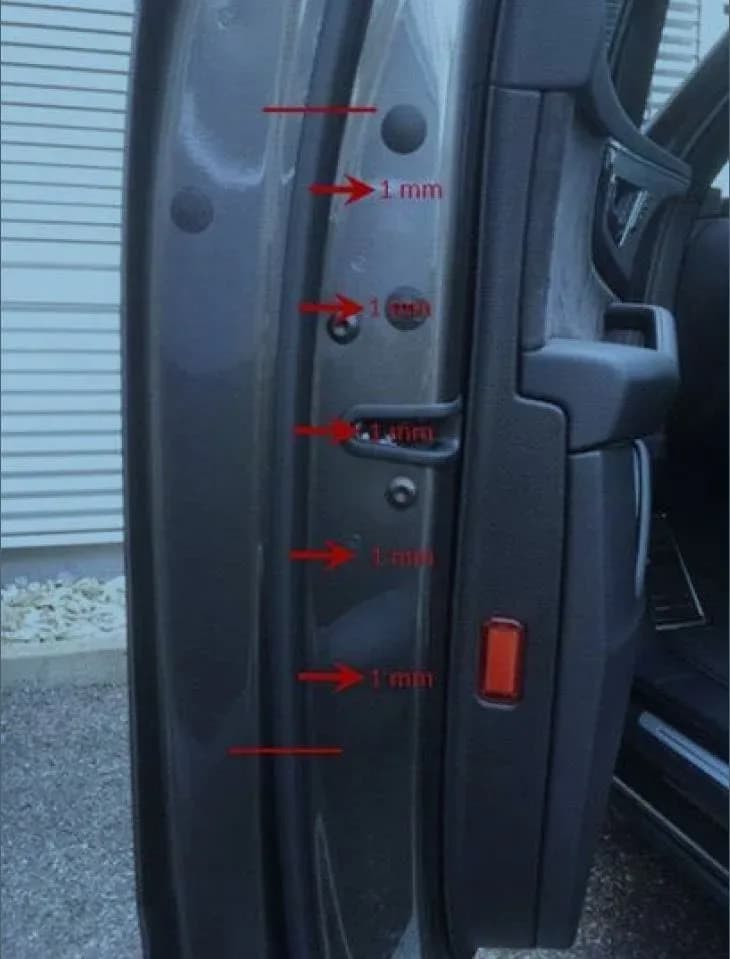
Also applies to
- Audi Q7
- 2021–2024
- Audi SQ7
- 2021–2025
Audi has released Technical Service Bulletin (TSB) 2058159/6 to address concerns regarding the Audi Q7 power closing door latch system in 2017-2025 Audi Q7 and SQ7 models. This bulletin, issued on June 17, 2024, supersedes previous TSB Group 57 number 23-10 dated June 13, 2023, and provides updated information for diagnosing and repairing an intermittently inoperative power closing door latch.
Symptoms Owners May Notice
Owners of affected vehicles may experience the following issues:
- The "power closing door latch system intermittently does not work."
- An "electronic parking brake warning is displayed in the instrument cluster."
- Despite these warnings, the door generally closes and latches properly.
Workshop findings indicate that the door striker often stops in the pre-latch position, preventing the power closing door system from fully closing the door. Importantly, no relevant Diagnostic Trouble Codes (DTCs) are typically stored in the door control modules when this condition occurs.
Diagnosis and Trigger Conditions
The root cause of the Audi Q7 power closing door latch issue is often insufficient counter-pressure on the door latch. The door latch relies on adequate counter-pressure from the door and door seal to generate a reliable signal for the door control module, indicating the driver's intent to close the door. If the door striker is misadjusted, it may not provide enough counter-pressure, causing the door control module to either not recognize the latch signal or recognize it for too short a duration, resulting in the door not fully closing.
Before proceeding with any repairs outlined in TSB 2058159/6, technicians are instructed to ensure that the door control modules have the latest software levels installed by checking other applicable TSBs, such as TSB 2051540.
Repair Procedure Summary
If the customer concern persists after verifying the latest door control module software, the following steps are to be performed:
- Door Striker Alignment Check: Inspect the door striker for proper alignment with the latch and make any necessary adjustments to center it.
- Door Striker Inward Adjustment: Adjust the door striker inward by at least 0.5 mm. This adjustment aims to increase the counter-pressure required for the latch to function correctly. The front door should appear flush or slightly under flush to the rear door after this adjustment, without causing wind noise.
- Functionality Recheck: After adjusting the door striker, recheck the functionality of the power closing door latch system. If the door closes properly, no further repairs are needed.
- Outer Door Seal Replacement (If Needed): If the issue persists after striker adjustment, a new outer door seal must be installed. This new seal should be positioned with a 1.0 mm inward offset compared to the original seal's location. Technicians are advised to mark the original seal's position before removal.
Required Tools or Parts
For this repair, the following parts may be required:
- Fasteners, Bolts, Nuts, and Screws: As needed per the Repair Manual (refer to ETKA).
- Front outer door seal: Part Number 4M0837911C.
Important Warnings for Owners
Owners should be aware of the following:
- If your vehicle is outside of its warranty period, this Technical Service Bulletin is for informational purposes only, and repair costs may not be covered.
- If adjusting the door striker resolves the issue, no additional repairs should be performed.
Warranty Information
Warranty claims for this procedure are generally covered for up to 48 months or 50,000 miles. For Certified Pre-Owned (CPO) vehicles, coverage is under G10, requiring owner verification. The damage code for this repair is 0016. Specific labor operations include front and rear striker plate adjustments (Service Numbers 5741, 5841) and front/rear door outer seal removal and reinstallation.
Source: NHTSA ID 11002971
Gallery
2 images
Frequently Asked Questions
- What is Audi TSB 2058159/6 about?
- Audi Technical Service Bulletin 2058159/6 addresses an intermittently inoperative power closing door latch system in 2017-2025 Audi Q7 and SQ7 vehicles. It provides a repair procedure to resolve the issue.
- What are the symptoms of an inoperative power closing door latch in an Audi Q7 or SQ7?
- Owners may notice that the "power closing door latch system intermittently does not work" and an "electronic parking brake warning is displayed in the instrument cluster." The door might not fully close via the power closing system, even if it latches properly otherwise.
- How is the Audi Q7 power closing door latch issue resolved?
- The repair procedure involves checking and adjusting the door striker inward by at least 0.5 mm. If the problem persists, the outer door seal may need to be replaced with a new one installed with a 1.0 mm inward offset.
- Is the repair for the power closing door latch covered under warranty?
- Yes, repairs performed under TSB 2058159/6 are typically covered under warranty for up to 48 months or 50,000 miles. For Certified Pre-Owned vehicles, coverage is also available. If your vehicle is outside of warranty, the bulletin serves as informational guidance.
Related Articles
2025 Audi Q7 Problems: TSBs and Common Issues
For the 2025 Audi Q7, there are no reported recalls or owner complaints to date. However, Audi has issued several technical service bulletins (TSBs) addressing various potential issues, from engine performance and electrical glitches to interior noises and body structure concerns.
2021-2025 Audi MIL On, Rough Engine Due to Loose Oil Cap TSB
Audi Technical Service Bulletin 2070915/2 details how a loose engine oil filler cap can cause a Malfunction Indicator Lamp (MIL) to illuminate, rough engine running, and oil leaks in 2021-2025 Audi A3, A4, A5, A6, Q5, and Q7 models. It often triggers DTCs P227900, P006800, and P004F00.
2024-2025 Audi MIB3 Infotainment Phone Menu Issue
Audi has released Technical Service Bulletin (TSB) 2080958/1 to address an issue in 2024-2025 Audi vehicles equipped with the MIB3 infotainment system. Owners may notice a phone menu appearing under the STORE menu item, but its controls are not functional. This TSB is informational, explaining the…
2022-2026 Audi Easy-Entry Function Complaint TSB 2064695/6
Audi has released Technical Service Bulletin 2064695/6 addressing customer complaints regarding the easy-entry function not working correctly in various 2022-2026 models. This TSB describes the symptom but does not provide a repair procedure.
2017-2025 Audi Q5/Q7 Taillight Switching Issue B146C29
Audi has released Technical Service Bulletin 2070964/3 for 2017-2025 Q5 and Q7 series vehicles experiencing taillight switching issues or constant illumination. This can be caused by dirt affecting the rear lid sensor, triggering DTC B146C29.
Leave a comment
Comments are moderated and may take a moment to appear. Only your first name and the initial of your last name are shown publicly.
Comments
Be the first to comment.