2021-2023 Audi Q7/SQ7 Rear Lights Malfunction TSB
Audi has released Technical Service Bulletin 2047618/5 for 2021-2023 Q7 and SQ7 vehicles experiencing rear lights not switching from bumper to hatchgate, displaying the "Vehicle lights: malfunction! Please contact Service" message, and storing DTC B146C29.
 Sarah Mitchell2023 Audi Q7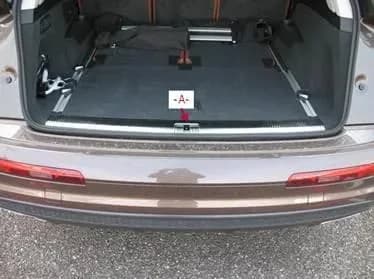
Also applies to
- Audi Q7
- 2021–2022
- Audi SQ7
- 2021–2023
Audi has issued Technical Service Bulletin (TSB) 94 21 48 2047618/5 to address a condition in 2021-2023 Audi Q7 and SQ7 vehicles where the rear lights may not switch correctly between the bumper and the hatchgate. This issue can trigger a specific error message in the driver information system and store a diagnostic trouble code.
This TSB, identified as 94 21 48 2047618/5, supersedes an earlier bulletin, Group 94 number 20-23, dated April 20, 2020. The latest revision, Revision 5, updated the header to include Model Years 2022-2023 and revised warranty information.
Symptoms
Owners of affected 2021-2023 Audi Q7 and SQ7 vehicles may observe several symptoms related to the rear lighting system. The most noticeable symptom is when the rear lid is closed, the lights located in the rear bumper do not transition to the main lights on the rear lid as they should.
Additionally, drivers might see the error message "Vehicle lights: malfunction! Please contact Service" intermittently displayed in the driver information system. It's important to note that all rear light bulbs are typically functional and not faulty when this condition occurs.
Fault Codes / DTCs
When diagnosing this issue, technicians may find the diagnostic trouble code (DTC) B146C29 stored in the comfort system central control module, J393 (address 0046). This code indicates a "Rear lid -closed- sensor Implausible signal."
Diagnosis / Trigger Conditions
The root cause of the Audi Q7 rear lights malfunction B146C29 is often incomplete actuation of the rear lid closed sensors, G525 and G526. These sensors are located at the base of the rear lid striker.
Debris can enter the striker housing and become lodged in the switch mechanism, preventing the sensors from actuating correctly. This obstruction leads to the implausible signal detected by the comfort system central control module.
Repair Procedure Summary
The repair procedure outlined in TSB 94 21 48 2047618/5 involves inspecting and potentially replacing the rear lid closed sensor. First, the technician will press down the striker cover on the loading sill cover -A- to gain access.
If debris is found obstructing the switch activation, it should be removed. This can be done by activating the switch paddles with fingers and using compressed air to clear the debris. After cleaning, the measuring values for the G525 and G526 switches are checked. If the malfunction persists, the rear lid closed sensor must be replaced. Only the improved rear lid closed sensor, which includes a protective enclosure, is available as a replacement part.
Required Tools or Parts
For this repair, the primary part required is a new Rear Lid Closed Sensor. Technicians should consult ETKA for the latest part numbers and information. Additionally, fasteners, bolts, nuts, and screws may be needed as specified in the Repair Manual, also referenced via ETKA/ELSA.
Owner Action
If your 2021-2023 Audi Q7 or SQ7 is exhibiting the symptoms of an Audi Q7 rear lights malfunction B146C29, such as the rear lights not switching correctly or the "Vehicle lights: malfunction! Please contact Service" message appearing, it is recommended to schedule an appointment with an authorized Audi service center. The repair involves a diagnostic check and potential replacement of the rear lid closed sensor.
Important Warnings
Audi's production solution for this issue involved installing a rear lid closed sensor assembly with an additional enclosure to protect the switches from debris. While this improves debris resistance, it cannot entirely eliminate the possibility of debris ingress.
For vehicles outside the warranty period (up to 48 months/50,000 miles), this Technical Service Bulletin is for informational purposes only. Warranty claims for CPO Covered Vehicles (G10) require verification of ownership and must adhere to the Audi Warranty Policies and Procedures Manual.
NHTSA ID: 10201552
Gallery
2 images
Other revisions of this TSB
Related Articles
2021-2026 Audi Q7/SQ7 Power Closing Door Latch Inoperative TSB
Audi has released Technical Service Bulletin (TSB) 2058159/7 to address an intermittent issue with the power closing door latch system in 2021-2026 Audi Q7 and SQ7 models. This condition can also trigger an electronic parking brake warning in the instrument cluster.
2023 Audi Q7 / SQ7 P275300 Transmission Fluid Cooler Hotfix
Audi has issued Service Information AOS-26-09 for 2023 Q7 and SQ7 vehicles. This hotfix addresses the P275300 Transmission Fluid Cooler Circuit/Open fault, which previously lacked a diagnostic test plan in ODIS, ensuring proper diagnosis and repair.
2023 Audi Q7 Panoramic Sunroof Creaking Noise TSB
If your 2023 Audi Q7 with a panoramic sunroof is making creaking or cracking noises, Technical Service Bulletin (TSB) 2080568/1 outlines a procedure to resolve it. The issue stems from unfavorable tolerances between the inner acoustic seal and the guide rail.
2023 Audi Q7 Engine Start Delay TSB 2079917/1
Audi has released Technical Service Bulletin (TSB) 2079917/1 for the 2023 Audi Q7 45 TFSI, addressing instances where the engine can only be started with a delay. This issue is often accompanied by fault codes P157000 or P164000, indicating an engine control module problem.
2022-2025 Audi Q7/SQ7 Sunroof Roller Blind Malfunction TSB
Audi Technical Service Bulletin 2077195/1 addresses a common issue in 2022-2025 Audi Q7 and SQ7 vehicles where the sunroof roller blind gets stuck. The TSB identifies broken sliders (part number 4M0877307B) as the cause, often due to excessive force, and clarifies that this repair is not covered…
Leave a comment
Comments are moderated and may take a moment to appear. Only your first name and the initial of your last name are shown publicly.
Comments
Be the first to comment.