2019-2026 Audi Overhead View Camera Fault TSB
Audi Technical Service Bulletin 2076264/2 provides repair instructions for overhead view camera issues affecting 2019-2026 Audi A6, A7, A8, Q7, Q8, and e-tron vehicles. It details diagnosis and replacement of exterior mirror mountings and specific video cables.
 Marcus Weber2022 Audi e-tron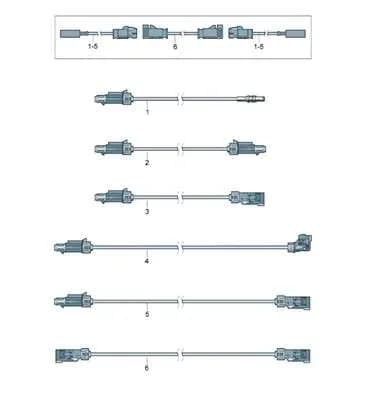
Também se aplica a
- Audi A6
- 2021–2025
- Audi A6 allroad
- 2021–2025
- Audi A7
- 2021–2025
- Audi A7 e
- 2021–2022
- Audi A8 L e
- 2021
- Audi e-tron
- 2021, 2023
- Audi e-tron GT
- 2022–2025
- Audi e-tron Sportback
- 2021–2022
- Audi Q7
- 2021–2025
- Audi Q8
- 2021–2025
- Audi RS 6 Avant
- 2021–2025
- Audi RS 7
- 2021–2025
- Audi RS e-tron GT
- 2022–2024
- Audi RS Q8
- 2021–2025
- Audi S e-tron GT
- 2026
- Audi S6
- 2021–2025
- Audi S7
- 2021–2025
- Audi S8
- 2021–2025
- Audi SQ7
- 2021–2025
- Audi SQ8
- 2021–2025
▸ Mostrar mais 14▾ Mostrar menos
Audi has released Technical Service Bulletin (TSB) 2076264/2 to address issues with the overhead view camera, specifically for generation 3 systems, affecting a wide range of models from 2019 to 2026. This TSB provides comprehensive repair instructions for technicians to diagnose and resolve malfunctions that may lead to a stored fault in the vehicle's Diagnostic Trouble Code (DTC) memory related to the camera system. Owners experiencing an Audi overhead view camera fault should be aware of this bulletin.
This TSB, initially published on December 16, 2024, and revised on October 7, 2025, falls under Topic 90, which covers driver assist systems. It details a multi-step repair process to ensure the proper functioning of the critical overhead view camera system, which is integral to features like 360-degree parking assistance and other driver aids.
Symptoms of an Overhead View Camera Fault
Owners may notice a malfunction of the overhead view camera system, which could manifest as an inoperative 360-degree camera display, distorted camera images, or a complete failure of the system. These symptoms are typically accompanied by a fault stored in the vehicle's DTC memory, indicating a problem within the control modules responsible for the camera's operation. The vehicle's infotainment system or instrument cluster might display a warning message indicating a camera system error or reduced functionality.
Diagnosis and Trigger Conditions
Diagnosing an Audi overhead view camera fault typically begins with a Guided Fault Finding (GFF) procedure using Audi's diagnostic tools. This process helps technicians pinpoint the exact cause of the malfunction. The TSB specifies that the repair procedure should only be performed if another TSB directs the technician to reference TSB 2076264/2, or if requested by Audi Product Support. This ensures that the correct diagnostic path is followed before proceeding with component replacement.
Repair Procedure Summary
The repair procedure outlined in TSB 2076264/2 is systematic and involves several key steps to address the overhead view camera malfunction. The primary goal is to ensure reliable communication and operation of the camera components.
Step 1: Check Repair History
Before any physical repairs begin, technicians are instructed to review the vehicle's repair history. This step is crucial to determine if any of the subsequent repair actions have already been performed. If previous repairs related to the camera system or associated components are documented, the technician can adjust the repair plan accordingly, potentially skipping redundant steps.
Step 2: Replace Exterior Mirror Mountings
If the issue persists and previous repairs do not cover this step, the next action is to replace both exterior mirror mountings. These mountings often house side-view cameras that contribute to the overall overhead view. The replacement must be carried out according to the detailed instructions provided in the Workshop Manual. The labor operation code for this task is 6689 5699, with varying labor times depending on the specific Audi model (A6, A7, A8, Q7, Q8, e-tron, e-tron GT).
Step 3: Replace All Video Cables
If the Audi overhead view camera fault remains after replacing the exterior mirror mountings, the TSB directs technicians to replace all video cables connected to the driver assist systems control unit J1121 and the overhead view cameras. These cameras include the front camera R243, rear camera R246, left camera R244, and right camera R245. This step is critical as faulty or damaged video cables can disrupt the signal transmission, leading to camera system malfunctions. The TSB emphasizes that these cables should only be replaced if the issue persists after the mirror mounting replacement.
Components for Wiring Harness for Vehicle Interior
For the interior wiring harness, technicians must use specific adapter cables from ETKA diagram 971-805. These adapter cables are designed for the wiring harness that connects the front and rear cameras to the left door coupling point (TTVL) and the right door coupling point (TTVR). Figure 1 in the TSB illustrates these adapter cables, highlighting various connector versions and lengths. The document specifies that items 1-5 define the adaptation, allowing for different connector versions, while item 6 determines the cable length. It also notes that connectors must be unplugged from the faulty cable, but the cable itself should remain in the vehicle, referencing parts bulletin 0-413 for further guidance.
Routing the Cables
The new video cables must be routed precisely along the existing interior wiring harness, as depicted in Figure 2 of the TSB. Correct routing is essential to prevent damage, interference, and ensure proper function of the camera system.
Components for Wiring Harness for Driver Door and Front Passenger Door
In addition to the interior video cables, the TSB mandates the replacement of the two door wiring harnesses. This includes the wiring harness for the driver door, identified by part number XXX.971.029.XX (referencing diagrams 972-033 and 972-330), and the wiring harness for the front passenger door, identified by part number XXX.971.030.XX (referencing diagrams 972-035 and 972-350). Figure 3 provides a visual representation of these door wiring harnesses, illustrating their complex structure and connections.
Components for Wiring Harness for Bumper
Finally, the corresponding adapter wiring harness in the front bumper must also be replaced. This harness, identified by part number XXX.971.192.X, connects to the front overhead view camera R243. Technicians should refer to diagrams 907-045 and 907-260 for detailed instructions. Figure 4 in the TSB shows this bumper wiring harness and its connection points.
Required Tools or Parts
To perform the repairs outlined in TSB 2076264/2, specific components and references are necessary:
- Adapter cables: As specified in ETKA diagram 971-805, for the vehicle interior wiring harness.
- Driver door wiring harness: Part number XXX.971.029.XX, referencing diagrams 972-033 and 972-330.
- Front passenger door wiring harness: Part number XXX.971.030.XX, referencing diagrams 972-035 and 972-350.
- Bumper adapter wiring harness: Part number XXX.971.192.X, referencing diagrams 907-045 and 907-260.
- Parts bulletin 0-413: Referenced for guidance on leaving the original faulty cable in the vehicle while unplugging its connectors.
Important Warnings for Owners
Owners should be aware of the following critical information regarding this Technical Service Bulletin:
- Warranty Coverage: "If the vehicle is outside of any warranty, this Technical Service Bulletin is informational only." This means that if your Audi is no longer under warranty, you will likely be responsible for the cost of these repairs.
- Warranty Claims: "All warranty claims submitted for payment must be in accordance with the Audi Warranty Policies and Procedures Manual. Claims are subject to review or audit by Audi Warranty." This indicates that even if your vehicle is under warranty, the claim process is subject to Audi's review.
- Technical Assistance: "Should the complaint persist after completing this TSB, please submit a technical repair query to the Technical Assistance Center (TAC)." This advises technicians on the next steps if the repair does not resolve the Audi overhead view camera fault, but it also informs owners that complex cases may require further investigation by Audi.
Owner Action
If you own a 2019-2026 Audi A6, A7, A8, Q7, Q8, or e-tron model and are experiencing an Audi overhead view camera fault or related issues, it is recommended to schedule an appointment with an authorized Audi dealership. Provide them with details of the symptoms you are observing. The dealership technicians will use TSB 2076264/2 and their diagnostic tools to accurately identify and resolve the problem. Be prepared to discuss your vehicle's warranty status, as this will determine the financial responsibility for the repair.
Source: NHTSA ID 11025302
Galeria
2 imagens
Frequently Asked Questions
- What is Audi TSB 2076264/2 about?
- Audi TSB 2076264/2 provides detailed repair instructions for resolving malfunctions in the generation 3 overhead view camera system affecting various 2019-2026 Audi models. It addresses issues that result in a fault stored in the DTC memory related to the camera system.
- What are the symptoms of an overhead view camera fault in my Audi?
- Symptoms can include a non-functional 360-degree camera display, distorted camera images, or a complete failure of the camera system. These issues are typically accompanied by a warning message on your vehicle's display and a fault stored in the DTC memory, indicating an 'Audi overhead view camera fault'.
- Will the repair for the Audi overhead view camera fault be covered under warranty?
- Coverage for the repair depends on your vehicle's warranty status. Audi TSB 2076264/2 states that if your vehicle is outside of any warranty, the bulletin is for informational purposes only, implying that you would be responsible for the costs. All warranty claims are subject to review by Audi Warranty.
- What parts are replaced to fix the Audi overhead view camera fault?
- The repair process involves several component replacements, including both exterior mirror mountings, all video cables connecting the driver assist systems control unit J1121 to the overhead view cameras (R243, R244, R245, R246), and specific wiring harnesses for the vehicle interior, driver door, front passenger door, and front bumper.
- My Audi's 360-degree camera isn't working, what should I do?
- If your Audi's 360-degree camera system is malfunctioning, you should contact an authorized Audi dealership. They will perform a Guided Fault Finding (GFF) diagnostic procedure and refer to TSB 2076264/2 to address the 'Audi overhead view camera fault' and perform the necessary repairs.
Related Articles
2022 Audi e-tron Problems: Electrical System & Braking Concerns
The 2022 Audi e-tron has faced significant owner complaints regarding its electrical system, including sudden power loss and charging hazards, as well as various braking malfunctions. This profile details these issues and relevant service bulletins.
2022-2026 Audi Guided Fault Finding Reporting Obligation
Audi has issued Technical Service Bulletin TPI 2033392, also known as Transaction No. 2081531/1, regarding a reporting obligation for technicians when Guided Fault Finding produces an unexpected result. This TSB outlines the process for contacting Audi Product Support for diagnostic assistance.
2022-2026 Audi Infotainment System Complaints
Audi has released Technical Service Bulletin (TSB) 2081405/1 to address various customer complaints regarding infotainment systems in 2022-2026 Audi vehicles. This TSB helps technicians diagnose issues often caused by external media or mobile devices, rather than vehicle technology.
2018-2026 Audi Models Cracking Noise TSB 2061464/11
Audi Technical Service Bulletin 2061464/11 describes a cracking noise from the front or rear axle when changing direction in various 2018-2026 Audi models. The issue is due to stub axle movement and is resolved by bonding the stub axle to the wheel bearing with locking fluid.
2022-2026 Audi Parking Aid False Warnings TSB 2024323/13
Audi has released Technical Service Bulletin 2024323/13 to address customer complaints of false parking aid warnings. This bulletin details various environmental and vehicle-specific conditions that can cause the parking aid system to issue alerts even when no obstacles are present. It provides…
Leave a comment
Comments are moderated and may take a moment to appear. Only your first name and the initial of your last name are shown publicly.
Comments
Be the first to comment.