2021-2026 Audi High-Voltage Battery Damage TSB
Audi has released TSB 2079520/1, an informational bulletin detailing the proper procedures for dealerships to process and document high-voltage batteries that have been classified as abnormal or damaged in various 2021-2026 PHEV and BEV models. This ensures safety and quality in handling.
 Marcus Weber2023 Audi e-tron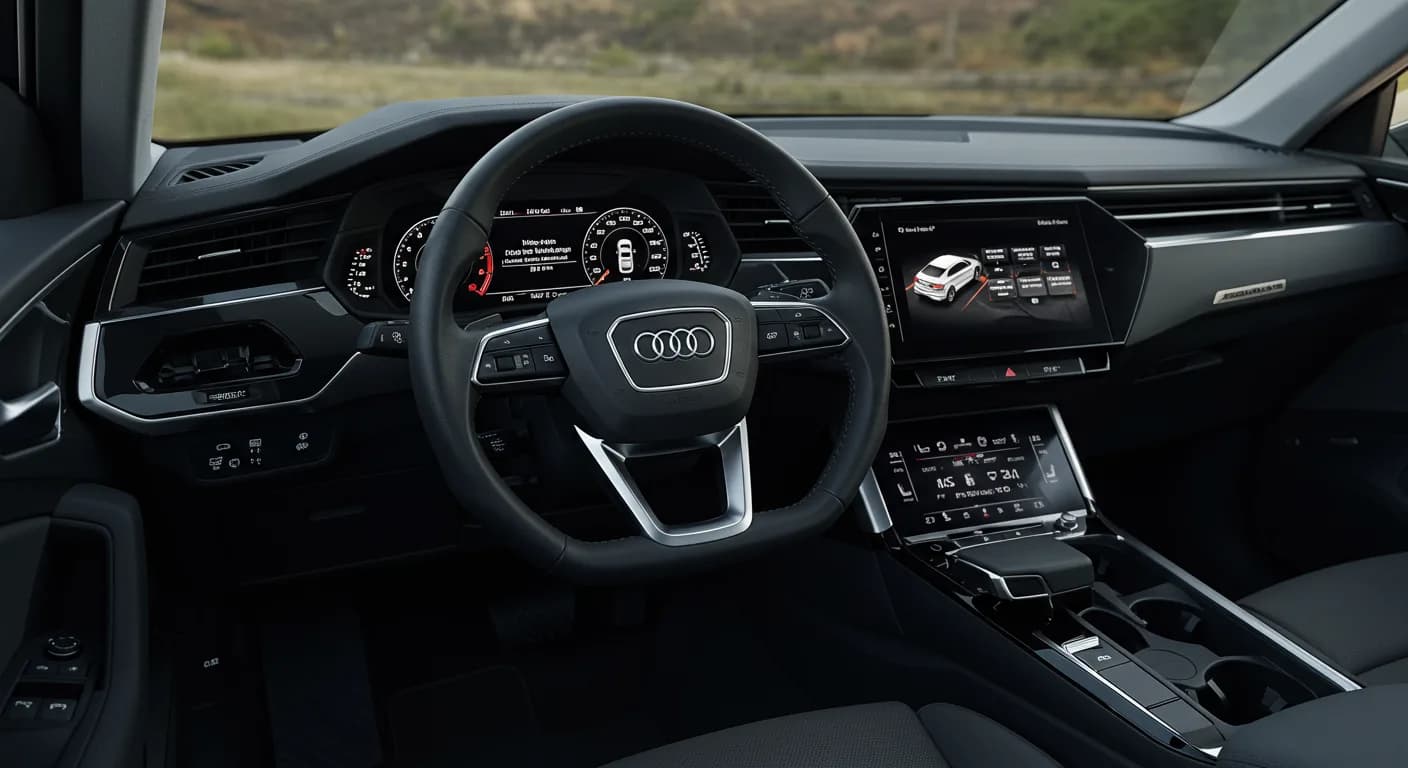
Also applies to
- Audi A7 e
- 2021–2022
- Audi A8 L e
- 2021
- Audi e-tron
- 2021–2022
- Audi e-tron GT
- 2022–2025
- Audi e-tron Sportback
- 2021–2022
- Audi Q5 e
- 2021, 2023, 2024, 2025
- Audi RS e-tron GT
- 2022–2024
- Audi S e-tron GT
- 2026
▸ Show 2 more▾ Show fewer
Audi has released Technical Service Bulletin (TSB) 2079520/1, an important informational document for dealerships regarding the handling of damaged high-voltage batteries. This TSB outlines the necessary procedures and resources to ensure that batteries classified as abnormal are processed correctly, safely, and with proper documentation.
Symptoms
Owners may notice an issue with their vehicle's power or electrical system, potentially accompanied by an error message. The primary condition addressed by this TSB is a high-voltage battery that has been classified as abnormal or damaged. This indicates a potential issue with the power supply or data transfer within the high-voltage battery system.
Diagnosis / Trigger Conditions
This TSB is not focused on diagnosing the root cause of battery damage but rather on the subsequent process once a high-voltage battery has been identified and classified as abnormal. The trigger condition for this TSB's procedures is the determination that an Audi high-voltage battery damage event has occurred, requiring specialized handling.
Handling Damaged High-Voltage Batteries
This TSB provides a comprehensive framework for Audi dealerships to correctly process and document high-voltage batteries that are classified as abnormal. The objective is to ensure that all steps are carried out fully and documented sufficiently, adhering to stringent safety and quality requirements. Due to the complexity of the topic, Audi continuously updates the documentation, which may not always be immediately available for all models.
Key Resources for Dealerships
Audi dealerships are directed to several critical documents and resources to manage an Audi high-voltage battery damage event effectively. These include:
- Basic Information on Damaged High-Voltage Batteries: General information and recommendations for processing damaged lithium-ion batteries.
- Personal Protective Equipment (PPE) Briefing: Detailed instructions and a table outlining the necessary Category III personal protective equipment, its protective functions, and requirements.
- Workshop Procedure Plan: A diagram illustrating a typical workshop procedure for high-voltage vehicles, along with qualification requirements for technicians.
- Example Catalogues for PHEVs/BEVs: Aids for assessing damage to high-voltage batteries across various models like the A5, A6, Q5 e-hybrid, Q7, Q8 TFSIe, e-tron GT, Q4, and Q6 A6 e-tron.
- Service TV Updates: Specific updates (0815_HVE update: introduction, 0816_HVE update: classification, 0817_HVE update: moisture, 0818_HVE update: thermal event) providing additional guidance on high-voltage battery issues.
- Vehicle-Specific Workshop Manuals: Information on flushing processes for high-voltage batteries.
Important Note on Implementation
The processes and documents described within this TSB, including the transaction number 2079520/1, will not be fully implemented and available for use in Audi systems until October 29, 2025.
Owner Action
If your Audi displays an error message related to its high-voltage battery, or if you suspect an Audi high-voltage battery damage issue, it is crucial to contact an authorized Audi dealership immediately. They have access to the specific procedures and documentation outlined in TSB 2079520/1 to safely and correctly assess and process the issue. This TSB is informational only and does not apply to any Audi Warranty.
NHTSA ID: 11025249
Frequently Asked Questions
- What does Audi TSB 2079520/1 address?
- Audi TSB 2079520/1 provides dealerships with essential information and structured procedures for the safe and correct processing of high-voltage batteries that have been identified as damaged or abnormal.
- Which Audi models are covered by this TSB?
- This TSB applies to various Audi PHEV and BEV models from model years 2021 through 2026, including the e-tron, e-tron GT, Q5 e, A7 e, A8 L e, and RS e-tron GT.
- What should I do if I suspect my Audi has high-voltage battery damage?
- If you suspect your Audi has high-voltage battery damage or if you receive an error message related to the high-voltage system, you should contact an authorized Audi dealership immediately. They are equipped with the specific guidelines from TSB 2079520/1 to handle such situations.
- When will the procedures in TSB 2079520/1 be fully available to dealerships?
- The processes and documents detailed in TSB 2079520/1 are scheduled to be fully implemented and available in Audi systems for dealerships to use starting October 29, 2025.
Related Articles
Should 2023 Audi e-tron Owners Worry? Recall & TSB Roundup
The 2023 Audi e-tron faces significant safety concerns, including recalls for potential brake pedal detachment and charging cable overheating. Owners have also reported serious issues like unintended acceleration and electrical system malfunctions. This guide covers all known problems and solutions.
2023 Audi e-tron Brake Pedal Recall
Audi has issued a recall (NHTSA ID: 26V240000, Audi Recall 46P7) for certain 2019-2024 E-Tron and 2020-2024 E-Tron Sportback vehicles, including the 2023 Audi e-tron. The recall addresses a potential issue where the brake pedal may detach from the brake booster, leading to a loss of brake function.
2015-2027 Audi Noise Diagnosis with Frequency Analysis App TSB
Audi has released Technical Service Bulletin 2051095/11 detailing the Audi Frequency Analysis app. This app helps technicians diagnose noise complaints more precisely across 2015-2027 Audi models. Learn how the app works, where to download it, and its features for effective vehicle noise analysis.
2023 Audi e-tron AC/DC Charging Not Possible TSB
This manufacturer communication (NHTSA ID 11031035) provides critical information for 2023 Audi e-tron owners facing issues with AC/DC charging. It specifically highlights problems linked to software version 00C6: 0093/3119, which can prevent the vehicle from charging.
2023-2025 Audi Rear Seat Reminder Message TSB 2074943/2
Audi Technical Service Bulletin 2074943/2 explains the instrument cluster message 'Please check rear seats and be aware of door safelock' in various 2023-2025 Audi models. This informational TSB details the rear occupant detection system designed to prevent children and pets from being left in…
Leave a comment
Comments are moderated and may take a moment to appear. Only your first name and the initial of your last name are shown publicly.
Comments
Be the first to comment.