2019-2025 Audi e-tron / Q8 e-tron Battery Charger Module Diagnostic Address Issue
Audi TSB 2063427/10 addresses an issue where the high-voltage battery charger control module (J1050) in 2019-2025 Audi e-tron and Q8 e-tron models reports under an incorrect diagnostic address (8113 instead of 00C6) after being replaced, preventing the high-voltage system from restarting.
 David Chen2022 Audi e-tron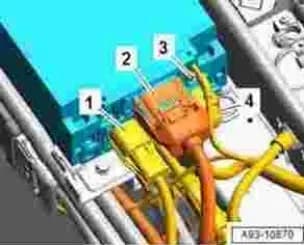
S'applique également à
- Audi e-tron
- 2021, 2023
- Audi e-tron Sportback
- 2021–2022
Audi Technical Service Bulletin (TSB) 2063427/10, issued on November 15, 2024, addresses a specific problem encountered after replacing the high-voltage battery charger control module, identified as J1050. This TSB, which supersedes TSB Group 93 number 24-02 dated August 27, 2024, provides updated measures for resolving diagnostic address discrepancies.
This issue primarily affects 2019 Audi e-tron quattro; 2021-2023 Audi e-tron quattro; 2020-2023 Audi e-tron Sportback; and 2024-2025 Audi Q8 e-tron, Q8 Sportback e-tron, SQ8 e-tron, and SQ8 Sportback e-tron vehicles. When a new Audi e-tron battery charger module (J1050) is installed, it may fail to report correctly in the diagnostic scan tool, leading to the high-voltage system being unable to restart.
Revision History
This Technical Service Bulletin has undergone several revisions to refine the service measures and clarify information:
- Revision 10 (November 15, 2024): Updated service measures and revised the title for clarity.
- Revision 9 (August 27, 2024): Updated service measures related to the second On-Board Charger (OBC).
- Revision 8 (July 10, 2024): Revised service measures for non-UNECE software and updated labor operations for warranty claims.
Symptoms
Owners might notice that their vehicle's high-voltage system cannot be restarted after a battery charger control module replacement. Technicians will observe that the new high-voltage battery charger control module, J1050 (address word 00C6), no longer reports under its correct diagnostic address (00C6) in the diagnostic scan tool. Instead, it reports under address word 8113.
This incorrect reporting is often accompanied by event memories entered in address 0019, indicating that the "High-voltage system cannot be restarted."
Fault Codes / Diagnostic Addresses
While no traditional DTCs (e.g., P-codes) are explicitly listed, the TSB highlights specific diagnostic addresses and measured values crucial for diagnosis:
- J1050 (Address word 00C6): The correct diagnostic address for the high-voltage battery charger control module.
- Address word 8113: The incorrect diagnostic address under which the replaced J1050 module may report.
- Address 0019: The gateway where event memories related to the high-voltage system's inability to restart may be found.
- PRX voltage at charging socket A 5413 (decimal)/0x1525 (hexadecimal): A measured value to be read out from address 00C6/8113.
- PRX voltage at charging socket B 5417 (decimal)/0x1529 (hexadecimal): Another measured value to be read out from address 00C6/8113.
Technical Background
The core of this problem lies in the diagnostic address of the replacement high-voltage battery charger control module. The new part needs to have its diagnostic address or address word correctly changed to integrate properly with the vehicle's electrical system. If this change doesn't occur, the system misidentifies the module, leading to operational failures, including the inability to restart the high-voltage system.
Repair Procedure Summary
Audi outlines specific steps for technicians to correct the diagnostic address issue, depending on the vehicle's software version. The TSB 2063427/10 details these procedures.
For Software Versions 3112 or 3115 (=UNECE)
- Order a New Charging Unit: A new high-voltage battery charging unit is required for the repair.
- Check Charging Socket Resistance: Before installation, technicians must use a VAS 1594 tool to measure the resistance of the charging sockets. This involves checking pins 24-60 and 41-60 on the 60-pin T-60 connector. The measured values should be around 2.7k Ohm or 4.7k Ohm with a tolerance of +/- 5%.
- Fuse Removal: Before installing the new charging unit, the fuse for either OBC1 (5) or OBC2 (11) must be removed from fuse carrier 1 (SR1).
- Battery Charger Installation: Install the new battery charger, carefully observing the connection sequence. Electrical connectors -1- and -2- (as shown in Figure 1 of the TSB) should be connected first, followed by connector -4-.
- Fuse Reinsertion: Reinsert the removed fuses for OBC1 or OBC2.
- Module Activation: Activate the newly installed battery charger using the workshop manual's Guided Functions, specifically "Commissioning 00C6 - Replace control module."
If the On-Board Charger (OBC) still logs address 8113 instead of 00C6, further steps are required:
- End Guided Fault Finding (GFF). If event memory entries are static, restart GFF.
- Work through event memory entries from gateway 0019 according to the test plan.
If the high-voltage system still cannot be activated, update the electrical system configuration by navigating through the self-test button to: "0019 - Data bus on board diagnostic interface - J533" > "0019 - Technical product information" > "J533 - Technical Product information 2063053". If commissioning remains unsuccessful, a Technical Assistance Center (TAC) inquiry should be created.
For All Other Software Versions
If the concern occurs after component replacement, proceed using ODIS:
- If the vehicle has PR number KB4 (onboard charging unit up to 22kW), disconnect charging unit 2 (AX5) first.
- Select the self-test button and then navigate to: "High-Voltage Battery Charger Control Module 2, J1239 (Diagnostic address 8113)" > "8113 - High-Voltage Battery Charger Control Module 2, functions" > "8113 - Change diagnostic address from 8113 to 00C6."
If the high-voltage system cannot be activated again:
- End GFF. If the DTC is static, start GFF again.
- Work through DTC entries from the gateway (0019) according to the test plan.
If the high-voltage system still cannot be activated, update the electrical system configuration by pressing "Select self-test" and navigating to: "0019 - Data bus on board diagnostic interface - J533" > "0019 - Technical product information" > "J533 - Technical Product information 2063053".
Required Tools and Parts
Technicians will require specific tools to perform this repair:
- VAS 1594: Wire harness repair set
- VAS 6160/VAS 6150: VAS tester with the current version of ODIS (Windows 10)
Warranty Information
This Technical Service Bulletin is informational only if the vehicle is outside of its warranty period. For in-warranty repairs, the following details apply:
- Service Number: 9352
- Damage Code: 0039
- Claim Comment: As per TSB 2063427/10
Labor Operations:
- For Software version 3112 or 3115:
- Replace high-voltage charging unit: 9352 5550 (Refer to SRT for associated operations)
- GFF: 0150 0060 (Labor according to the diagnostic log)
- For all other software versions with charging unit 2 (AX5):
- Loosen and secure high-voltage charging unit: 9352 0999 (50 Time Units)
- GFF: 0150 0060 (Labor according to the diagnostic log)
- For all other software versions without charging unit 2 (AX5):
- GFF: 0150 0010 (Refer to SRT for associated operations)
- GFF: 0156 0060 (Labor according to the diagnostic log)
All warranty claims must adhere to the Audi Warranty Policies and Procedures Manual and are subject to review or audit by Audi Warranty.
Source: NHTSA ID 11011294
Frequently Asked Questions
- What is Audi TSB 2063427/10 about?
- Audi Technical Service Bulletin 2063427/10 addresses an issue where the high-voltage battery charger control module (J1050) reports under an incorrect diagnostic address after being replaced, preventing the high-voltage system from restarting.
- Which Audi models are affected by the incorrect diagnostic address for the J1050 module?
- This issue primarily affects 2019-2025 Audi e-tron, e-tron Sportback, Q8 e-tron, and SQ8 e-tron models when the high-voltage battery charger control module (J1050) is replaced.
- What should I do if my Audi e-tron battery charger module is replaced and the high-voltage system won't restart?
- If your Audi e-tron experiences the "High-voltage system cannot be restarted" message after a battery charger module replacement, it indicates a diagnostic address discrepancy. You should take your vehicle to an authorized Audi service center, as they have the tools and procedures outlined in TSB 2063427/10 to correct the diagnostic address and reactivate the high-voltage system.
- What diagnostic addresses are involved in this Audi e-tron battery charger module issue?
- The primary diagnostic addresses involved are 00C6 (the correct address for J1050), 8113 (the incorrect address it may report), and 0019 (the gateway address where related event memories might be found).
- What tools are required for this repair?
- The repair requires specialized tools including the VAS 1594 wire harness repair set and a VAS tester (VAS 6160/VAS 6150) running the current version of ODIS (Windows 10).
Related Articles
2022 Audi e-tron Problems: Electrical System & Braking Concerns
The 2022 Audi e-tron has faced significant owner complaints regarding its electrical system, including sudden power loss and charging hazards, as well as various braking malfunctions. This profile details these issues and relevant service bulletins.
2022-2026 Audi Guided Fault Finding Reporting Obligation
Audi has issued Technical Service Bulletin TPI 2033392, also known as Transaction No. 2081531/1, regarding a reporting obligation for technicians when Guided Fault Finding produces an unexpected result. This TSB outlines the process for contacting Audi Product Support for diagnostic assistance.
2022-2026 Audi Infotainment System Complaints
Audi has released Technical Service Bulletin (TSB) 2081405/1 to address various customer complaints regarding infotainment systems in 2022-2026 Audi vehicles. This TSB helps technicians diagnose issues often caused by external media or mobile devices, rather than vehicle technology.
2018-2026 Audi Models Cracking Noise TSB 2061464/11
Audi Technical Service Bulletin 2061464/11 describes a cracking noise from the front or rear axle when changing direction in various 2018-2026 Audi models. The issue is due to stub axle movement and is resolved by bonding the stub axle to the wheel bearing with locking fluid.
2022-2026 Audi Parking Aid False Warnings TSB 2024323/13
Audi has released Technical Service Bulletin 2024323/13 to address customer complaints of false parking aid warnings. This bulletin details various environmental and vehicle-specific conditions that can cause the parking aid system to issue alerts even when no obstacles are present. It provides…
Leave a comment
Comments are moderated and may take a moment to appear. Only your first name and the initial of your last name are shown publicly.
Comments
Be the first to comment.