2021-2023 Audi e-tron Charger Diagnostic Address Issue TSB
This Technical Service Bulletin (TSB) 2063427/9 from Audi addresses an issue where the high-voltage battery charger control module (J1050) in 2021-2023 Audi e-tron models reports under an incorrect diagnostic address (8113 instead of 00C6) after replacement. This can prevent the high-voltage…
 Sarah Mitchell2023 Audi e-tron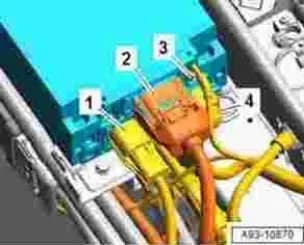
Also applies to
- Audi e-tron
- 2021–2022
- Audi e-tron Sportback
- 2021–2022
Audi has released Technical Service Bulletin (TSB) 93 24 02 2063427/9 to address a specific issue affecting the high-voltage battery charger control module (J1050) in certain 2021-2023 Audi e-tron vehicles. This bulletin, dated August 27, 2024, supersedes TSB 24-70 dated July 10, 2024, and provides updated measures for resolving the problem. The core of the issue is that after the J1050 module is replaced, it may report an incorrect diagnostic address, leading to system malfunctions.
Symptoms
Owners or technicians may notice the following symptoms related to the Audi e-tron charger address problem:
- The high-voltage battery charger control module, J1050, was replaced due to a fault.
- After replacement, the new J1050 unit no longer reports in the diagnostic scan tool under its correct address word 00C6. Instead, it reports under address word 8113.
- The high-voltage system cannot be restarted, and event memories may be entered in address 0019.
Fault Codes / Diagnostic Addresses
This TSB primarily deals with incorrect diagnostic address reporting rather than traditional DTCs. The key identifiers are:
- 00C6: The correct diagnostic address for the high-voltage battery charger control module (J1050).
- 8113: The incorrect diagnostic address that the J1050 module may report after replacement.
- 0019: An address where event memories may be entered if the high-voltage system fails to restart.
Diagnosis / Trigger Conditions
The issue typically arises after the high-voltage battery charger control module (J1050) has been replaced. The diagnostic scan tool will show the J1050 reporting under address 8113 instead of 00C6. If the high-voltage system cannot be activated, further diagnostic steps are required to update the electrical system configuration.
Repair Procedure Summary
The repair procedure varies slightly depending on the vehicle's software version. The overall goal is to ensure the high-voltage battery charger control module reports the correct diagnostic address (00C6).
For Software Version 3112 or 3115 (UNECE)
- If the battery charger was replaced, it must be replaced again, ensuring the correct connection sequence for the battery charger is followed as described in the workshop manual.
- Before installing the new charging unit, check the charging socket(s) and their resistance. Measure pins 24-60 and 41-60 on the 60-pin plug of the battery charger using a VAS 1594 tool. The resistance values should be approximately 2.7k Ohm or 4.7k Ohm, with a tolerance of +/- 5%.
- Install the battery charger, observing the connection sequence shown in Figure 1 (first connect electrical connectors 1 and 2, then connector 4 last).
- Activate the battery charger as per the workshop manual's Guided Functions: Commissioning 00C6 - Replace control module.
- If the onboard charger (OBC) still logs address 8113 instead of 00C6, end Guided Fault Finding (GFF). If event memory entries are static, restart GFF and work through the event memory entries from gateway 0019 according to the test plan.
- If the high-voltage system still cannot be activated, update the electrical system configuration by selecting the self-test button and navigating to:
- 0019 - Data bus on board diagnostic interface – J533
- 0019 - Technical product information
- J533 Technical Product information 2063053
For All Other Software Versions
- If the vehicle has PR number KB4 (onboard charging unit up to 22kW), first disconnect charging unit 2 (AX5).
- Select the self-test button and then navigate to:
- High-Voltage Battery Charger Control Module 2, J1239 (Diagnostic address 8113)
- 8113 - High-Voltage Battery Charger Control Module 2, functions
- 8113 - Change diagnostic address from 8113 to 00C6
- Run the test plan. The scan tool will correct the diagnostic address.
- Verify that the high-voltage battery charger control module, J1050, now reports under address word 00C6 and that the high-voltage battery charger control module 2, J1239, no longer reports under address word 8113.
Required Tools or Parts
Technicians will require specific tools to perform the diagnostic and repair procedures for the Audi e-tron charger address issue:
- VAS 1594: Wire harness repair set
- VAS 6160 / VAS 6150: VAS tester with the current version of ODIS (Windows 10)
Warranty Information
For vehicles still under warranty, claims for this repair should be submitted in accordance with the Audi Warranty Policies and Procedures Manual. The claim type is informational only if the vehicle is outside of warranty. The relevant codes for warranty claims are:
- Service Number: 9352
- Damage Code: 0039
- Claim Comment: As per TSB 2063427/9
Labor operations vary based on the software version and whether a charging unit replacement or diagnostic work is performed. Examples include 9352 5550 for replacing the high-voltage charging unit and 0150 0060 for Guided Fault Finding (GFF).
Source: NHTSA ID: 11007271
Frequently Asked Questions
- What is the primary issue addressed by Audi TSB 93 24 02 2063427/9?
- This TSB addresses a problem where the high-voltage battery charger control module (J1050) in certain Audi e-tron vehicles reports an incorrect diagnostic address (8113 instead of 00C6) after being replaced, which can prevent the high-voltage system from restarting.
- Which Audi models and years are affected by the incorrect charger diagnostic address?
- The TSB applies to 2021-2023 Audi e-tron models, as well as other e-tron variants from 2019-2025, including the e-tron Sportback, Q8 e-tron, and SQ8 e-tron, depending on the specific model year.
- What diagnostic addresses are involved in this Audi e-tron charger address issue?
- The correct diagnostic address for the J1050 control module is 00C6. The issue arises when the module incorrectly reports address 8113. Additionally, address 0019 may show event memories if the high-voltage system fails to restart.
- What tools are needed to fix the Audi e-tron charger address problem?
- Technicians will need a VAS 1594 wire harness repair set and a VAS tester (VAS 6160 or VAS 6150) equipped with the current version of ODIS (Windows 10) software to perform the necessary diagnostics and repairs.
Related Articles
Should 2023 Audi e-tron Owners Worry? Recall & TSB Roundup
The 2023 Audi e-tron faces significant safety concerns, including recalls for potential brake pedal detachment and charging cable overheating. Owners have also reported serious issues like unintended acceleration and electrical system malfunctions. This guide covers all known problems and solutions.
2023 Audi e-tron Brake Pedal Recall
Audi has issued a recall (NHTSA ID: 26V240000, Audi Recall 46P7) for certain 2019-2024 E-Tron and 2020-2024 E-Tron Sportback vehicles, including the 2023 Audi e-tron. The recall addresses a potential issue where the brake pedal may detach from the brake booster, leading to a loss of brake function.
2015-2027 Audi Noise Diagnosis with Frequency Analysis App TSB
Audi has released Technical Service Bulletin 2051095/11 detailing the Audi Frequency Analysis app. This app helps technicians diagnose noise complaints more precisely across 2015-2027 Audi models. Learn how the app works, where to download it, and its features for effective vehicle noise analysis.
2023 Audi e-tron AC/DC Charging Not Possible TSB
This manufacturer communication (NHTSA ID 11031035) provides critical information for 2023 Audi e-tron owners facing issues with AC/DC charging. It specifically highlights problems linked to software version 00C6: 0093/3119, which can prevent the vehicle from charging.
2023-2025 Audi Rear Seat Reminder Message TSB 2074943/2
Audi Technical Service Bulletin 2074943/2 explains the instrument cluster message 'Please check rear seats and be aware of door safelock' in various 2023-2025 Audi models. This informational TSB details the rear occupant detection system designed to prevent children and pets from being left in…
Leave a comment
Comments are moderated and may take a moment to appear. Only your first name and the initial of your last name are shown publicly.
Comments
Be the first to comment.