2019-2025 Audi e-tron / Q8 e-tron J1050 Address TSB
Audi Technical Service Bulletin 2063427/6 addresses an issue in 2019-2025 Audi e-tron and Q8 e-tron models where the J1050 high-voltage battery charger control module reports an incorrect diagnostic address (8113) after replacement, preventing high-voltage system activation.
 David Chen2021 Audi e-tron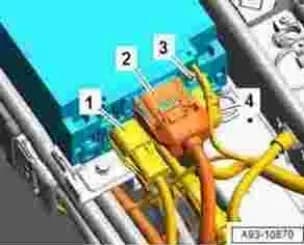
Şu araçlar için de geçerli
- Audi e-tron
- 2022–2023
- Audi e-tron Sportback
- 2021–2022
Audi has released Technical Service Bulletin (TSB) 2063427/6, issued on May 14, 2024, to address a specific issue affecting the high-voltage battery charger control module, J1050, in various Audi e-tron and Q8 e-tron models. This bulletin supersedes Technical Service Bulletin Group 93 number 23-33, dated November 15, 2023, and provides updated guidance for technicians.
This TSB applies to 2019 Audi e-tron, 2021-2023 Audi e-tron, 2020-2023 Audi e-tron Sportback, and 2024-2025 Audi Q8 e-tron, SQ8 e-tron, Q8 e-tron Sportback, and SQ8 e-tron Sportback vehicles. The core problem arises when a replaced J1050 module, which should be identified by address word 00C6, incorrectly reports under diagnostic address 8113 in the diagnostic scan tool. This misidentification prevents the high-voltage system from being properly activated, impacting vehicle operation. This TSB provides the necessary steps to correct the Audi e-tron J1050 address.
Revision History
This bulletin has undergone several revisions to expand its scope and refine the service procedure:
- Revision 5 (May 14, 2024): The header was revised to include Model Year 2024 and 2025 vehicles. The service procedure was updated to include measures for UNECE software, and the warranty section was revised to add specific labor operations.
- Revision 4 (March 31, 2023): The header was revised to include Model Year 2023 vehicles.
- Revision 3 (January 09, 2023): The header was revised to update model codes.
Symptoms
Owners typically won't notice a direct symptom until the vehicle undergoes service involving the high-voltage battery charger control module. The issue becomes apparent to technicians after the J1050 module has been replaced due to a fault. The diagnostic scan tool will then show the new J1050 reporting under address word 8113 instead of its correct address word 00C6. Consequently, the high-voltage system cannot be activated.
Technical Background
The underlying reason for this diagnostic address discrepancy is that the replacement J1050 part requires its diagnostic address or address word to be changed or correctly configured. Without this adjustment, the vehicle's electrical system does not recognize the module correctly, leading to the high-voltage system activation failure. This TSB provides the necessary steps to correctly configure the Audi e-tron J1050 address.
Repair Procedure Summary
Audi TSB 2063427/6 details a specific repair process depending on the vehicle's software version. For vehicles with software versions 3112 or 3115 (=UNECE), the procedure involves several key steps:
- Order New Charging Unit: A new charging unit for the high-voltage battery must be ordered.
- Resistance Check: Before installing the new unit, technicians must check the resistance of the charging socket(s). Using a special tool, the VAS 1594 wire harness repair set, measurements on the 60-pin plug of the battery charger (pins 24-60 and 4-61) should yield values around 2.7k Ohm or 4.7k Ohm, with a tolerance of +/- 5%.
- Installation and Connection Sequence: The battery charger is then installed, carefully observing the specified connection sequence. Electrical connectors -1- and -2- must be connected first, followed by electrical connector -4-. Figure 1 in the TSB visually depicts these labeled connections (3, 2, 4) to guide technicians.
- Activation: After installation, the battery charger must be activated using the workshop manual's Guided Functions, specifically "Commissioning 00C6 - Replace control module."
- Address Verification: Normally, the On-Board Charger (OBC) should log address 00C6. If it logs as 8113 instead of 00C6, further steps are required.
High-Voltage System Activation Failure
If the high-voltage system still cannot be activated, or if the OBC logs the incorrect address 8113, the electrical system configuration must be updated. This involves using the ODIS diagnostic system (with VAS tester VAS 6160/VAS 6150) and following these steps:
- Press "Select self-test."
- Select the path: "0019 - Data bus on board diagnostic interface – J533."
- Select the path: "0019 - Technical product information."
- Select the path: "J533 - Technical Product information 2063053."
For all other software versions, if the concern occurs after component replacement, technicians should use ODIS. If the high-voltage system cannot be activated, they should end GFF (Guided Fault Finding), and if any Diagnostic Trouble Code (DTC) is static, restart GFF. Then, all DTC entries from the gateway (0019) must be addressed according to the test plan. If the high-voltage system still cannot be activated, the same electrical system configuration update steps as above should be followed.
Required Tools and Parts
Technicians will need specific tools to perform this repair:
- VAS 1594: Wire harness repair set
- VAS 6160/VAS 6150: VAS tester with the current version of ODIS (Windows 10)
Warranty Information
This repair is covered under warranty according to the following guidelines:
- Claim Type: 110, applicable for vehicles up to 48 months or 50,000 miles.
- CPO Vehicles: G10 for CPO (Certified Pre-Owned) Covered Vehicles, requiring owner verification.
- Out of Warranty: If the vehicle is outside of any warranty, this Technical Service Bulletin is for informational purposes only.
- Service Number: 9352
- Damage Code: 0039
- Labor Operations:
- Replace high-voltage charging unit: 9352 5550 (See SRT with associated operations)
- Check high-voltage charging connector: 9353 0199 (10 Time Units)
- Charge battery: 2706 8950 (See SRT with associated operations)
- Diagnostic Time: GFF, 0150 0060 (Time stated on the diagnostic protocol, maximum 100 Time Units).
- Claim Comment: As per TSB 2063427/5.
All warranty claims must comply with the Audi Warranty Policies and Procedures Manual and are subject to review and audit by Audi Warranty.
NHTSA ID: 2063427
Frequently Asked Questions
- What is Audi TSB 2063427/6 about?
- Audi Technical Service Bulletin 2063427/6 addresses an issue where the J1050 high-voltage battery charger control module in 2019-2025 Audi e-tron and Q8 e-tron vehicles reports an incorrect diagnostic address (8113 instead of 00C6) after being replaced, preventing the high-voltage system from activating.
- What is the 'Audi e-tron J1050 address' issue?
- The 'Audi e-tron J1050 address' issue refers to the problem where a newly installed high-voltage battery charger control module (J1050) fails to register its correct diagnostic address (00C6) in the vehicle's diagnostic scan tool. Instead, it incorrectly reports under address 8113, which leads to the high-voltage system being unable to activate.
- How is the J1050 diagnostic address issue resolved?
- The resolution involves replacing the charging unit, performing resistance checks on the charging sockets using a VAS 1594 tool, and then installing and activating the new battery charger according to a specific connection sequence and guided functions. If the issue persists, the electrical system configuration must be updated using ODIS, following paths like '0019 - Data bus on board diagnostic interface – J533' and 'J533 - Technical Product information 2063053'.
- Is this repair covered under warranty?
- Yes, this repair is covered under Audi's New Vehicle Limited Warranty for up to 48 months or 50,000 miles, whichever comes first. It is also covered for CPO (Certified Pre-Owned) vehicles under the G10 program. If the vehicle is outside of any warranty, this Technical Service Bulletin serves as informational guidance only.
- What tools are required for this repair?
- Technicians will need the VAS 1594 wire harness repair set and a VAS 6160/VAS 6150 tester with the current version of ODIS (Windows 10) to perform the diagnostic and repair procedures outlined in TSB 2063427/6.
Related Articles
2021 Audi e-tron Electrical Malfunction and Power Loss
A 2021 Audi e-tron owner reported a severe 'Electrical Malfunction' resulting in complete loss of power on the highway. The issue has persisted despite dealer attempts to fix it over five months, posing significant safety risks.
2021-2026 Audi UTR Troubleshooting & FAQs TSB 2081409/1
This Audi Technical Service Bulletin (TSB 2081409/1) provides comprehensive answers to frequently asked questions and troubleshooting steps for the Audi Universal Traffic Recorder (UTR) accessory, covering topics like SD card compatibility, video playback, Wi-Fi issues, and more.
2021-2025 Audi Emergency Call System Fault TSB
Audi has released Technical Service Bulletin 2059528/18 to address an "Emergency call function: malfunction! Function unavailable. Please contact service" warning, often accompanied by a red SOS LED and DTC B200000. This issue affects various 2021-2025 Audi models and is due to a software problem…
2021-2026 Audi Adaptive Light System Fault C12B3FA TSB
Audi has released Technical Service Bulletin 2054202/7 to address an intermittent 'Audi adaptive light: system fault' message and DTC C12B3FA in various 2021-2026 models. This TSB outlines diagnosis and resolution for driver assistance system malfunctions.
2021-2026 Audi Parking Aid False Warnings TSB 2024323/12
This Technical Service Bulletin (TSB 2024323/12) details diagnostic and repair procedures for 2021-2026 Audi vehicles experiencing false parking aid warnings. Learn about environmental factors, sensor checks, and proper installation to resolve issues like 'Parking aid does not work / warning is…
Yorum bırakın
Yorumlar moderasyondan geçer ve görünmesi biraz zaman alabilir. Sadece adınız ve soyadınızın baş harfi herkese açık olarak gösterilir.
Yorumlar
İlk yorum sizden olsun.