2021-2025 Stellantis Aluminum Body Panel Corrosion TSB
Stellantis has released Technical Service Bulletin (TSB) 31-001-24 to address aluminum corrosion and bubbling on body panels. This bulletin provides diagnostic and repair procedures for issues like "Aluminum corrosion or bubbling along the leading edge of hood, hinges or other exterior surface…
 David Chen2022 Alfa Romeo Stelvio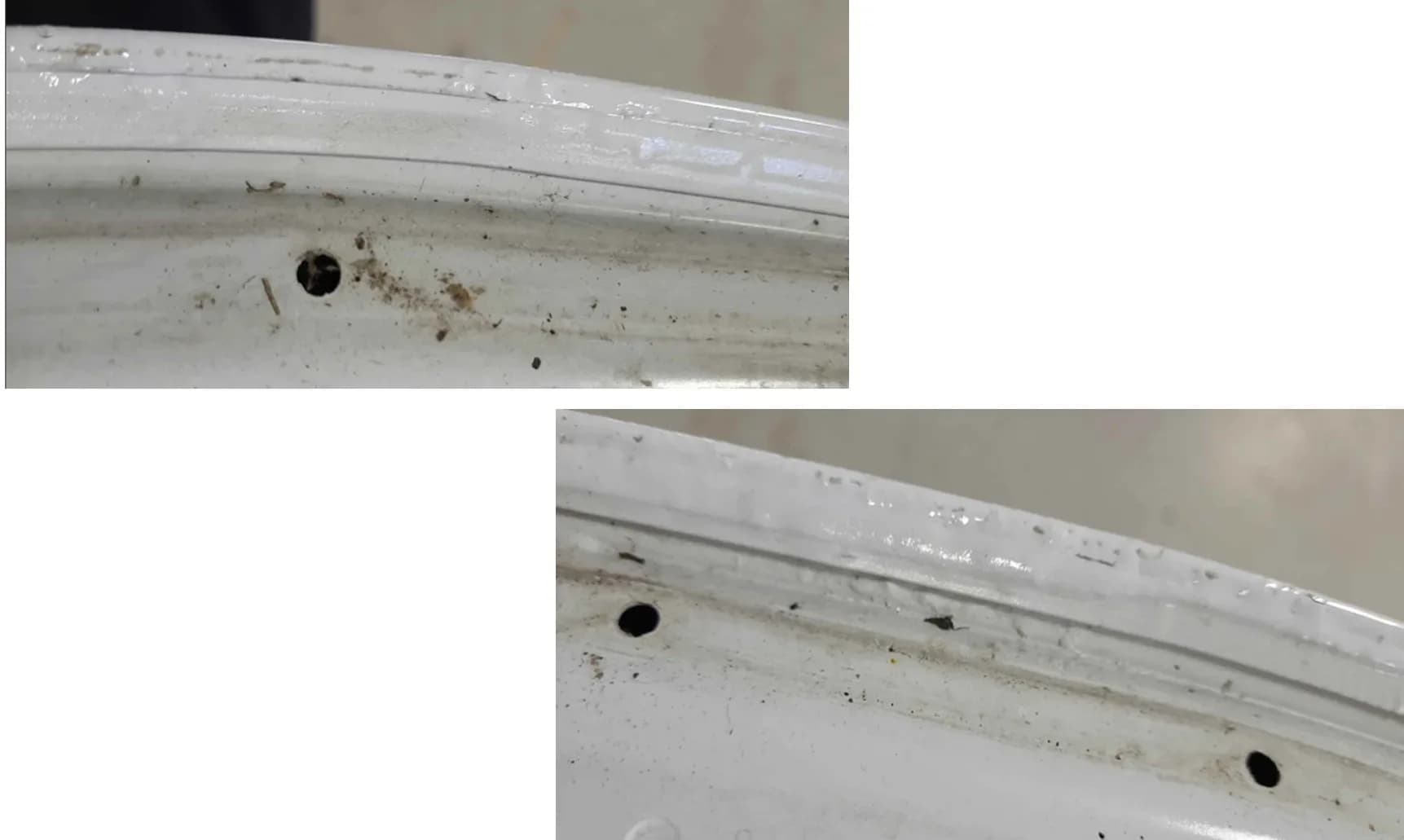
Also applies to
- Alfa Romeo Stelvio
- 2023–2025
- Dodge Challenger
- 2021
- Dodge Durango
- 2021–2022
- Jeep Cherokee
- 2021–2023
- Jeep Compass
- 2021–2024
- Jeep Gladiator
- 2021–2024
- Jeep Grand Cherokee
- 2021–2022
- Jeep Renegade
- 2021–2024
- Jeep Wrangler
- 2021–2024
- Ram 1500
- 2021–2022
- Ram 2500
- 2021–2024
- Ram 3500
- 2021–2024
▸ Show 6 more▾ Show fewer
Stellantis has issued Technical Service Bulletin (TSB) 31-001-24 to provide guidance for diagnosing and repairing aluminum corrosion and bubbling on various body panels. This bulletin, dated July 24, 2024, supersedes TSB 31-001-23 REV. A, which was issued on March 04, 2023. The updated TSB includes revisions to affected vehicles, clarifies the cause, and details an updated repair procedure.
The TSB addresses a common concern for owners of affected 2021-2025 Alfa Romeo, Chrysler, Dodge, Jeep, and RAM vehicles experiencing visible corrosion on aluminum components. The repair involves inspecting, removing the corrosion, and refinishing the affected aluminum panels.
Symptoms of Aluminum Corrosion
Owners may notice visible signs of corrosion or bubbling on exterior aluminum body panels. The primary symptom described in TSB 31-001-24 is "Aluminum corrosion or bubbling along the leading edge of hood, hinges or other exterior surface areas of the hinges, doors, fenders, swing gates or liftgates."
This can manifest as small blisters or raised areas in the paint, indicating that corrosion is occurring beneath the surface. These symptoms are typically found on aluminum components such as the hood, doors, fenders, swing gates, and liftgates.
Understanding the Cause
The root cause of this issue is identified simply as "Corrosion conditions." Aluminum, while resistant to rust, can corrode when exposed to certain environmental factors, especially when its protective oxide layer is compromised. This can lead to the bubbling and paint delamination observed by owners.
Important Warnings for Owners and Technicians
Stellantis TSB 31-001-24 includes several critical warnings to ensure proper repair and prevent further damage:
- Warranty Policy: Technicians must verify the current warranty policy to determine if digital imaging pre-authorization or pre-approval from the Regional Office is required before proceeding with any repairs.
- Aluminum Panels Only: This bulletin specifically applies to aluminum panels. Technicians must confirm the panel material by referring to the collision manual's material specifications.
- Hem Flange Corrosion: This bulletin does not apply to corrosion found in the hem flange area of panels. Corrosion in this specific area will require complete panel replacement, not repair.
- Cross-Contamination Risk: To prevent galvanic corrosion, all grinding, sanding, and prep work on aluminum components must be performed in a separate room, away from ferrous (iron-containing) materials. Only clean, non-contaminated abrasives should be used.
- Hinge Removal Caution: Exterior mounted hinges should only be removed if necessary for specific repair procedures, such as filiform corrosion repair underneath and around the hinge area. Unnecessary removal can risk further corrosion damage by breaking the paint around the hinge's perimeter.
- Tool and Abrasive Use: Tools and abrasive materials used for aluminum components must not be used interchangeably with steel components. This practice can lead to galvanic corrosion and a sub-standard finish.
Diagnosis for Aluminum Panel Corrosion
Diagnosing the issue involves a visual inspection for corrosion or bubbling on aluminum panels. If corrosion is evident, technicians must consult the current warranty policy for approval before proceeding. If severe pitting is present that cannot be removed by sanding or stripping, the panel must be replaced rather than repaired. If no corrosion is evident, the repair procedure outlined in TSB 31-001-24 does not apply.
Repair Procedure Summary
The repair process detailed in TSB 31-001-24 involves several steps to effectively address aluminum corrosion:
- Panel Removal: The affected aluminum panel is removed from the vehicle. Detailed service procedures for panel removal are available in DealerCONNECT/Service Library.
- Trim Removal: Any necessary trim components are removed from the panel to facilitate repair and refinishing.
- Cleaning: The panel is thoroughly washed with soap and water to remove waterborne contaminants, followed by wax and grease remover to eliminate solvent-based contaminants.
- Corrosion Removal: Corrosion is removed using an angle grinder equipped with 80-grit or finer grinding discs. Roloc® 3" grinding discs or Clean 'N Strip discs (such as 3M® p/n 07470) may be used for hard-to-reach areas.
- Sanding: Bare metal areas are sanded with 180-grit sandpaper. The old finish and repair area are feather-edged using 320-400-grit sandpaper.
- Masking: The prepared area is masked for primer application.
- Final Cleaning (Pre-Primer): Sanded bare aluminum areas are cleaned with a metal cleaner (e.g., Glasurit's 360-4) and advanced prep wipes (e.g., BASF 2000 Advanced Prep Wipes) before primer application.
- Priming: Two coats of UV Primer (e.g., Glasurit 151-170 UV Primer) are applied to the repair area.
- Curing and Sanding: The primer is cured using a UV cure lamp, then block sanded with 500-grit or finer sandpaper.
- Seam Sealer (If Needed): If the backside of the panel required repair and seam sealer removal, it must be restored using products like Fusor 129 or 3M 08308 seam sealer.
- Refinishing Prep: The panel is prepared for refinishing by removing dust, cleaning with wax and grease remover, and using a tack cloth.
- Painting: Sealer, basecoat, and clearcoat are applied according to the chosen paint manufacturer's procedures.
- Reinstallation: The repaired panel and all removed trim components, including adhesive-backed items like nameplates, are reinstalled.
Required Tools and Materials
Technicians will require specific materials for this repair, including:
- Sandpaper: 500-grit, 800-grit, 80-grit, 180-grit
- 3M® 3" Clean and Strip Disc (3M® p/n 07470 or equivalent)
- 3M Scotch-Brite Scuffing Disc (07467 Maroon or equivalent)
- Anti-Corrosion Pen (Part No. 06103087AA)
- Various paint products from approved manufacturers such as Akzo Nobel®, Axalta®, BASF®, PPG®, and Sherwin Williams®.
- Metal cleaners (e.g., Glasurit's 360-4)
- Advanced prep wipes (e.g., BASF 2000 Advanced Prep Wipes)
- UV Primer (e.g., Glasurit 151-170 UV Primer)
- Seam sealers (e.g., Fusor 129 or 3M 08308)
- Wax and grease removers (e.g., Pre-Kleano 700)
What Owners Should Know
This TSB 31-001-24 is classified as "Information Only." This means Stellantis is not actively notifying consumers about this issue. Owners who observe "Aluminum corrosion or bubbling along the leading edge of hood, hinges or other exterior surface areas of the hinges, doors, fenders, swing gates or liftgates" on their 2021-2025 Alfa Romeo, Chrysler, Dodge, Jeep, or RAM vehicle should proactively contact their authorized dealership to inquire about inspection and potential repair under warranty.
NHTSA ID: 11005320
Gallery
4 images
Frequently Asked Questions
- What is Stellantis TSB 31-001-24 about?
- Stellantis TSB 31-001-24 addresses aluminum corrosion and bubbling on exterior body panels, such as the hood, doors, and fenders, for various 2021-2025 Alfa Romeo, Chrysler, Dodge, Jeep, and RAM vehicles. It provides a detailed repair procedure for technicians.
- What are the common symptoms of this aluminum corrosion?
- Owners may observe "Aluminum corrosion or bubbling along the leading edge of hood, hinges or other exterior surface areas of the hinges, doors, fenders, swing gates or liftgates." This typically appears as blisters or raised areas in the paint on aluminum components.
- Will Stellantis notify me about this TSB?
- No, TSB 31-001-24 is designated as "Information Only," meaning Stellantis is not directly notifying vehicle owners. If you notice symptoms of aluminum corrosion, you should contact your dealership for an inspection.
- Can I repair the aluminum corrosion myself?
- The repair procedure outlined in TSB 31-001-24 is complex and requires specialized tools, materials, and expertise to prevent further issues like galvanic corrosion. It is strongly recommended that this repair be performed by a qualified technician at an authorized Stellantis dealership.
- What is the significance of the 'Corrosion conditions' cause?
- The cause, listed as 'Corrosion conditions,' indicates that environmental factors and potential compromises to the aluminum's protective layer are leading to the issue. The TSB provides specific steps to mitigate these conditions during repair, including strict protocols to avoid cross-contamination with ferrous materials.
Related Articles
2022-2026 Stellantis Aluminum Panel Corrosion TSB
Stellantis Technical Service Bulletin (TSB) 31-001-25 provides comprehensive guidance for diagnosing and repairing aluminum corrosion and bubbling on body panels, including hoods, hinges, doors, and liftgates, affecting various 2022-2026 Stellantis models.
2013-2026 Stellantis Aluminum Body Panel Corrosion TSB
Stellantis has issued Technical Service Bulletin (TSB) 31-001-25 REV. B to address aluminum corrosion or bubbling on exterior body panels. This TSB covers a wide range of 2013-2026 models, providing detailed diagnosis and repair procedures for affected areas.
2022-2024 Alfa Romeo Stelvio Timing Cover Oil Leak TSB
Alfa Romeo has issued Technical Service Bulletin 09-013-25 REV. B for 2022-2024 Stelvio models. This TSB addresses oil leakage from the timing cover, often caused by loose fasteners, and outlines the repair procedure.
2021-2025 Stellantis EVAP System Hard to Fill TSB
This manufacturer communication, TSB 9100471, details diagnostic and repair procedures for 'Hard to Fill' fuel tank conditions and other evaporative system issues in various 2021-2025 Stellantis vehicles. It covers checks for the ESIM detector, vapor canister, and associated hoses.
2022 Alfa Romeo Stelvio PCM Update for MIL & DTCs
A Technical Service Bulletin (TSB 18-013-25) addresses Malfunction Indicator Lamp (MIL) illumination and various Diagnostic Trouble Codes (DTCs) in 2022 Alfa Romeo Stelvio vehicles. The fix involves updating the Powertrain Control Module (PCM) software.
Leave a comment
Comments are moderated and may take a moment to appear. Only your first name and the initial of your last name are shown publicly.
Comments
Be the first to comment.